About All Tours 5 Day Tours2 Day Tours3 Day Tours4 Day ToursFrom Cape Town ToursFrom Port Elizabeth Directions Hours & Fees Guides
Find Tours 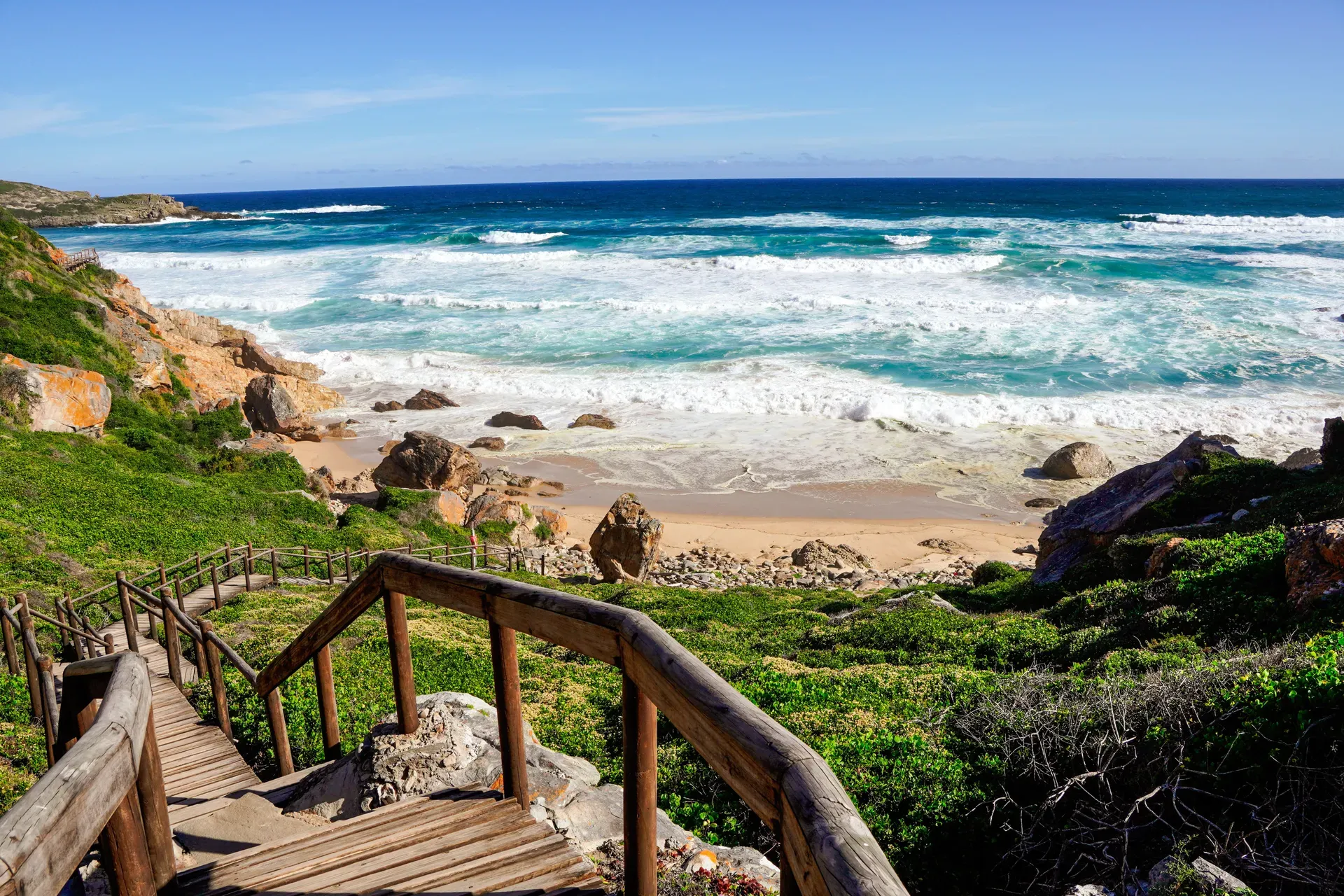
The Garden Route is a roughly 200 km stretch of South Africa's south-eastern coast between Mossel Bay and Storms River, where rain-fed forest, fynbos mountains and sheltered beaches line a single drivable corridor. It's the country's most popular self-drive, and almost all of it sits inside a 1,210 km² national park.
The Garden Route is a roughly 200-kilometre stretch of South Africa's south-eastern coast, running along the N2 from Mossel Bay in the Western Cape to Storms River in the Eastern Cape. Broader definitions stretch it to 300 km, starting at Witsand. Either way, the drive threads George, Wilderness, Sedgefield, Knysna and Plettenberg Bay, each town 25 to 50 km from the next. You can do it non-stop in under three hours — that misses the point.
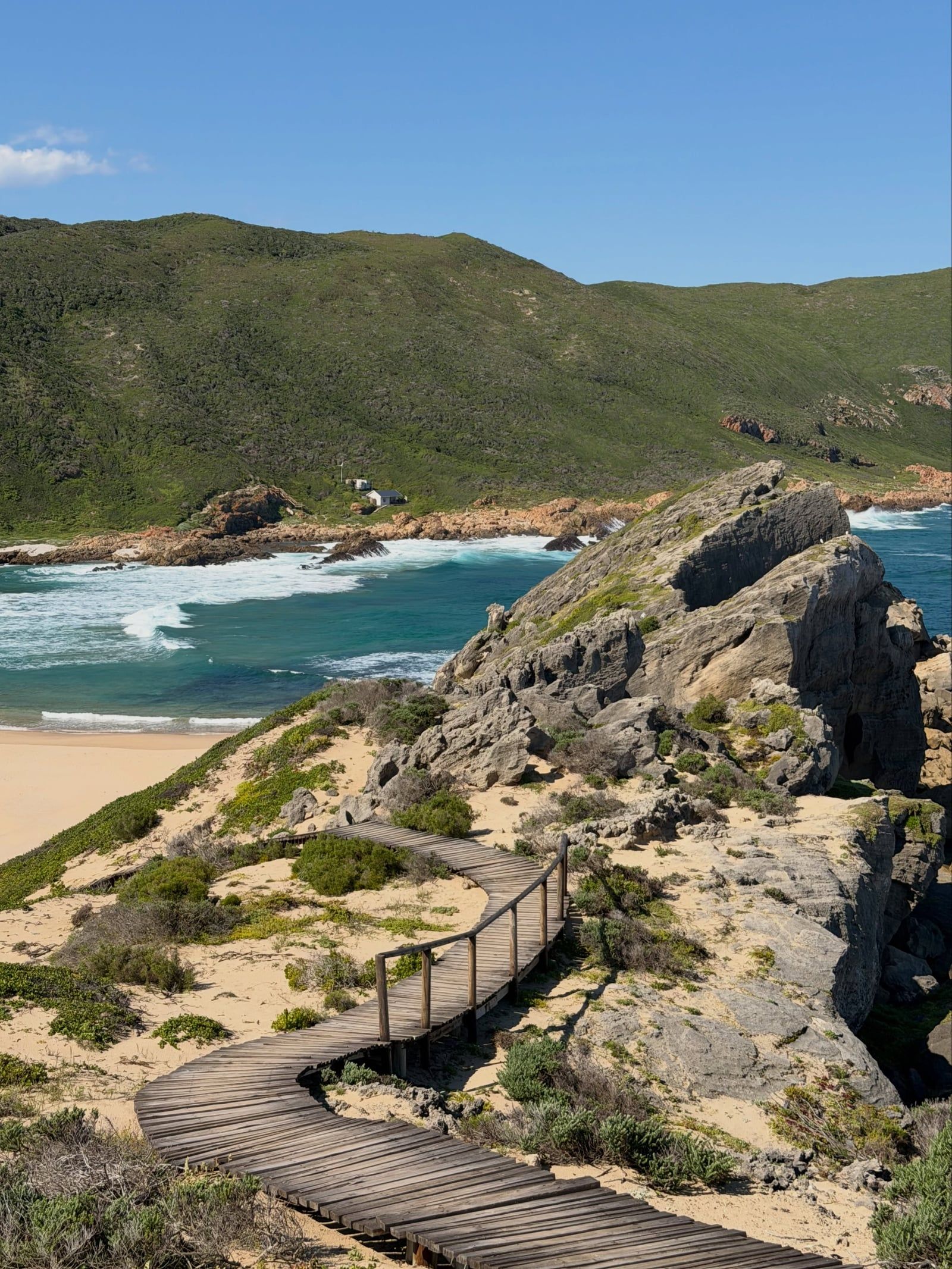
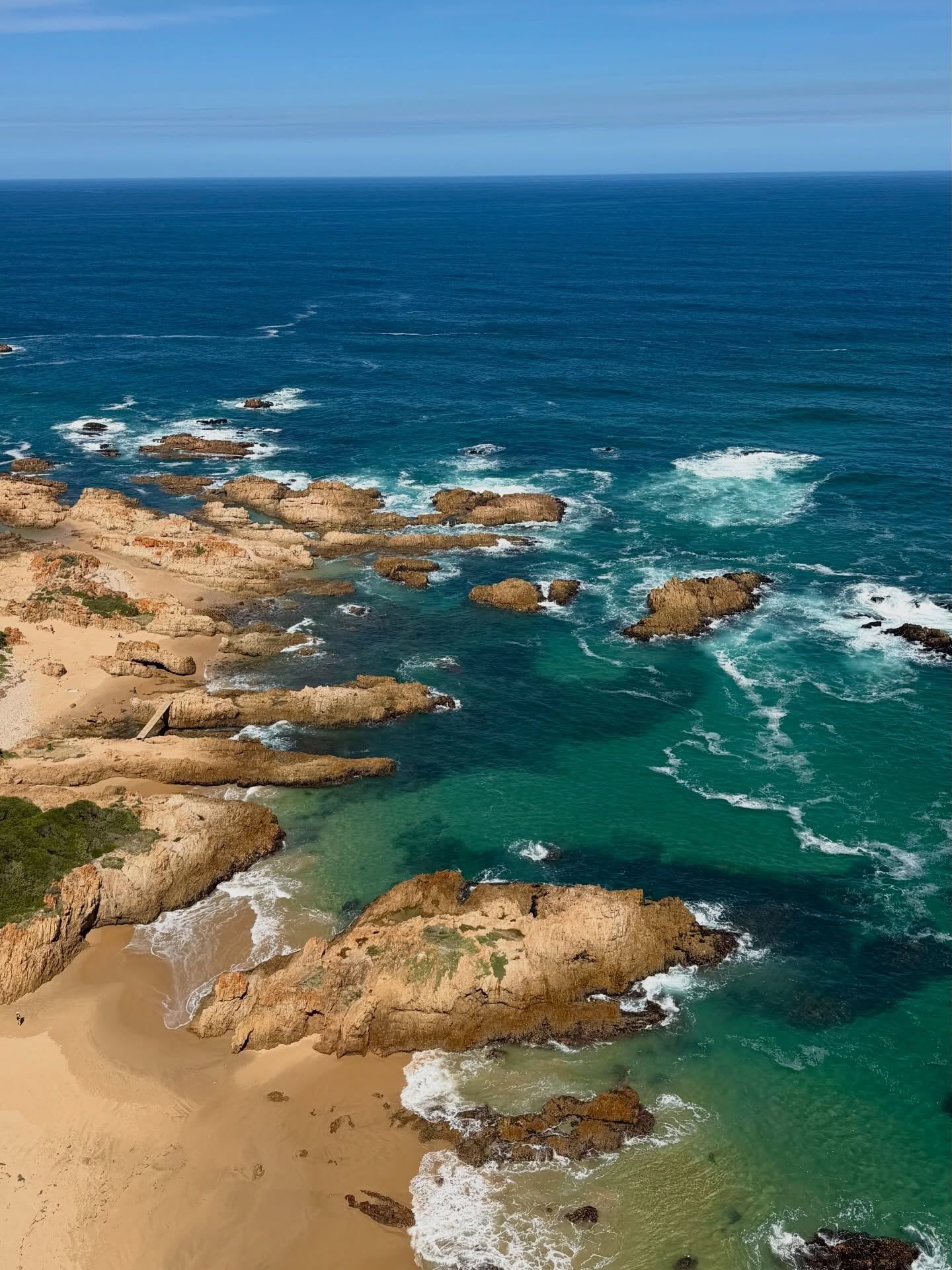
The Indian Ocean sits to the south, the Outeniqua and Tsitsikamma mountains to the north, and between them a chain of beaches, estuaries, lakes and rain-fed forest. Most of it falls inside the Garden Route National Park, proclaimed in 2009, which covers about 1,210 km² and holds roughly 605 km² of indigenous afro-montane forest. Off Tsitsikamma lies Africa's oldest marine protected area, a total no-take zone since 1964. Rain falls in every month here, which is why the coast stays green through the Cape's dry summer.
What you actually do: walk the suspension bridges over the Storms River gorge, jump — or just watch — the 216 m Bloukrans bungy, eat oysters in Knysna, and scan for southern right whales between June and November. It's malaria-free, drivable in an ordinary car, and manageable with small children. Most travellers need 4–5 days for the highlights; add Oudtshoorn's Cango Caves and Addo Elephant National Park and a week isn't much.
Bartolomeu Dias made the first European landing on this coast in February 1488, at present-day Mossel Bay, while probing a route to the East. Little followed for nearly 300 years. In 1777 the Cape Colony opened its first woodcutter's post in the region, at Hoogekraal near modern George, to supply the settlement with timber from the Outeniqualand forests. From the early 1800s George Rex, buyer of the Melkhoutkraal farm at Knysna, began cutting the indigenous forest on an industrial scale, and yellowwood left the coast by ship.
The woodcutter communities that grew from that trade lived and worked inside the forest until the late 1930s. By then, two centuries of harvesting had also cut the forest elephants — once in the hundreds — down to a straggle of survivors. The Knysna Museums tell the woodcutters' story today; the elephants, if any remain, stay hidden in the Diepwalle backroads.
In 1964 the Tsitsikamma coast became a marine protected area — Africa's oldest, and still a 100% no-take zone where nothing may be removed from the sea. Wilderness followed as a national park in its own right, and the Knysna estuary gained protection as the Knysna National Lake Area, largely for the sake of a fish no bigger than your thumb: the Knysna seahorse, the first seahorse ever listed as Endangered on the IUCN Red List.
On 6 March 2009, Environment Minister Marthinus van Schalkwyk amalgamated those pieces into a single Garden Route National Park of roughly 1,210 km², combining Tsitsikamma and Wilderness National Parks with the Knysna lakes and other state-owned land. The park now anchors South Africa's most popular self-drive route. Its hardest ticket is the Otter Trail: five days and four nights, 42.5 km from Storms River Mouth to Nature's Valley, capped at 12 hikers a day and booked out about a year ahead.
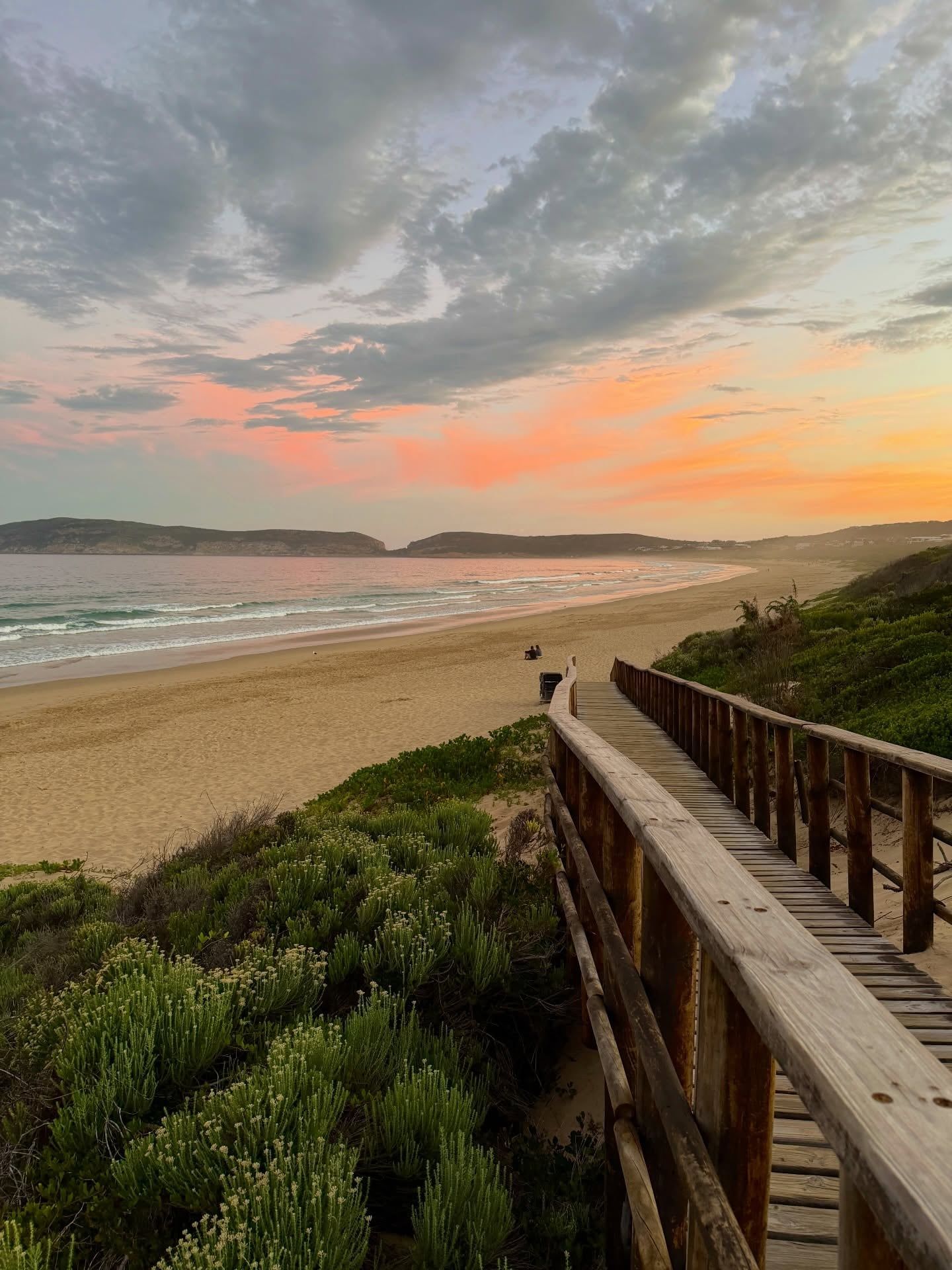
The N2 runs the whole route with the Indian Ocean to the south and the Outeniqua and Tsitsikamma mountains to the north; in places the forest canopy closes right over the road. That forest — about 605 km² of contiguous indigenous trees — is among the largest patches of afro-montane forest in southern Africa. Outeniqua yellowwoods form the ceiling, some centuries old, and the Tsitsikamma Big Tree, a short walk from the N2 near Storms River Village, is the famous specimen. Above and between the trees grows fynbos: ericas and proteas flowering through the southern year.
Between forest and sea sits the water. The Wilderness section strings together a chain of lakes and the Touw River, calm enough for family canoeing. At Knysna, two sandstone cliffs — the Heads — guard the mouth of the country's best-known estuary, home to the Endangered Knysna seahorse. Off Tsitsikamma, the seabed has been closed to fishing since 1964.
Start with the climate, because it explains the name. Rain falls in every month, with June averaging about 12 rain days, so the coast stays green while the rest of the Western Cape browns off in summer. Daytime highs run 20–28°C from November to March; winter in George sits between 8 and 20°C. Inland, the region climbs over the Outeniqua Pass — 55 km from George — to Oudtshoorn and the Swartberg, where karoo scrub and the Cango cave system replace the forest entirely.
The Garden Route's defining story is the woodcutters. From a single colonial post in 1777 to the late 1930s, families harvested the Knysna forests, living so far inside the trees that they became a closed community with their own customs and vocabulary. Their decline, and the stripping of the forest they worked, is documented in the Knysna Museums — worth an hour in town between the lagoon and the Heads.
The forest elephants carry similar weight locally. Hundreds roamed here in the 1800s; by the 1930s, logging and hunting had cut them to a handful. No one can confirm how many survive today, if any, and that uncertainty has made them the region's emblem — you'll spot the elephant on trail markers and shopfronts around Knysna.
The modern tradition is the Knysna Oyster Festival, running since 1983: about ten days each July of fresh oysters and South African wine in a town that swells for the occasion. July also brings peak whale season, and August–September the wildflowers, so the coast's busiest stretch is actually midwinter. For most South Africans, though, the route means something simpler — the family road trip, first car, school holidays. It's malaria-free, forgiving to drive, and still the country's default answer to "where should we go?"
The Knysna forest elephants were once the country's only free-roaming forest population, numbering in the hundreds. Today their survival is unconfirmed — occasional dung and footprint finds keep the question open.
The Knysna seahorse lives in only three estuaries on Earth, all on the Garden Route. It was the first seahorse listed as Endangered on the IUCN Red List.
The Tsitsikamma Marine Protected Area dates to 1964, making it Africa's oldest MPA. It is a 100% no-take zone — nothing may be fished or collected from its waters.
Bloukrans Bridge stands 216 m above the Bloukrans River and hosts the world's highest commercial bridge bungy jump. Non-jumpers can walk the Sky Walk to the platform.
The Otter Trail admits a maximum of 12 hikers per day on its 42.5 km, five-day route, and the serviced huts sell out roughly a year in advance.
The entire Garden Route is malaria-free, unlike Kruger and the Lowveld. No prophylaxis is needed, which is a large part of its family appeal.
The park contains roughly 605 km² of contiguous indigenous afro-montane forest — comparable to the area of Singapore — among the largest such patches in southern Africa.
The core Mossel Bay to Storms River stretch is about 200 km and takes 2–3 hours non-stop — but that defeats the purpose. Most travellers allow 4–5 days for the highlights, and operators recommend 5–7 nights. Add Oudtshoorn, the Cango Caves and Addo Elephant National Park and you'll want 7–10 days.
SANParks charges daily conservation fees per section (1 Nov 2025 – 31 Oct 2026): Storms River Mouth costs R367 per international adult, R82 for South Africans; Wilderness is R235 and Knysna R231 for internationals. The Plaatbos/Goesa forest trails and Big Tree charge R96, card only. A Wild Card exempts you from all daily fees.
Yes, entirely. No prophylaxis is needed anywhere along the route, unlike Kruger and the Lowveld. That malaria-free status, combined with the easy N2 driving, is why it's South Africa's most popular family road trip.
Southern right whales pass the coast from June to November, peaking July–September. Good shore-based viewing includes the cliff paths and Reebok's Kusweg near Mossel Bay; boat cruises run from Mossel Bay, Knysna and Plettenberg Bay harbours.
Book through SANParks (sanparks.org or +27 12 428 9111). Bookings are only accepted 11 months or less in advance, opening on the first working day of each month, and the trail — capped at 12 hikers per day — sells out almost immediately. It costs R2,561 per person plus a 1% levy and R55 admin fee, including four nights in serviced huts, a trail book and tide tables. Watch the cancellation list.
George Airport (GRJ) is the route's own airport, a 50-minute flight from Cape Town International, with rental cars at the terminal. Many travellers instead fly into Cape Town, rent one-way (drop fee around R1,800) and fly out of Gqeberha after the 2-hour drive east from Storms River.
It's considered one of South Africa's safer tourist routes, but take standard precautions. Don't drive after dark — the N2 is poorly lit and you can meet baboons, livestock, pedestrians or unlit vehicles. Park in secure areas, keep valuables out of sight, refuel at major stations, and avoid township areas without a registered local guide.
No. The N2 is well-surfaced and towns are frequent, so a normal rental car handles the whole route. Note that some scenic detours, including parts of Route 62 and the Swartberg Pass, are gravel and better suited to confident drivers.
It's the most threatened seahorse in the world and the first to be listed as Endangered on the IUCN Red List. It survives in only three estuaries on Earth, all on the Garden Route, with Knysna the best known. You can see live specimens in the SANParks aquarium on Thesen Island in Knysna.
The headline act is the 216 m Bloukrans Bridge bungy — the world's highest commercial bridge bungy. Beyond that: Tsitsikamma canopy tours and ziplines, kayak and lilo trips up the Storms River gorge, the Otter and Tsitsikamma hiking trails, and paragliding over Wilderness. Most operators are based in Storms River Village and Plettenberg Bay.
Browse verified tours with free cancellation and instant confirmation.
Find Tours