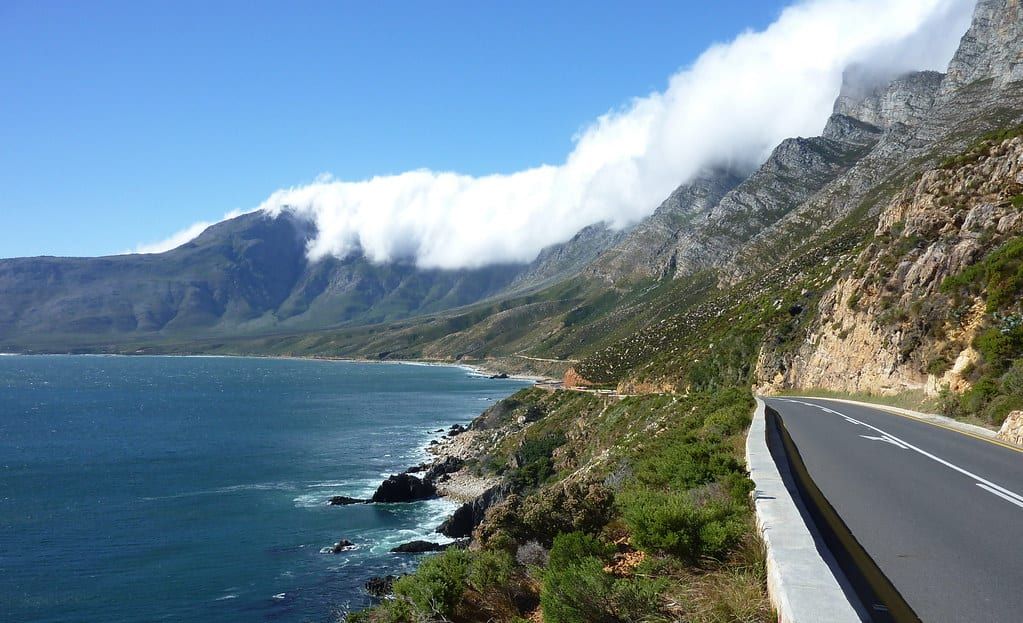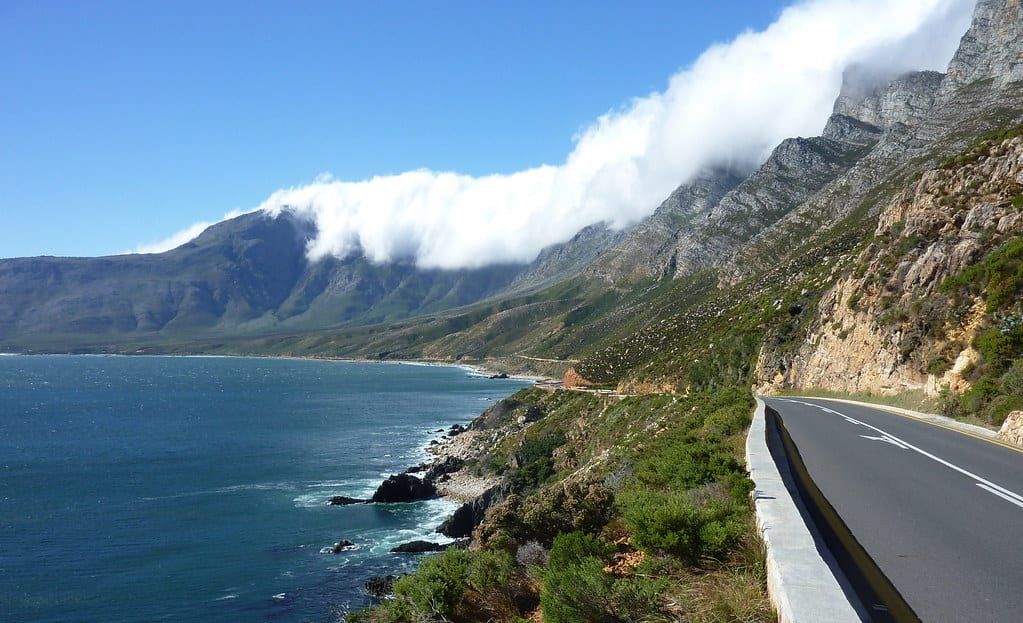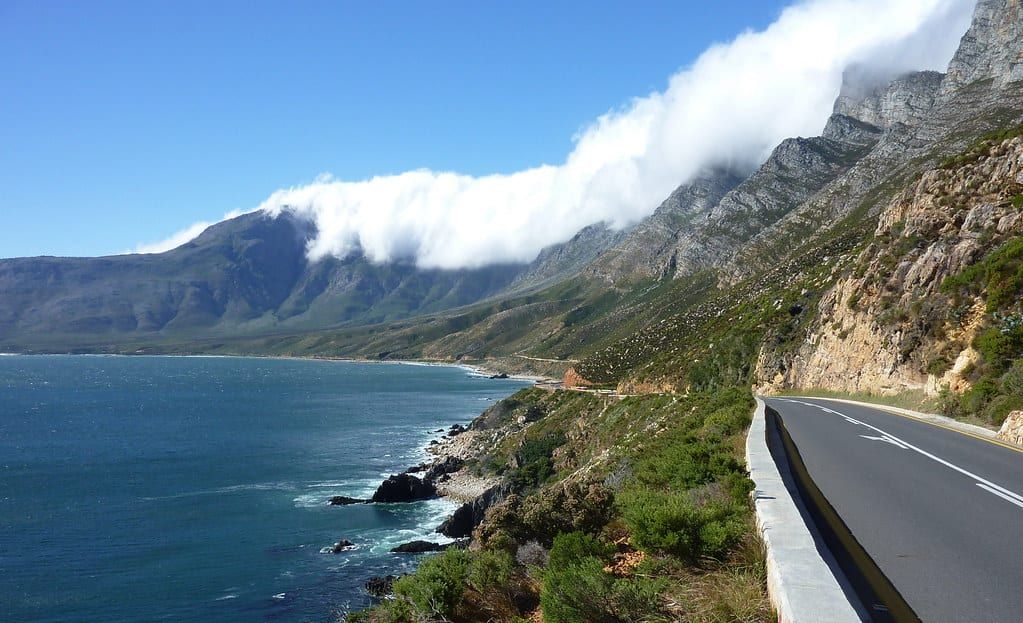
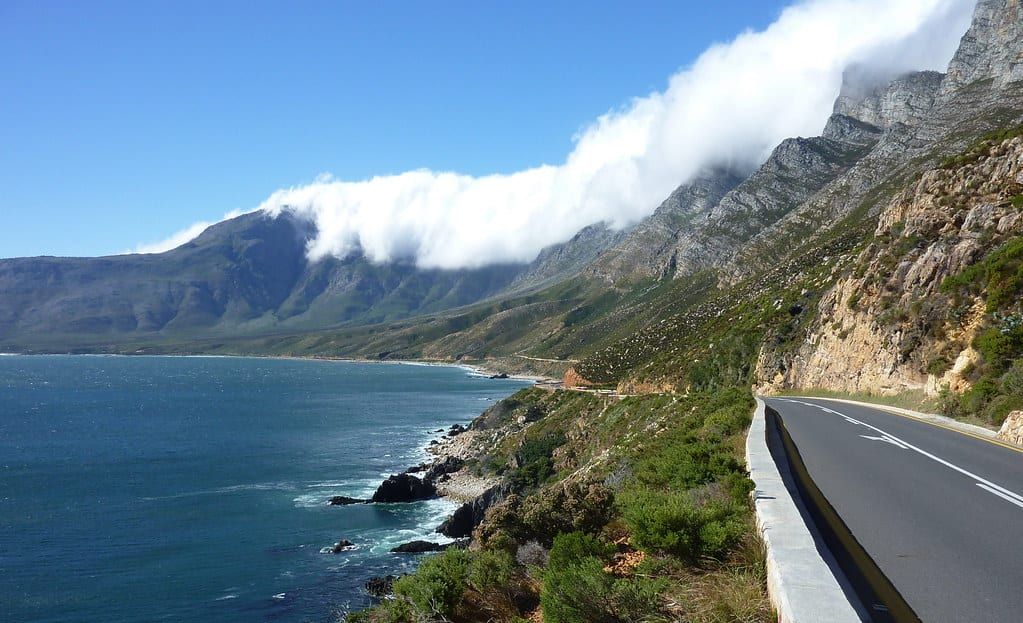
Five days is the sweet spot for the Garden Route — enough to drive the roughly 200 km of coast from Mossel Bay to Storms River at a human pace, with either a safari or a Klein Karoo loop to finish. This plan starts in Cape Town, sequences four overnight bases, and ends with the decision most guides quietly make for you: your departure airport dictates your final day.
Garden Route in 5 Days at a Glance
The Garden Route is the stretch of South Africa's south coast between Mossel Bay in the Western Cape and Storms River in the Eastern Cape, driven along the N2 past George, Wilderness, Sedgefield, Knysna and Plettenberg Bay. The core drive takes 2–3 hours non-stop, which would be a waste. Most of it sits inside Garden Route National Park — 1,210 km² of indigenous forest, fynbos, lakes and protected coastline, proclaimed in 2009.
Cape Town sits 385 km (about 4 hours) west of Mossel Bay; Gqeberha (Port Elizabeth) sits 190 km (2 hours) east of Storms River. So the trip is really a 775 km corridor with the famous bit in the middle. Here's the whole plan on one line each:
| Day | Route | Distance | Driving | Sleep |
|---|---|---|---|---|
| 1 | Cape Town → Mossel Bay → Wilderness | 435 km | ~4.5 h | Wilderness or Sedgefield |
| 2 | → Knysna (via the Heads) | 45 km | ~35 min | Knysna |
| 3 | → Plettenberg Bay (Robberg) | 32 km | ~25 min | Plettenberg Bay |
| 4 | → Nature's Valley → Storms River Mouth | 75 km | ~1 h | Storms River Mouth |
| 5 | → Addo / Oudtshoorn / Jeffreys Bay | 80–300 km | 1–3 h | Addo or Oudtshoorn |
Shorter on time? Drop the full Knysna day and merge it with the Wilderness afternoon, skip Addo, and you have a 3-day Garden Route plan that still touches every headline stop. A week lets you unhurried the hiking and add Oudtshoorn properly — our 7-day itinerary covers that version. Five days is the compromise that works: every stage is short, so the driving never eats the day.
One decision shapes everything else, and you should make it before booking anything: drive one-way and fly out of Gqeberha, or loop back to Cape Town through the Klein Karoo. The Logistics section below works through the trade-offs.
Day 1: Cape Town to Mossel Bay and Wilderness
Day 1 is the longest driving day of the trip, so start early and decide your approach road the night before. The pay-off is a proper Garden Route evening: half a day in Mossel Bay at the official start of the route, then forest and river time in Wilderness before dark.
Two ways to start the drive
The direct N2 run to Mossel Bay is 385 km, about 4 hours. The alternative — south through Hermanus and around Cape Agulhas — stretches the day to 540 km, so it earns its place only in whale season.
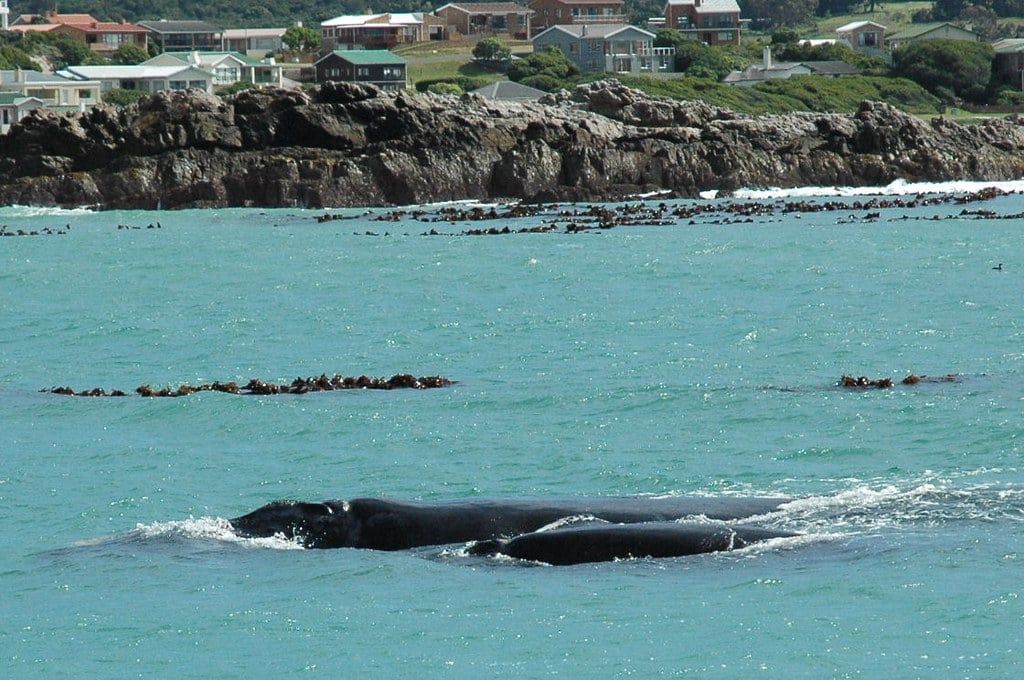
Hermanus is the best land-based whale-watching spot in the country: southern right whales are in the bay from June to December, and the 10 km Cliff Path along the shore costs nothing. September is the single best month. Between roughly June and October, budget the extra two hours and walk a stretch of the path; from November to May, skip it and take the N2 — you'll see the same coastline later from Mossel Bay's cliffs. If you do go via Agulhas, the southernmost tip of Africa is a signed detour 260 km out of Cape Town.
Mossel Bay in half a day
Mossel Bay is the official start of the route, and it packs well. The Bartolomeu Dias Museum complex covers the bay's claim to history — Bartolomeu Dias made the first European landing on this coast here in February 1488 — and the Post Office Tree, the old milkwood where sailors left mail for passing ships, stands beside it. Santos Beach and The Point are both minutes from the centre; The Point is where the St Blaize trail begins.
That trail runs 14 km along the cliffs to Dana Bay, starting at the Cape St Blaize Cave, and you must sign in at the Golf Estate checkpoint. You won't have time for all of it today — hike the first hour west and turn back, or skip it and just watch for whales from the clifftops. Running late? The museum, the tree and a swim at Santos is a legitimate half-day.
Wilderness and Sedgefield in the afternoon
It's only 50 km (40 minutes) from Mossel Bay to Wilderness, so arrive mid-afternoon with daylight to spare. Stop first at the Map of Africa viewpoint on the hillside above the Kaaimans River valley — the river's course resembles the African continent, which is the whole point of the stop.
Then head into Ebb and Flow, the SANParks rest camp on the Touw River. Five day-visitor trails run from 3 km to 10 km through the forest; the Giant Kingfisher trail to its waterfall is the favourite, and the short Bosduif Loop gives you the viewpoint without the sweat. You can also swim or rent a kayak and paddle the Touw. Sedgefield, 20 minutes further east, has quiet beaches and the Wild Oats farmers' market (Saturdays 8 am–12 pm) if your dates line up. Sleep in Wilderness or Sedgefield tonight — Ebb and Flow is the best-positioned option of the lot.
Day 2: Knysna — Heads, Lagoon and Oysters
Today is the shortest drive of the trip — 30 km from Sedgefield, 45 from Wilderness — and a full day on foot and on the water. That contrast is the point of a Knysna day.
The Knysna Heads
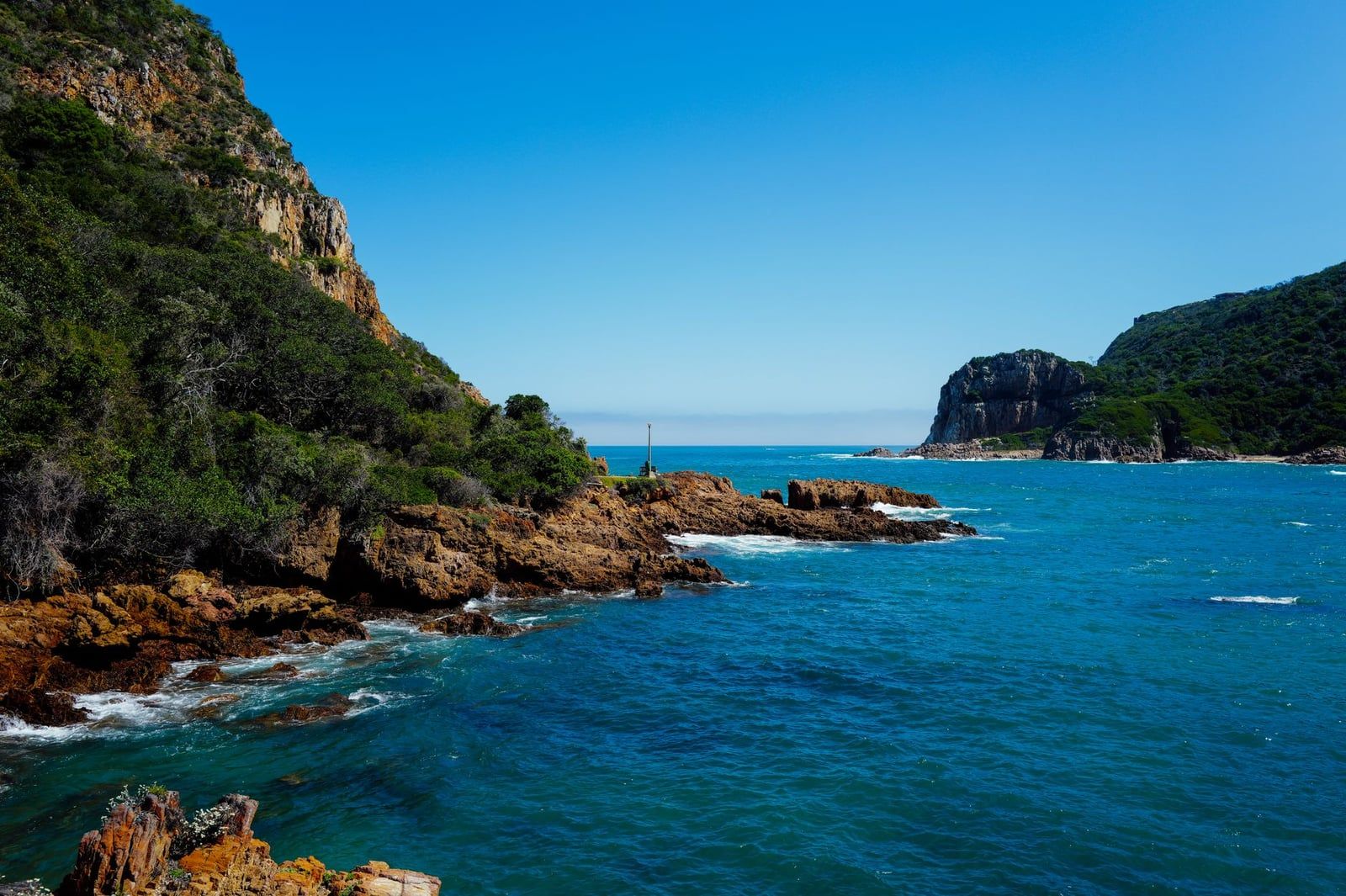
Two sandstone cliffs guard the narrow mouth of the Knysna estuary, and the channel between them was long counted among the most dangerous harbour entrances in the world. The Eastern Head carries the viewpoints; go at sunrise or in the last hour of light, when the sandstone glows and the day-trippers have gone. The Western Head is reached by road on the other side and hides coves and forest walks below.
Down in the estuary lives the town's strangest resident: the Knysna seahorse, the most threatened seahorse on Earth, found in only three estuaries worldwide — all on the Garden Route. You can see live ones in the SANParks aquarium tank on Thesen Island.
On the lagoon
Spend the middle of the day on the water. Lagoon cruises and sunset sailing trips leave from the waterfront; in whale season (June–November) some boats run whale-watching legs out past the Heads. Back on shore, the town's oyster scene is lagoon-cultivated and taken seriously — raw with a glass of local white is the local lunch. If your trip lands in July, the Knysna Oyster Festival runs about ten days of oysters, wine and running races, and the town triples in size.
Forest and beaches for the spare hours
Hikers should point the car inland instead: the Diepwalle section of the national park, in the old woodcutter forests north of town, has three marked trails of 7, 8 and 9 km under yellowwood canopy. The Knysna Museums tell the woodcutters' story — the industry ran from the 1770s until the late 1930s. If you'd rather not sweat, Noetzie Beach, 10 km west, ends at a cove framed by castellated private houses, and Brenton-on-Sea is the sunset spot. Sleep on the Heads or Leisure Island side of the lagoon.
Day 3: Plettenberg Bay — Robberg, Seals and Sanctuaries
Plett, 32 km east of Knysna, is where the trip's energy picks up. The standard day is a morning hike on Robberg and an afternoon choosing between the ocean and the animal sanctuaries — you won't do all of it, so pick from the options below rather than attempting the lot.
Robberg Nature Reserve
Robberg is a peninsula south of town with three circuits, from a 30-minute stroll to the full 9–10 km Point loop around the whole thing. The long circuit is one of the best day-hikes in South Africa: cliff paths, the white Witsand dune, and a Cape fur seal colony of over 6,000 animals barking below the point. Walk clockwise past the Gap — the alternative means an 80-metre trudge up loose sand.
The reserve is run by CapeNature; recent visitors report about R75 per adult at the gate, free with a Wild Card. Hours are roughly 07:00–20:00 in summer and 08:00–18:00 in winter, with no entry in the last hour — confirm on capenature.co.za. The car park fills by mid-morning in season, so this is your first stop of the day, not your second.
On the water
If Robberg wore you out, the ocean still owes you. Guided sea-kayaking runs close to the seal colony, and boat trips from the harbour go out to the same rocks. Southern right whales pass this coast from June to November, peaking July–September; dolphins and seals are year-round. Whales from a kayak are the memorable option, but in big swell it's a wet one — take the boat if you're unsure.
The sanctuaries — and how to pick animal stops
Three sanctuaries sit side by side just outside town: Monkeyland (11 primate species in free-roaming forest), Birds of Eden (the world's largest free-flight aviary — a two-hectare dome holding 3,500-plus birds of about 200 species) and Jukani, home to rescued predators. One combo ticket covers all three, and you'll need 2–3 hours. They're well run, and that matters here.
The Garden Route has no shortage of animal attractions, and the ethics vary widely. The rule: choose free-roaming, observation-based operations and skip anything that offers riding, handling or performing. Swim-with-seals trips get mixed reviews on welfare grounds — watching the colony from a boat or from Robberg's clifftops is the lower-impact version. Sleep in Plettenberg Bay tonight.
Day 4: Tsitsikamma National Park and Nature's Valley
Day 4 is the scenic crescendo. Leave Plett early — the Storms River gate opens 07:00 in summer — and take the slow road: the old R102 inland of the N2 climbs over the Grootrivier Pass before dropping into Nature's Valley, where a white beach sits between the river mouth and a wall of forested mountains. It's 68 km from Plett to Storms River via the N2; the R102 detour adds little distance and most of the day's beauty. Note that SANParks charges per section here: Nature's Valley costs R73 for South Africans and R165 for international adults.
Storms River Mouth
The Tsitsikamma section's headline act is the chain of suspension bridges spanning the storm-water gorge where the Storms River meets the Indian Ocean. From the rest-camp car park it's a flat, forested boardwalk of about 1 km — 45 minutes return, doable with kids and grandparents alike — with a viewpoint trail climbing above the bridges for the wider picture. Allow 1–2 hours and come at opening for empty walkways and the best light.
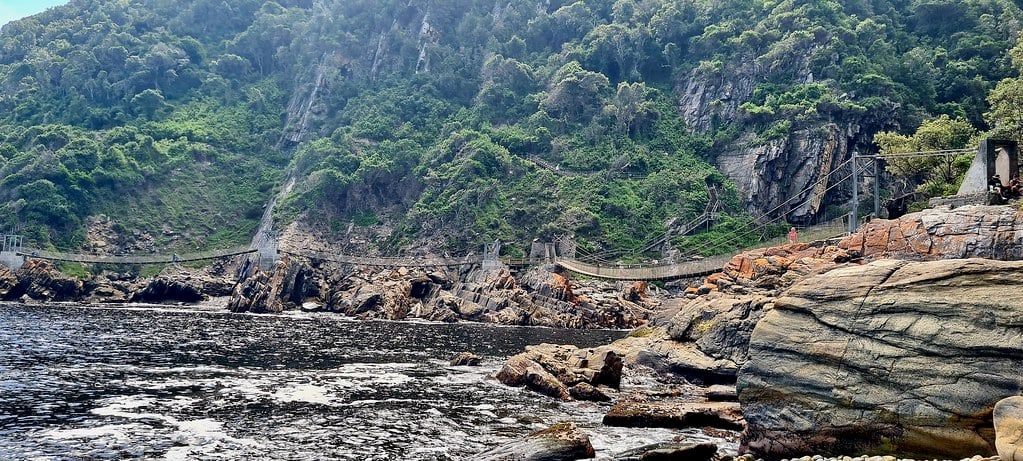
The Waterfall hike is the bigger commitment: 2–3 hours return along the coast with rock hopping and some scrambling, ending at a waterfall dropping onto a pebble beach. The gorge itself is only fully seen from the water — kayak and lilo paddles run up the Storms River from the rest camp on calmer days. Serious hikers should know the Otter Trail starts here too: 42.5–45 km over five days to Nature's Valley, capped at 12 hikers a day, R2,561 per person, and sold out roughly a year ahead — it's a trip of its own, not a Day 4 add-on.
Fees and gates: Storms River Mouth charges R82 per South African adult and R367 per international adult (1 Nov 2025–31 Oct 2026 rates), children roughly half. Gates are manned 07:00–18:00 in summer (September–April) and 08:00–17:00 in winter (May–August), enforced strictly, with penalties for overstaying. A Wild Card covers the fee — worth it if you're visiting two or more SANParks sections on this trip.
Bloukrans Bridge
Back on the N2, the Bloukrans Bridge carries the world's highest commercial bridge bungy: 216 m above the river, a free fall of about three seconds. Slots sell out — book ahead. Non-jumpers can walk the Sky Walk out to the jump platform and watch other people's faces, which is honestly half the entertainment. Even if nobody jumps, the gorge view from the deck justifies the stop.
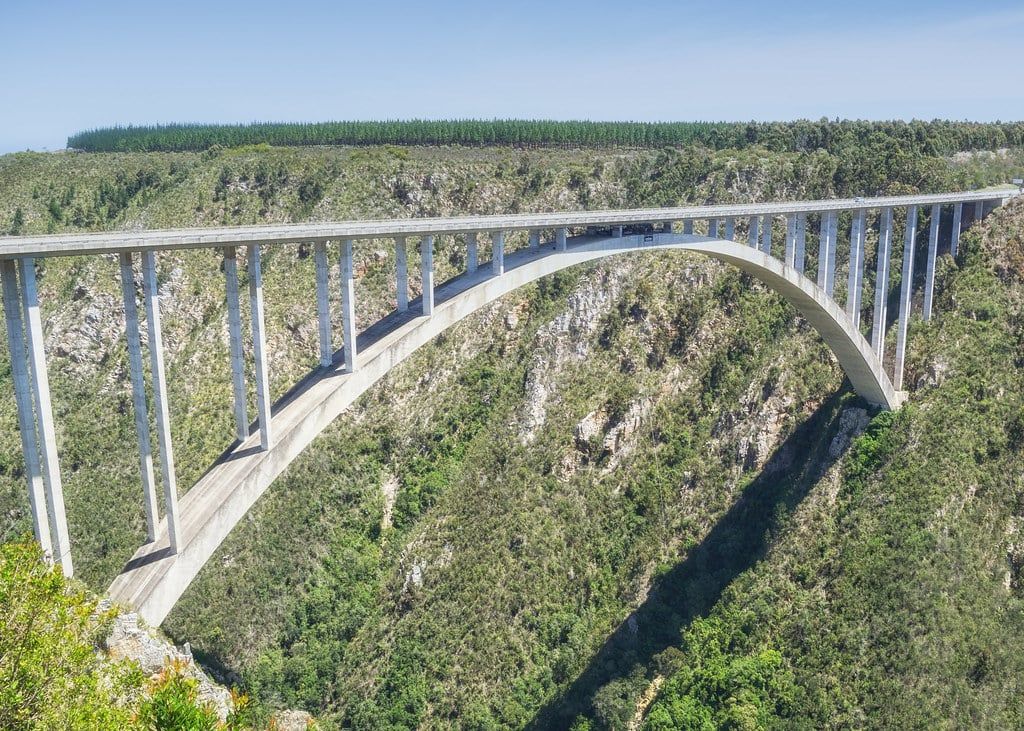
Sleep at Storms River Mouth Rest Camp itself — camping, forest huts and chalets inside the park — at The Fernery Lodge on the cliffs nearby, or backtrack 45 minutes to Plett if the park is full. Book the rest camp as early as you can; check-in is 14:00, check-out 10:00, and gate hours limit your evening anyway.
Day 5: Your Finish Line — Addo, Oudtshoorn or Jeffreys Bay
Your last day is decided by your departure airport, not by a fixed list. Flying out of Gqeberha? Take the safari. Returning to Cape Town? Take the Karoo. Here's the logic worked through.
Option A — Addo if you fly out of Gqeberha
Storms River to Gqeberha is 190 km, about 2 hours, and Addo Elephant National Park sits a short drive north of the city. Addo holds more than 600 elephants and ranks among South Africa's largest parks, with plans to become the only park in the world hosting the Big 7 — lion, leopard, rhino, buffalo, elephant plus whales and great white sharks off its coast. On a self-drive morning you'll almost certainly find herds at the waterholes; enter at the main gate, fill the tank before you go, and bring binoculars.
The daily conservation fee is R110 for South African adults and R492 for international visitors (2025/26 rates), with children at roughly half. SANParks has posted fee and booking changes for Addo taking effect 1 October 2026 — check the current rate before you commit. Stay inside the park if you can; an evening at a waterhole with a herd coming in beats any airport hotel.
Option B — the Route 62 loop back to Cape Town
Driving the route back down the N2 means repeating 500 km of road you've already seen. Route 62 through the Klein Karoo turns the return into the trip's second half: Oudtshoorn's ostrich farms, the Cango Caves, Calitzdorp's port wine, and the Swartberg Pass for confident drivers. From George it's 55 km north over the Outeniqua Pass to the caves — about 40 minutes of spectacular driving — and the whole inland loop adds roughly 160 km to the trip, but saves you from retracing the coast.
The Cango Caves, Africa's largest show-cave system, can only be visited on a guided tour: the one-hour Heritage Tour costs R150 adult and R100 child, departing hourly 09:00–16:00, closed Christmas Day. The crawl-through Adventure Tour is temporarily unavailable, so check before promising the kids tunnels. Push on to Swellendam or Montagu for the final night rather than attempting the whole distance to Cape Town in a day.
Option C — Jeffreys Bay, and where Cape Agulhas fits
Surfers flying out of Gqeberha should detour to Jeffreys Bay, South Africa's surfing capital, 80 km west of the city on the N2 — it slots neatly between Storms River and the airport. Cape Agulhas, the southernmost tip of Africa, only makes sense if you're returning to Cape Town on the coastal road: it sits 260 km from Cape Town, best combined with the Hermanus approach in reverse.
One sentence to decide by: match Day 5 to where you need to be tomorrow, and don't let a fixed itinerary override it.
Logistics: One-Way or Loop, Car Hire and N2 Driving Tips
Everything above assumes you have a car and a rough plan for where it ends up. This section settles both, plus what to know about the N2 itself.
One-way or loop?
Dropping the rental in Gqeberha and flying back to Cape Town saves roughly a day of driving and pairs perfectly with the Addo finale; the cost is a one-way drop fee of about R1,800, on top of a domestic flight. Looping via Route 62 costs no drop fee but adds a day and the longest driving stretches of the trip — which is exactly why the seven-day version exists. Here's the trade side by side:
| One-way, drop in Gqeberha | Loop back via Route 62 | |
|---|---|---|
| Final-day highlight | Addo safari finale | Cango Caves, Oudtshoorn, wine country |
| Time cost | Saves roughly a day of driving | Adds a day or more |
| Extra cost | One-way drop fee ~R1,800 plus flight | No drop fee, extra fuel only |
| Works best if | Flying out of Gqeberha | Needing the car back in Cape Town |
| Trip length fit | Best with 5 days | Better with 6–7 days |
Car hire and the no-car options
A compact car is all you need — the N2 and every detour in this itinerary are tarred (only parts of Route 62 and the Swartberg Pass are gravel, and both are avoidable). Rentals run about R350–R700 a day in season, so book early for December–February. South Africans drive on the left; if that's new to you, take your first hour slow. Full details on airports, flights and transfers are in our guide to how to get to the Garden Route.
No car? The Baz Bus runs hop-on, hop-off from Cape Town to Gqeberha, stopping at hostels along the whole route — the budget answer for solo travellers — and Intercape coaches link the bigger towns. The other no-car route is a guide: 5-day Garden Route tours run from both ends of the route, typically $700–$1,400 per person, covering the same stops with pickup included. A tour beats self-drive if you're short on time, uneasy about left-side driving, or travelling alone and want company; it costs you the freedom to linger an hour on the Robberg cliffs.
There are also tours from Cape Town and from Port Elizabeth if you'd rather start from one end only — the Gqeberha departures reverse this itinerary neatly in four or five days.
Driving the N2 safely
Speed limits are 120 km/h on dual carriageway and 100 km/h on single, and the traps between Wilderness and Knysna are famous — stick to the number. Fill up in George, Knysna or Plett; stations thin out between towns. Plan every leg for daylight: the rural N2 is poorly lit after dark, and baboons, livestock and unlit broken-down vehicles are real hazards at night. Fog can swallow the passes without warning. Keep a layers-and-rain-jacket kit, water, snacks, binoculars and offline maps in the car — park sections have patchy signal. One reassurance to close the list: the Garden Route is entirely malaria-free, so no prophylaxis and no worries on that front.
Where to Sleep Each Night
Sequenced to the itinerary above, and leaning on SANParks rest camps where they beat private lodges on position. Mid-range guesthouses in Knysna and Plett run roughly R1,000–R3,000 per night, luxury from R3,000; our fuller Garden Route accommodation guide lists individual properties.
Night 1 — Wilderness or Sedgefield. Ebb and Flow Rest Camp puts you inside the national park on the Touw River, minutes from the trailheads, with camping and cottages; glamping outfits nearby offer the same forest-and-water setting with better linen. Mossel Bay works too if you want a town evening, but Wilderness positions you better for the morning.
Night 2 — Knysna. Stay on the Heads or Leisure Island side of the lagoon for the views and the quiet. Alternative for campers: the Diepwalle forest decks in the Knysna forest — wooden platforms with roofed areas and fireplaces — are the most atmospheric beds on the whole route. Under Milkwood Resort's wooden chalets sit right on the lagoon beach.
Night 3 — Plettenberg Bay. Beachside guesthouses in the same price bands as Knysna, walkable to the sand. This is the night to take somewhere with a braai — the town's butcheries are good.
Night 4 — Storms River Mouth. The rest camp's forest huts and chalets sit metres from the suspension-bridge boardwalk, with the ocean in your ears all night; The Fernery Lodge is the cliff-top splurge nearby. Backtracking to Plett is the fallback, not the plan.
Night 5 — Addo or Oudtshoorn. A camp or cottage inside Addo keeps you with the elephants till the gate closes; an Oudtshoorn guesthouse pairs with the Route 62 return. Whichever you choose, book December–February stays months ahead — this coast fills up completely over the South African summer holidays, and SANParks accommodation in particular goes early.
When to Go and What It Costs
April–May and September–October are the best-value windows: 18–25°C days, green country, fewer crowds, lower rates. December–February is peak — 25–30°C, full beaches, peak prices, and the accommodation crunch described above. June–August is whale season, cooler at 15–20°C and wetter; June averages around 12 rain days. The whales follow their own calendar: southern rights pass from June to November, with July–September the peak, and that timing is what decides whether Day 1 goes via Hermanus or straight down the N2.
Budget roughly R800–R1,200 per person per day as a backpacker, R2,000–R3,500 mid-range with guesthouses and paid activities, R5,000 and up for the luxury tier. Fuel for the full route averages R1,200–R1,800 total. Add the park fees as you go: Storms River Mouth R82/R367 (South African/international adult), Nature's Valley R73/R165, Wilderness and Knysna sections in between — all waivable with a Wild Card, which pays for itself once you've booked two or three sections plus Addo. Budget for one splurge meal of Knysna oysters. The rest of the trip's best things — the Cliff Path, the Heads, Robberg's cliff line, the beaches — cost nothing but daylight.
Frequently asked questions
Is 5 days enough for the Garden Route?
Yes. The route itself runs about 200 km from Mossel Bay to Storms River, and 4–5 days is the recommended minimum to cover it properly. With 5 days you get the whole coast plus one finish — an Addo safari or the Klein Karoo loop. Only if you insist on a Cape Town round trip by road does 7 days become the better length.
Should I drive one-way to Gqeberha or loop back to Cape Town?
Drive one-way if you can: dropping the car in Gqeberha (drop fee roughly R1,800) and flying back saves a day of driving and ends the trip with Addo. Loop back via Route 62 if you need the car in Cape Town — the Cango Caves, Oudtshoorn and the Klein Karoo wine route make the extra day worthwhile.
When is whale watching season on the Garden Route?
Southern right whales pass this coast from June to November, with July–September the peak. Hermanus, on the Day 1 approach, is the best land-based spot (June–December, September strongest) with a free 10 km Cliff Path. Boat cruises run from Mossel Bay, Knysna and Plettenberg Bay.
How much are the entrance fees for Tsitsikamma and Addo?
SANParks daily conservation fees (1 Nov 2025–31 Oct 2026): Storms River Mouth costs R82 per South African adult and R367 per international adult; Nature's Valley R73/R165. Addo charges R110/R492. Gates at the Garden Route sections run 07:00–18:00 in summer and 08:00–17:00 in winter. Wild Card holders skip the daily fees.
Can you do the Garden Route without renting a car?
Yes. The Baz Bus runs hop-on, hop-off from Cape Town to Gqeberha with stops at hostels along the route, and Intercape coaches link the major towns. Guided 5-day small-group tours (roughly $700–$1,400 per person) cover the same stops with pickup from Cape Town or Gqeberha — the trade-off is flexibility.
Where should I stay each night on a 5-day Garden Route trip?
Night 1 Wilderness or Sedgefield (Ebb and Flow Rest Camp for position), Night 2 Knysna on the Heads or Leisure Island side, Night 3 Plettenberg Bay, Night 4 Storms River Mouth Rest Camp inside the park, Night 5 Addo or Oudtshoorn depending on how you exit. Book December–February stays months in advance.
How much does a 5-day Garden Route trip cost?
Roughly R800–R1,200 per person per day on a budget, R2,000–R3,500 mid-range and R5,000+ luxury, plus about R1,200–R1,800 total for fuel. Park fees add roughly R165–R500 per adult day depending on nationality and section, unless you carry a Wild Card. The region is malaria-free, so no medical costs there.