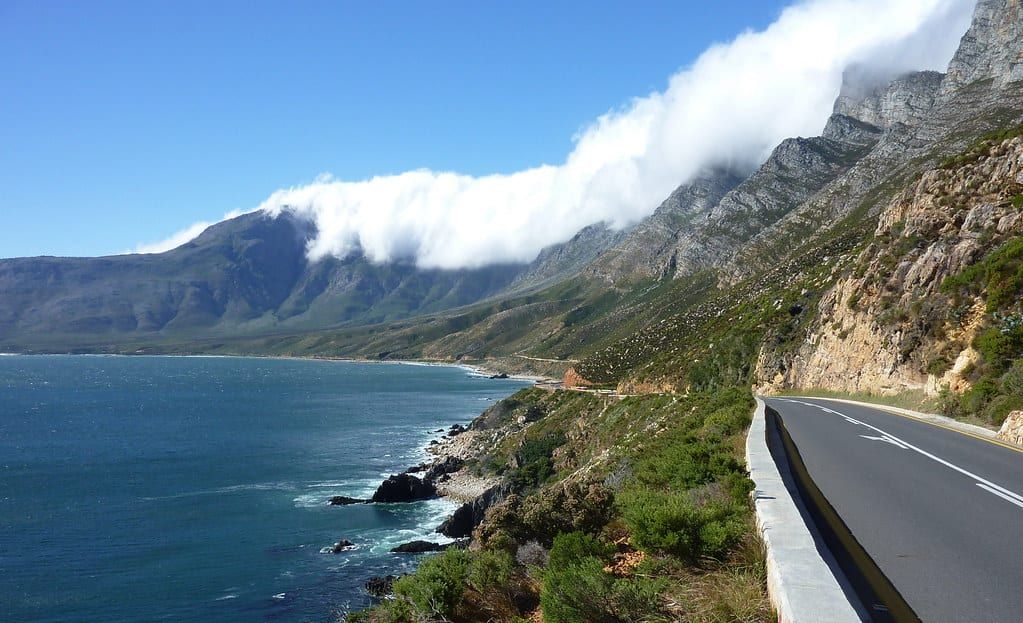
Fourteen days turns the Garden Route from a rushed highlight reel into a proper road trip. The famous stretch itself is short — roughly 200 km of coast between Mossel Bay and Storms River, with broader definitions running 300 km from Witsand — but a two-week loop from Cape Town lets you bolt on the Overberg whale coast, De Hoop's dunes and fynbos, two full safari days in Addo and a Klein Karoo return on Route 62, without ever driving more than about five hours in a day.
The plan below is a loop: out along the coast, back through Oudtshoorn and the wine valleys of Route 62, roughly 2,000–2,200 km in total. If you only have a week, our 7-day Garden Route itinerary covers the essentials — but two weeks is what buys you two-night bases, lazy lagoon mornings and a safari finale.
The Garden Route in 14 Days: The Route at a Glance
Officially, the Garden Route is the coastal run from Mossel Bay to Storms River along the N2, past George, Wilderness, Sedgefield, Knysna and Plettenberg Bay. Much of it sits inside Garden Route National Park, proclaimed in March 2009, which spans about 1,210 km² of forest, fynbos, lakes and estuary — including the Tsitsikamma Marine Protected Area, Africa's oldest, established in 1964.
Seven days covers that core at a gallop. Fourteen lets you start with Cape Town and the Peninsula, add the whale coast at Hermanus and the solitude of De Hoop, finish with real safari time in Addo Elephant National Park, and come home through the Karoo instead of repeating the N2. Here is the whole trip at a glance.
| Overnight base | Nights | Days | Getting there |
|---|---|---|---|
| Cape Town | 2 | 1–2 | Arrive; collect the car late on Day 2 |
| Hermanus / De Hoop | 2 | 3–4 | ~2 h via Clarence Drive, then via Cape Agulhas |
| Wilderness | 2 | 5–6 | ~3 h from De Hoop via Mossel Bay |
| Knysna | 2 | 7–8 | 45 km / ~35 min |
| Plettenberg Bay | 2 | 9–10 | 32 km / ~25 min |
| Addo / Oudtshoorn | 3 | 11–13 | ~300 km to Addo, then ~390 km to Oudtshoorn |
Day 14 is the final leg: Oudtshoorn to Cape Town via Route 62, about 420 km and five hours plus stops. Total loop distance lands around 2,000–2,200 km.
One-Way or Loop? Choosing Your Route and Direction
Drive the loop. A one-way run from Cape Town to Gqeberha (Port Elizabeth) is the shorter option — you skip the ~800 km return — and most rental companies allow it, but expect a drop fee of roughly R1,800 and a flight out of a different airport than you arrived at. It is the right call if you are continuing elsewhere in South Africa after the coast.
With a full two weeks, though, the loop wins on simple arithmetic: the Route 62 return through Oudtshoorn, Barrydale and the Robertson wine valley is a destination in its own right, so you are not paying kilometres to retrace scenery. Outbound you get whales and ocean; inbound you get caves, meerkats, ostrich country and wine. Two different trips for one rental.
Does direction matter for the views? No. The road alternates coastal and inland stretches either way, and west-to-east versus east-to-west comes out roughly even. What matters is that outbound and inbound legs differ — which the loop gives you for free. If you would rather not drive at all, guided tours from Cape Town cover the route in three to five days with pickup included.
The 14-Day Itinerary, Day by Day
The pattern is simple: short hops between two-night bases, with the two long days — Addo to Oudtshoorn and Oudtshoorn to Cape Town — split across the back end of the trip. Each day below lists the leg, the headline activities and what to cut if you're short on time.
Days 1–2: Cape Town and the Peninsula
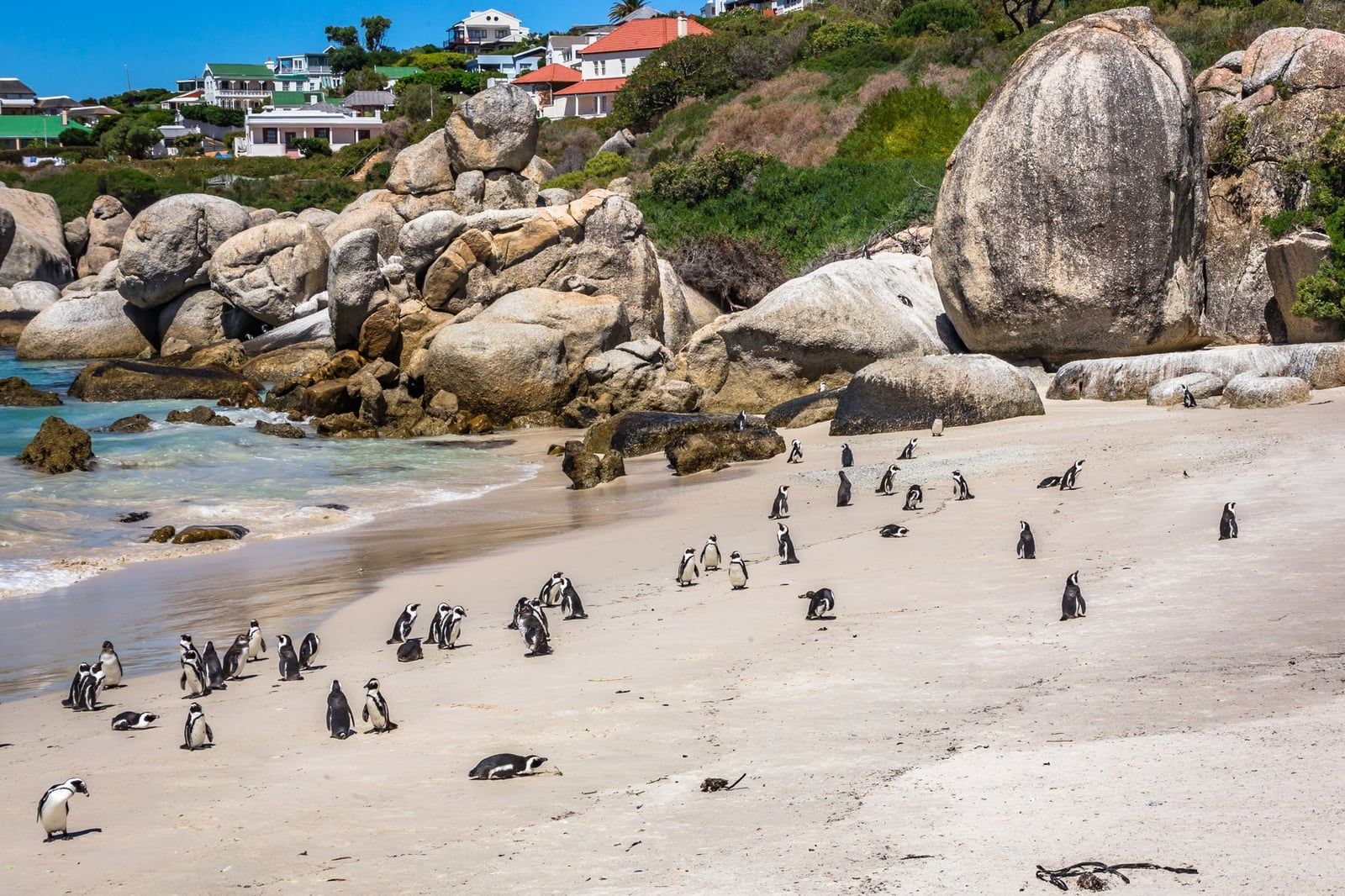
Spend two days on foot and in ride-hails while you adjust: Table Mountain first (book the cableway slot online — cloud closes it often), then the Peninsula loop via Chapman's Peak Drive, the Cape Point lighthouse and the African penguin colony at Boulders Beach in Simon's Town. Collect the rental car at the end of Day 2 so you are not paying for city parking you don't use. Spare half-day: Kirstenbosch Botanical Gardens on the mountain's eastern slopes.
Day 3: Cape Town to Hermanus via Clarence Drive (~2 hours)
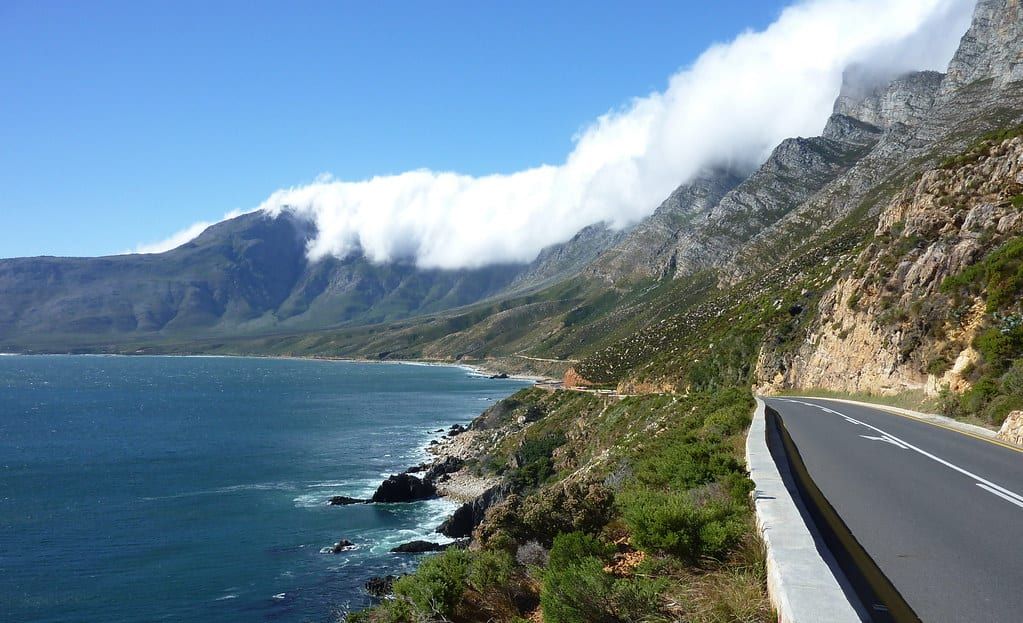
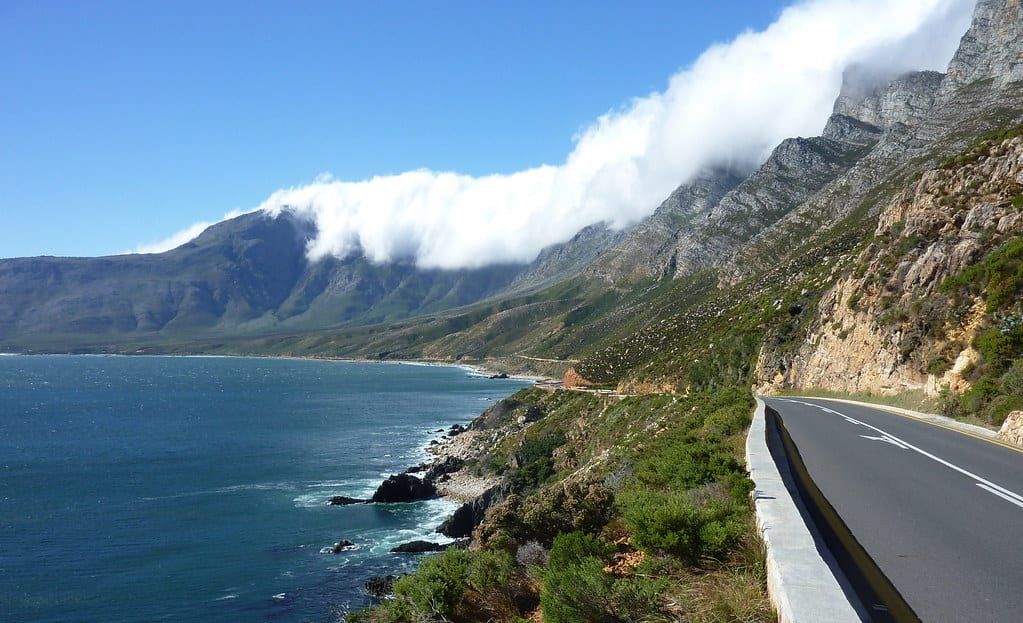
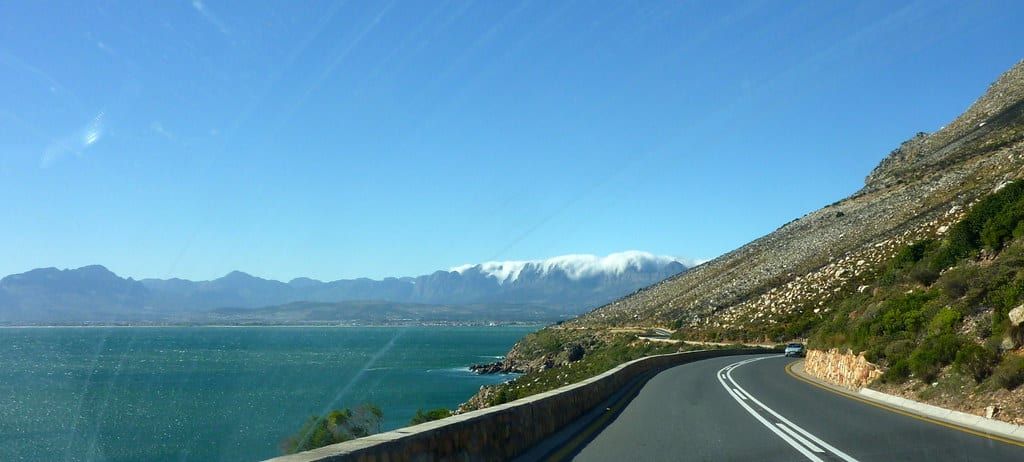
Take the R44, not the N2. Clarence Drive hugs False Bay between Gordon's Bay and Rooi-Els — one of the world's great coastal roads — and drops you at Betty's Bay, home to the Stony Point penguin colony, a quieter alternative to Boulders. Hermanus is the planet's best town for land-based whale watching: southern right whales cruise close inshore from June to November, and a costumed whale crier blows his horn when sightings happen. Walk the Cliff Path for free views; boat trips run from the harbour. Overnight in Hermanus.
Day 4: Hermanus to De Hoop via Cape Agulhas
Detour first to Cape Agulhas, the official southernmost tip of Africa, where the two oceans officially meet — the detour adds 1.5–2 hours to the day and is worth every one. Then continue to De Hoop Nature Reserve, 34,000 hectares of fynbos and pale limestone dunes with a marine reserve reaching 5 km offshore. Bontebok and Cape mountain zebra graze the plain; southern right whales calve in the shallows between July and September, one of the best shore-based whale-watching spots in the country. After day visitors leave, the reserve goes almost silent. Overnight inside it.
Day 5: De Hoop to Wilderness (~3 hours)
Break the drive at Mossel Bay, where the world's longest over-ocean zipline runs more than 1 km across the water — a 30-second adrenaline hit between coffee stops. Bartolomeu Dias made the first European landing on this coast here in 1488, if you want a museum stop. Roll into Wilderness by mid-afternoon and walk up to the Map of Africa viewpoint, where the Kaaimans River gorge below looks convincingly like the shape of the continent. Two nights here.
Day 6: Full Day in Wilderness
Canoe the Touw River — a two-seater costs about R350 for a half day — then hike the Giant Kingfisher trail to the waterfall, three to four hours return through indigenous forest. It is part of the Wilderness section of the national park (international adult conservation fee R235 per day), a chain of lakes and wetlands that is the calmest, most family-friendly stretch of the whole route. Adrenaline options: paragliding over the coastline from the hills above town. Otherwise, do nothing on the beach. That is allowed too.
Days 7–8: Knysna (45 km, ~35 minutes)
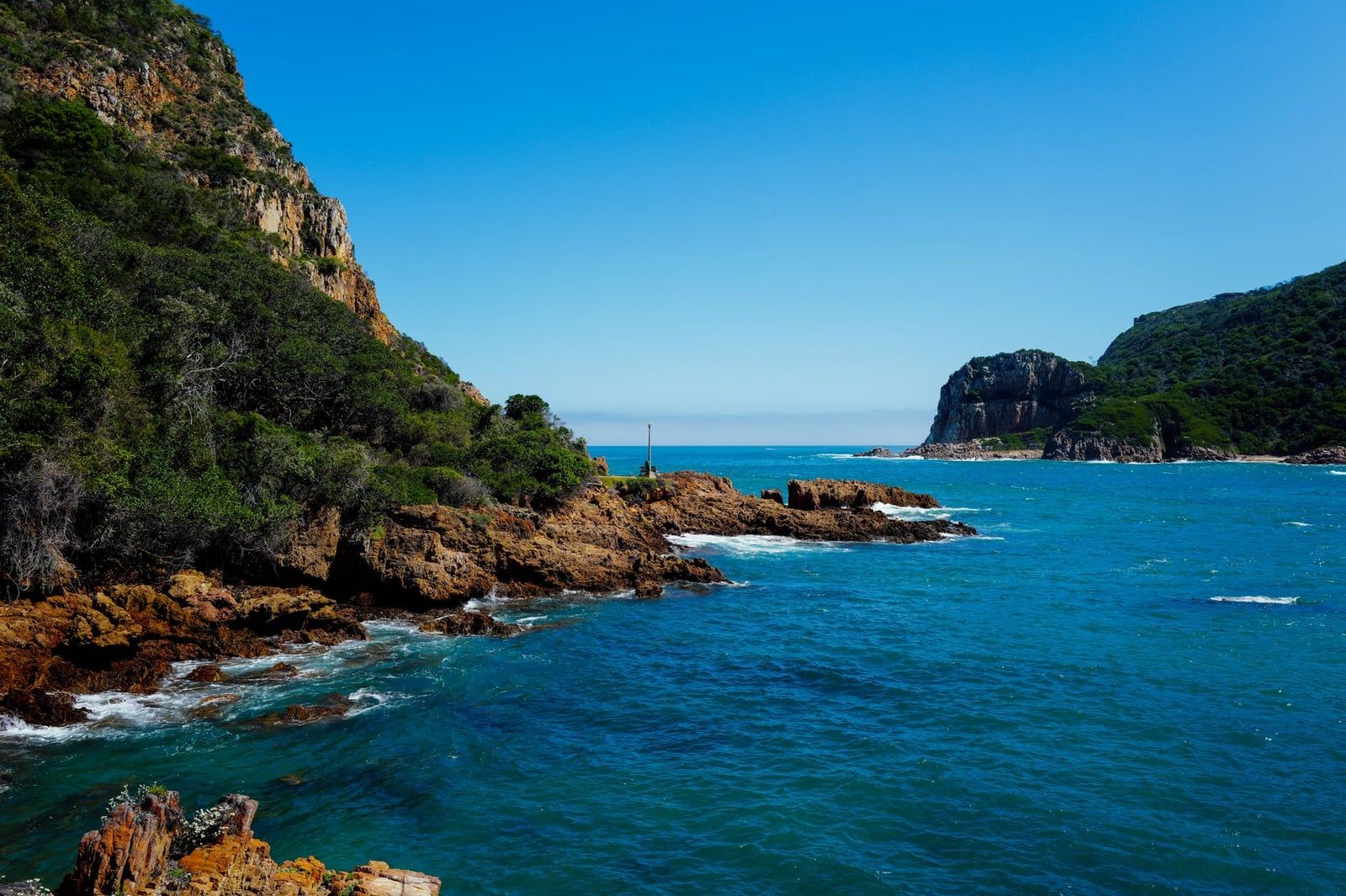
Shortest hop of the trip. Knysna is built around its lagoon and the Heads — two sandstone cliffs guarding a narrow, notoriously dangerous mouth — best seen from the Eastern Head viewpoints or from the water. A sunset lagoon cruise runs about R1,050 per person; the 2.5-hour daytime version about R1,200. The four-hour Featherbed eco experience (ferry, guided nature walk and lunch under the western Head) costs roughly R701 per person and is the town's signature outing.
Eat oysters. Knysna farms them in the lagoon, and the July Oyster Festival — running since 1983 — serves them for about ten days straight. Also worth an hour: the SANParks aquarium tank on Thesen Island, which holds live Knysna seahorses, the most threatened seahorse on Earth, found in only three estuaries worldwide, all on this coast. The lagoon is also the route's best stand-up paddleboarding.
Days 9–10: Plettenberg Bay and The Crags (32 km, ~25 minutes)
Plett is the beach base. Hike the Witsand circuit in Robberg Nature Reserve — two to three hours around a peninsula carrying a noisy Cape fur seal colony, with whales offshore from June to November. Walk clockwise past the Gap to avoid an 80-metre trudge up loose sand, arrive before 09:00 in season because the car park fills, and pay the CapeNature gate fee at the entrance (recently R75 adult; Wild Card holders free).
Between Plett and Storms River, The Crags holds two record-holders: Monkeyland, the world's first free-roaming multi-species primate sanctuary, and Birds of Eden, the world's largest free-flight aviary — a combo ticket covers both. You can also swim with seals off Robberg. If you swap one thing, make it this: use Day 10 for a Tsitsikamma day trip rather than more beach time — the forest section is the least skippable part of the route.
Day 10 alternative: Tsitsikamma day trip
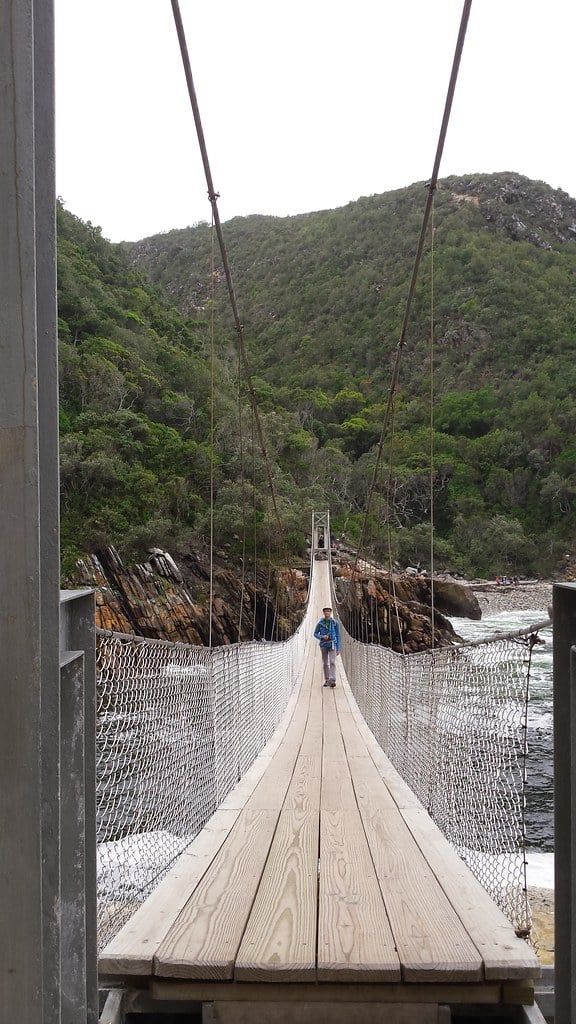
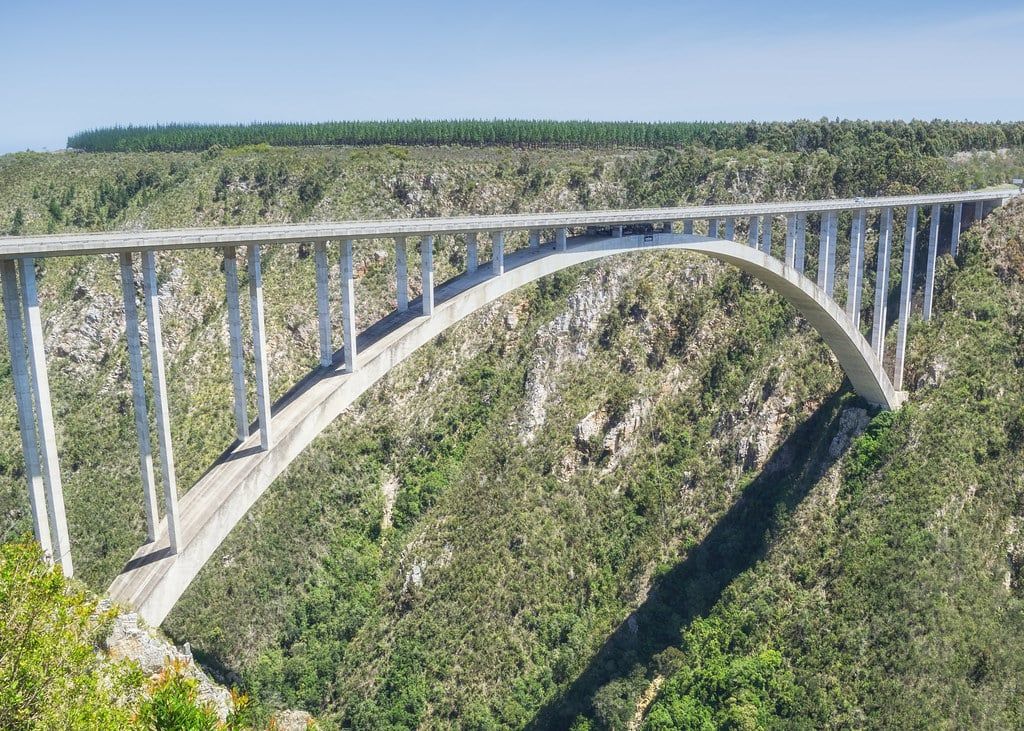
Plett to Storms River is 68 km, about 50 minutes. At Storms River Mouth, a short boardwalk through coastal forest leads to the suspension bridges spanning the gorge where the river meets the ocean — allow an hour or two, and go early: the day gate opens 07:00 in summer and closes 18:00 sharp, with the international adult conservation fee at R367. Upstream in the gorge, kayak-and-lilo trips paddle to a waterfall. Back on the N2, Bloukrans Bridge carries the world's highest commercial bridge bungy, 216 m above the river; non-jumpers can walk the SkyWalk to the platform or just watch from the deck. Canopy tours zip through the yellowwoods on the slopes above.
Day 11: Tsitsikamma to Addo (~300 km, ~3.5 hours)
One straight, easy N2 day. Finish anything left in Tsitsikamma in the morning — a second walk to the suspension bridges, or the Big Tree, a centuries-old Outeniqua yellowwood a short stroll from the N2 — then drive east past Gqeberha to your Addo-area base, arriving with daylight to spare. Book an afternoon game drive if you can't wait until tomorrow, or just sit by the pool. After ten days of coastal driving, a slow afternoon is not wasted.
Days 12–13: Addo Safari, Then Addo to Oudtshoorn (~390 km, ~4.5 hours)
Addo Elephant National Park is SANParks' big-five park and home to some of the densest elephant viewing in Africa — herds of 100-plus gather at the waterholes. A regular 2WD is fine; most of the park is explorable without a 4x4. Self-drive the main loops in the morning when the elephants drink, then take a guided open-vehicle drive for the tracking and the commentary. Buffelsdrift Game Lodge, near the park, sells open-vehicle drives to non-guests at about R745 per adult, and runs guided giraffe walks.
On Day 13, give Addo the early morning, then drive southwest to Oudtshoorn, the ostrich capital of the world in the Klein Karoo below the Swartberg range. The leg is about 390 km and 4.5 hours — leave by lunch or you arrive in the dark, which you should not do. If you would rather not self-drive the safari at all, the region's Garden Route and safari tours handle it with a guide.
Day 14: Meerkats, Cango Caves and Route 62 Home (~420 km, ~5 hours)
Get up before dawn. Meerkat sunrise experiences near Oudtshoorn are led by guides who have studied the colonies for around 20 years, and you sit metres from the burrow as the mob emerges, stretches and warms up in the first sun. Then the Cango Caves, Africa's largest show-cave system: the one-hour Heritage Tour (R150 adult, departing hourly 09:00–16:00) is the easy option; the squeeze-through Adventure Tour is the one to tell people about afterwards — check availability when booking, as it is not always running.
Then Route 62 west. Stop in Barrydale for lunch and a winery tasting, and again in Robertson, the Breede River Valley's wine heartland, before the final hour into Cape Town. It is a big day — book a late flight or a Cape Town hotel for the last night rather than pushing for a same-evening departure.
Where to Stay: Overnight Bases and How Many Nights
This itinerary is built on two-night bases, and that is the point of taking fourteen days: every stop gives you a full unpacked day with day trips that don't involve moving the car. The self-drive specialists' standing advice is to allow two weeks for the Garden Route and limit one-night stays precisely because a night-every-night schedule turns the trip into a driving exam. On this plan only the Karoo tail is a single night.
Character picks, by stop: Wilderness for lakes, forest and national-park rest camps (Ebb-and-Flow sits right on the Touw River); Knysna for waterfront restaurants and lagoon views; Plettenberg Bay for beaches and easy reach of the sanctuaries; De Hoop for solitude and whales — book early, it is remote and small. Addo is where a splurge actually pays, since the safari is the trip's finale and a pool, a guide and a boma dinner beat a roadside motel there. Budget stretches furthest in Wilderness and Oudtshoorn, where guesthouses and self-catering places are cheap and good. Family and lodge-style rooms along the route run about R1,500–3,600 per night, with camping and backpackers at every stop below that. Our full Garden Route accommodation guide breaks down the options town by town.
Booking rules: December–January and South African school holidays fill the coast months ahead, and De Hoop and SANParks rest camps sell out first. Book everything then, but always on flexible or free-cancellation rates — the whole point of a self-drive is the freedom to linger where the weather is good.
What a 14-Day Trip Costs: Sample Budget
Figures below are for two travellers, in rand with rough US-dollar equivalents. Fuel is scaled to the full loop; the reference point is a week-long ~1,900 km round trip in a large 4x4 that cost R4,500–5,000 in petrol, so a small economy car over 2,100 km lands in the same ballpark or less.
| Item | Cost | Notes |
|---|---|---|
| Car rental (13 days) | €30–60/day | Economy cars at the low end; no 4x4 needed |
| Fuel (~2,100 km loop) | ~R4,500–5,000 total | Less in a small car; more in a big 4x4 |
| Accommodation (13 nights) | R1,500–3,600/night | Mid-range to lodge tier; backpackers far cheaper |
| Meals | R150–240 pp per restaurant meal | House wine R40–60 a glass; self-catering cuts this hard |
| Headline activities | R350–1,200 pp each | Canoe R350, Featherbed ~R701, game drive R745, lagoon cruise R1,050–1,200 |
Add SANParks daily conservation fees if you enter the park sections — R235 international adult at Wilderness, R231 at Knysna, R367 at Storms River Mouth per day — or buy a Wild Card, which waives daily fees across the system and pays for itself if you visit two or more sections plus Addo. On the savings side: the whale watching from Hermanus's Cliff Path and De Hoop's dunes costs nothing.
When to Go: Timing Your Two Weeks
The honest trade-off: whales or beach weather. Southern right whales pass this coast from June to November, with peak calving in July and August — but that is Western Cape winter, when George sits around 8–20°C and June averages roughly twelve rain days. November to March brings highs of 20–28°C and swimmable water, with almost no whales. Pick your season by what you would regret missing more.
The all-round answer is a shoulder month. April–May and September–October give mild 18–25°C days, lower prices and thinner crowds, and September–November adds the spring fynbos bloom — proteas and ericas flowering across the whole coastal strip. If you want whales and decent weather together, September is the month.
Avoid December–February unless you are booking far ahead: it is the busiest, most expensive stretch of the year, with every guesthouse from Wilderness to Plett full and the beaches with them. July has its compensations — the Knysna Oyster Festival runs about ten days — and winter rates are the lowest of the year.
Driving, Safety and Practical Tips
You drive on the left. The local courtesy is to pull onto the paved left shoulder to let faster traffic pass, and to flash your hazards two or three times afterwards as a thank-you — do both and you'll read as a local within a day. Brown road signs mark tourist attractions; speed limits are camera-enforced and the fines find you through the rental company. Full route logistics, airports and transport options are covered in our guide to getting to the Garden Route.
Never drive after dark. This is the single most important rule on the route: rural N2 stretches are poorly lit, and after sunset you meet baboons, livestock, pedestrians and unlit broken-down vehicles. Plan every leg for daylight, start the long days early, refuel at major stations rather than waiting for rural ones, and carry 5–10 litres of drinking water. Doors locked in towns, valuables in the boot, nothing visible on seats.
Paperwork is light. A licence printed in English is accepted; otherwise arrange an International Driving Permit before you fly. No 4x4 needed — the N2 and every road on this itinerary are tarred and in good condition — but check the spare tyre at pickup, because potholes cause punctures. Take full insurance. Note that some scenic detours off Route 62 and the Swartberg Pass are gravel; a confident driver in a normal car manages them dry.
Connectivity: an eSIM or local SIM covers the towns, but there are dead stretches between them — download offline maps before setting out each day, along with a load-shedding schedule app for the towns. Tap water is drinkable throughout the region.
If you cannot or won't drive, the Baz Bus is a hop-on hop-off service that drops at hostel doors along the route, and Intercape coaches link the main towns depot-to-depot. Both work, but you'll depend on taxis and local tours for trailheads, De Hoop and Addo — for a two-week trip, a rental car earns its cost back in freedom alone.
Packing, compressed to what actually matters here:
- Layers and a rain jacket — weather turns fast, year-round
- Binoculars for whales, birds and safari
- A dry bag for canoeing, lilo trips and boat cruises
- Sturdy shoes with grip for forest and cliff trails
- A chip-and-PIN card; some park gates are card-only
How to Adapt the Itinerary (Shorter, Longer, Add-Ons)
Compressing to ten or twelve days? Cut in this order: first the De Hoop night (reroute Day 4 direct to Wilderness), then one Knysna night, then one Plettenberg Bay night, folding Tsitsikamma into the Addo drive. Never cut Tsitsikamma or Addo — the forest section and the safari are the two anchors that survive every version of this route. Our 10-day Garden Route itinerary shows the compressed route in full, and there are shorter 3-day Garden Route itineraries and 5-day versions if that is all the time you have.
Going longer, or starting from Cape Town with days to spare? Add Cape Winelands nights at the start or end — the Franschhoek Wine Tram's Orange Route visits four estates including Babylonstoren and Boschendal — and give De Hoop two nights if whales are your priority. Skipping Addo entirely still leaves route-adjacent safari options: Gondwana Game Reserve near Mossel Bay (about four hours from Cape Town), Botlierskop near Mossel Bay, and Buffelsdrift near Oudtshoorn.
The Kruger question, answered honestly: Kruger and a real Garden Route do not fit in the same two weeks. Itineraries that try leave the Garden Route with roughly five days and spend the rest on flights and the Lowveld, short-changing both. Do one properly; save the other for its own trip. The Garden Route's consolation is that it is entirely malaria-free, unlike Kruger.
FAQs
How many days do you need for the Garden Route?
The official Mossel Bay–Storms River route is about 200 km and manageable in 4–5 days at a push. But a trip that includes Cape Town, the Overberg whale coast, Addo and the Karoo return needs two weeks — which is why self-drive specialists recommend at least two weeks and limiting one-night stays.
Do I need a 4x4 for the Garden Route?
No. The N2 and all the roads on this itinerary are tarred and in good condition, and most of Addo is explorable in a 2WD. Check the spare tyre at pickup — potholes cause punctures — and note that some Route 62 detours and the Swartberg Pass are gravel.
Is it safe to self-drive the Garden Route?
It is one of South Africa's safer tourist regions. The rules that matter: never drive after dark (wildlife, livestock and pedestrians on unlit roads), keep doors locked in towns, and never leave valuables visible in the car. Refuel at major stations rather than remote ones.
Should I drive the Garden Route one-way or as a loop from Cape Town?
Direction makes no difference to the views — the road alternates coastal and inland either way. One-way Cape Town to Gqeberha saves about 800 km but needs a one-way rental (most companies allow it; expect a drop fee of roughly R1,800) and different arrival and departure airports. For two weeks, the loop via Route 62 and Oudtshoorn is the better trip.
When is the best time to drive the Garden Route?
It is a year-round destination. Whale season runs June–November, peaking July–September; November–March brings the warmest beach weather (20–28°C). Shoulder months — March–May and September–November — offer the best balance of weather, crowds and prices, with spring adding the fynbos bloom.
Do I need an international driver's licence in South Africa?
Any licence printed in English is accepted. If yours is not, arrange an International Driving Permit before you travel.
Can I do the Garden Route without a car?
Not comfortably. The Baz Bus runs hop-on hop-off with door-to-door hostel drop-offs, and Intercape coaches link the main towns, but trailheads, De Hoop and Addo all need taxis or local tours. For a two-week trip, a rental car is strongly recommended.
How much does a 14-day Garden Route road trip cost?
Roughly: car rental €30–60 per day, fuel around R4,500–5,000 for the full ~2,100 km loop in a modest car, R1,500–3,600 per night for mid-range-to-lodge accommodation, R150–240 per person per restaurant meal, and headline activities from R350 (canoe hire) to about R1,200 (lagoon cruise). Two weeks for two people typically lands in the low-to-mid thousands of US dollars excluding flights.