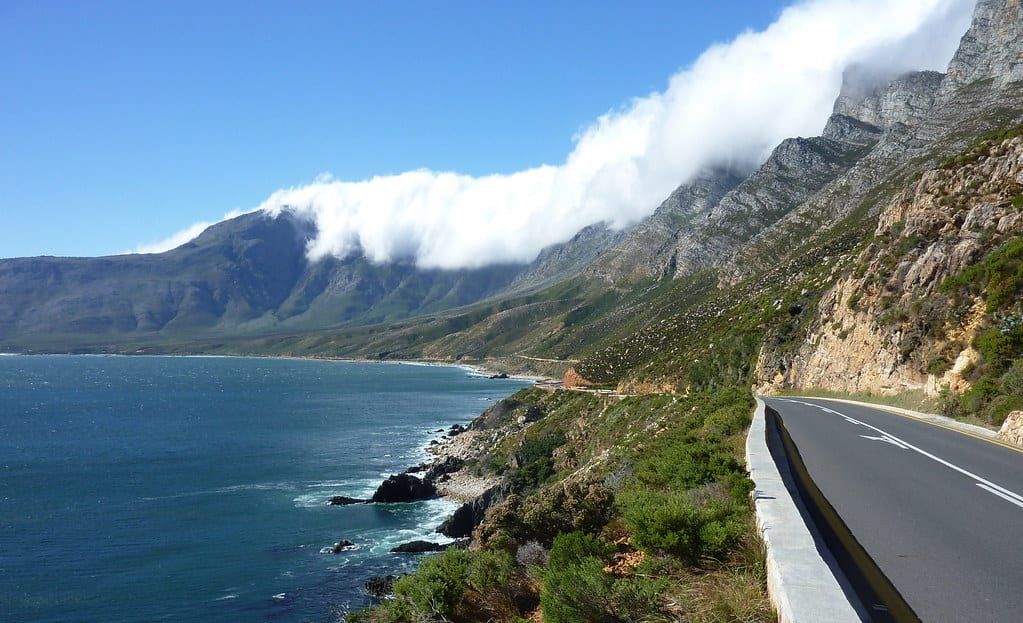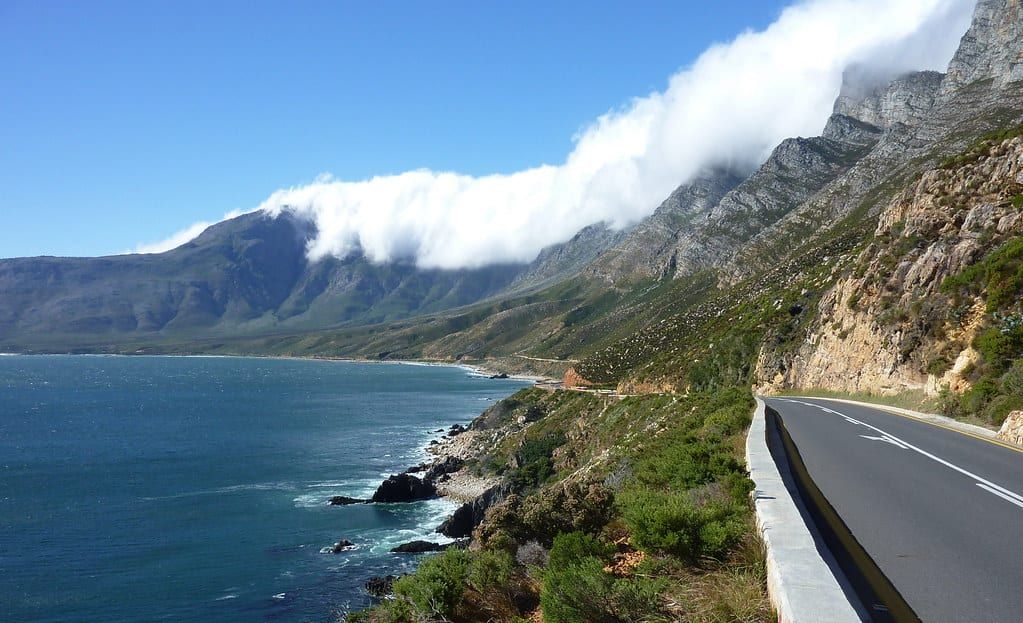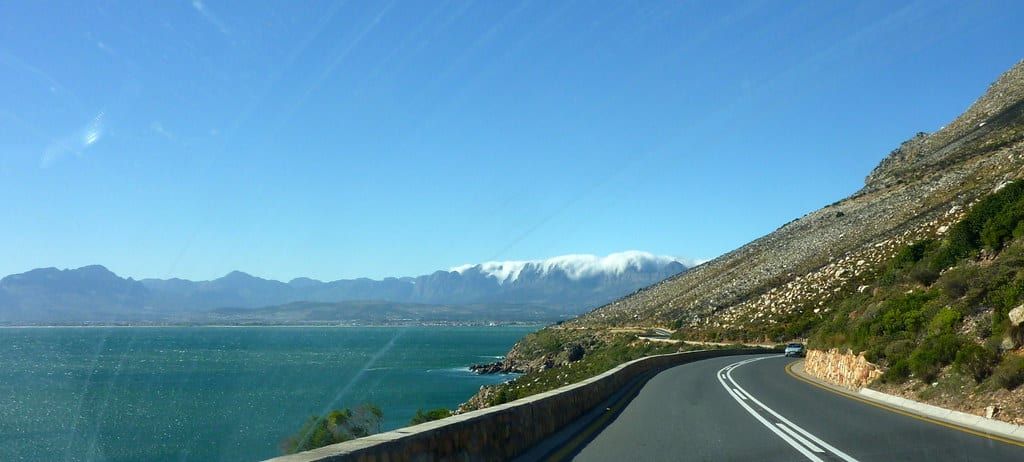
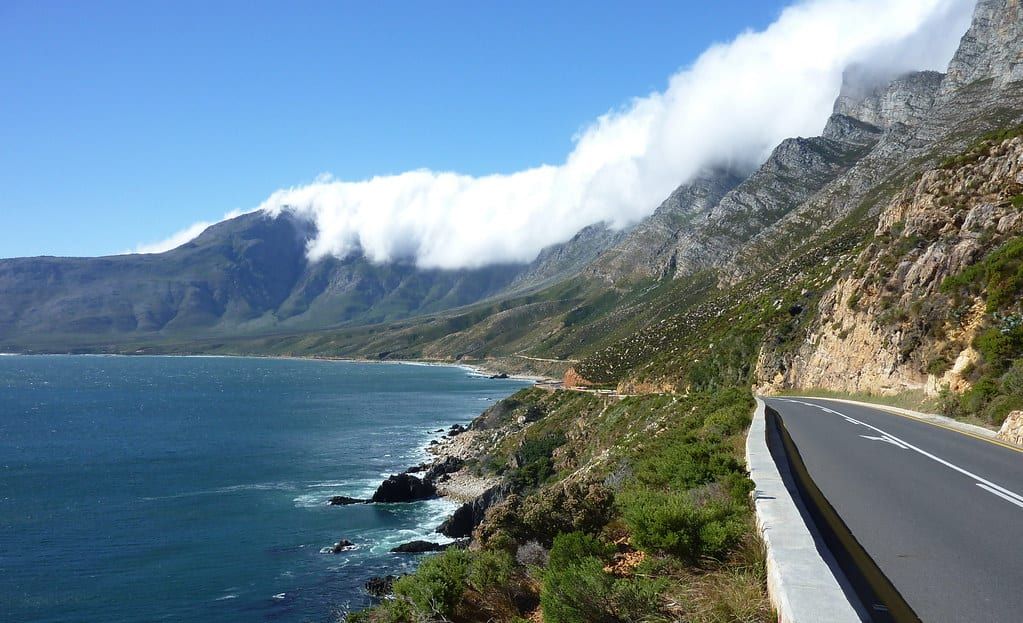
Three days is the minimum that works on the Garden Route — and it works only if you drive it with a plan. The route itself is short: roughly 200 km of N2 between Mossel Bay and Storms River, about two to three hours of pure driving. The stops are what fill your days, so the whole game is choosing them in the right order and cutting the right things when the clock runs against you.
This itinerary does exactly that. It starts in Mossel Bay, ends at the Storms River suspension bridges, sleeps in Knysna and Plettenberg Bay, and tells you what to drop when you're running late. If you'd rather leave the driving to someone else, guided three-day Garden Route tours cover the same ground.
Is 3 Days Enough for the Garden Route?
Yes — as a highlights run. The Garden Route proper runs about 200 km from Mossel Bay in the Western Cape to Storms River in the Eastern Cape, and you can drive it non-stop in two to three hours. What fills 72 hours is the stops: a museum and lighthouse in Mossel Bay, viewpoints above Wilderness, the Knysna Heads, the Robberg peninsula and the Tsitsikamma forest. All of that fits, comfortably, if you keep moving.
What doesn't fit is everything else. The Cango Caves near Oudtshoorn sit 55 km inland of George over the Outeniqua Pass, and the detour adds roughly 160 km of return driving — that's a day 4 activity, not a 3-day one. Addo Elephant National Park, the region's most accessible safari, lies about 40 km east of Gqeberha, beyond the route's eastern end. Hermanus, Swellendam and Jeffreys Bay are all off-route and belong to a longer trip.
So treat three days as a decision. If you have a fourth day, spend it on Oudtshoorn and the Cango Caves (R150 adult for the Heritage Tour, departing hourly 09:00–16:00), ideally looping back to Cape Town on Route 62 instead of repeating the N2. If you have a fifth, add Addo for elephants. And if your dates fall between June and November, the whale season may reorder your priorities — see the timing section below. For the slower, fuller version of this route, read our five-day Garden Route itinerary.
One more thing: the Garden Route's weather turns fast, and "four seasons in a day" is a real possibility. Don't pre-book anything time-critical for your first morning — build the slack in early, when you haven't yet lost time.
How to Start and End Your 3-Day Trip
You have three realistic strategies, and the right one depends on where your trip begins.
Strategy A — fly to George (GRJ). George Airport is the route's own airport, a 50-minute flight from Cape Town International, with rental cars at the terminal. Rental prices from George run about the same as from Cape Town, so for a short trip this buys you a full extra day of coast instead of tarmac. Flights from Johannesburg are frequent and affordable; Cape Town connections are pricier and thinner, so check both.
Strategy B — self-drive from Cape Town. Cape Town to Mossel Bay is 385 km, about four hours. Leave at 07:00 and you're standing at the Dias Museum by lunch, which means Day 1 stays intact — but the drive home on Day 3 is roughly 5.5 hours from Storms River. If that sounds grim, add a buffer night or start with Garden Route tours from Cape Town and let someone else hold the wheel.
Strategy C — end in Gqeberha. Dropping the rental car in Gqeberha (Port Elizabeth) and flying out turns a 5.5-hour return drive into a 190 km, two-hour run east. One-way drop fees run around R1,800 — weigh that against the cost of your time. Travellers starting from the east can also run the route in reverse; it works just as well read backwards.
Drive west to east if you can. The route builds: quiet Mossel Bay first, the drama of the Knysna Heads mid-trip, and the Storms River gorge as the finale. Here are the legs you'll actually drive:
| Leg | Distance | Drive time |
|---|---|---|
| Cape Town → Mossel Bay | 385 km | ~4 h |
| Mossel Bay → Wilderness | 50 km | ~40 min |
| Wilderness → Knysna | 45 km | ~35 min |
| Knysna → Plettenberg Bay | 32 km | ~25 min |
| Plettenberg Bay → Storms River | 68 km | ~50 min |
| Storms River → Gqeberha | 190 km | ~2 h |
Day 1: Mossel Bay → Wilderness → Knysna
Roughly 95 km of driving today, none of it long. The day divides into three moves: a Mossel Bay morning, a Wilderness lunch stop, and a Knysna evening.
Mossel Bay: Dias Museum, St Blaize and the beach
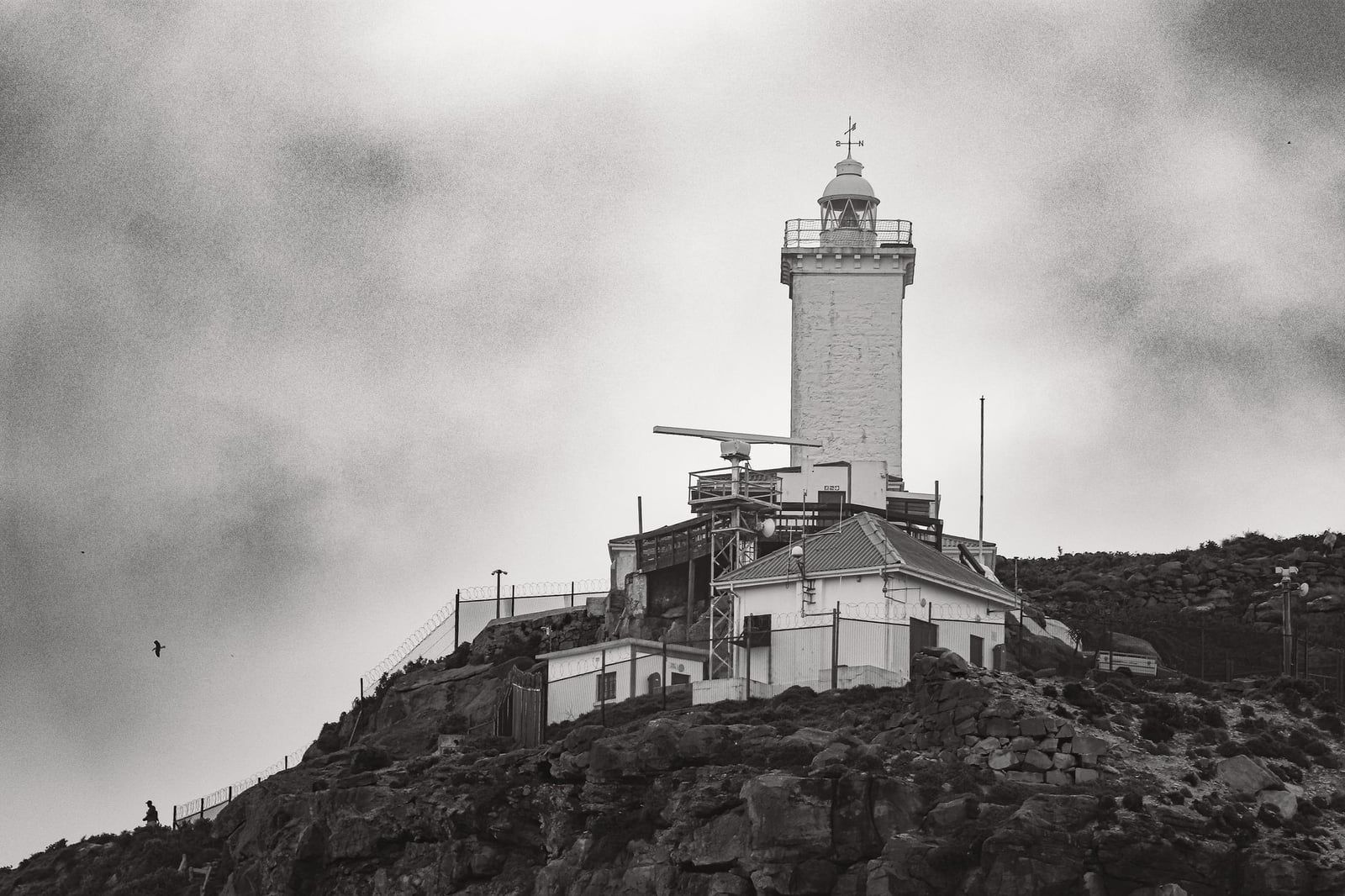
Start at the Dias Museum Complex, which holds a life-sized replica of Bartolomeu Dias's ship — he made the first European landing on this coast in February 1488, a few hundred metres from where you're standing. A few steps away is the Old Post Office Tree, believed to be South Africa's oldest post office. Allow 90 minutes for both. Then climb to the Cape St Blaize Lighthouse above the cave where the coastal trail begins, and finish with a swim at Santos Beach, the town's sheltered sandy curve.
Two optional extras, and pick one at most: the 14 km St Blaize Trail, a half-day coastal hike from the Cape St Blaize Cave, or a game drive at Botlierskop Private Game Reserve (rhino, lion, giraffe), about 30 minutes inland. If the morning slips — Cape Town starters, this means you — these are the first things to cut.
Wilderness: viewpoints and a beach lunch
Fifty km and 40 minutes east, Wilderness is where the road meets the view. Pull off at Dolphin Point on the Kaaimans River bend — whales from June to November, dolphins year-round — then stop at the Map of Africa viewpoint, where the river valley below is shaped uncannily like the African continent. Both stops take ten minutes each and cost nothing.
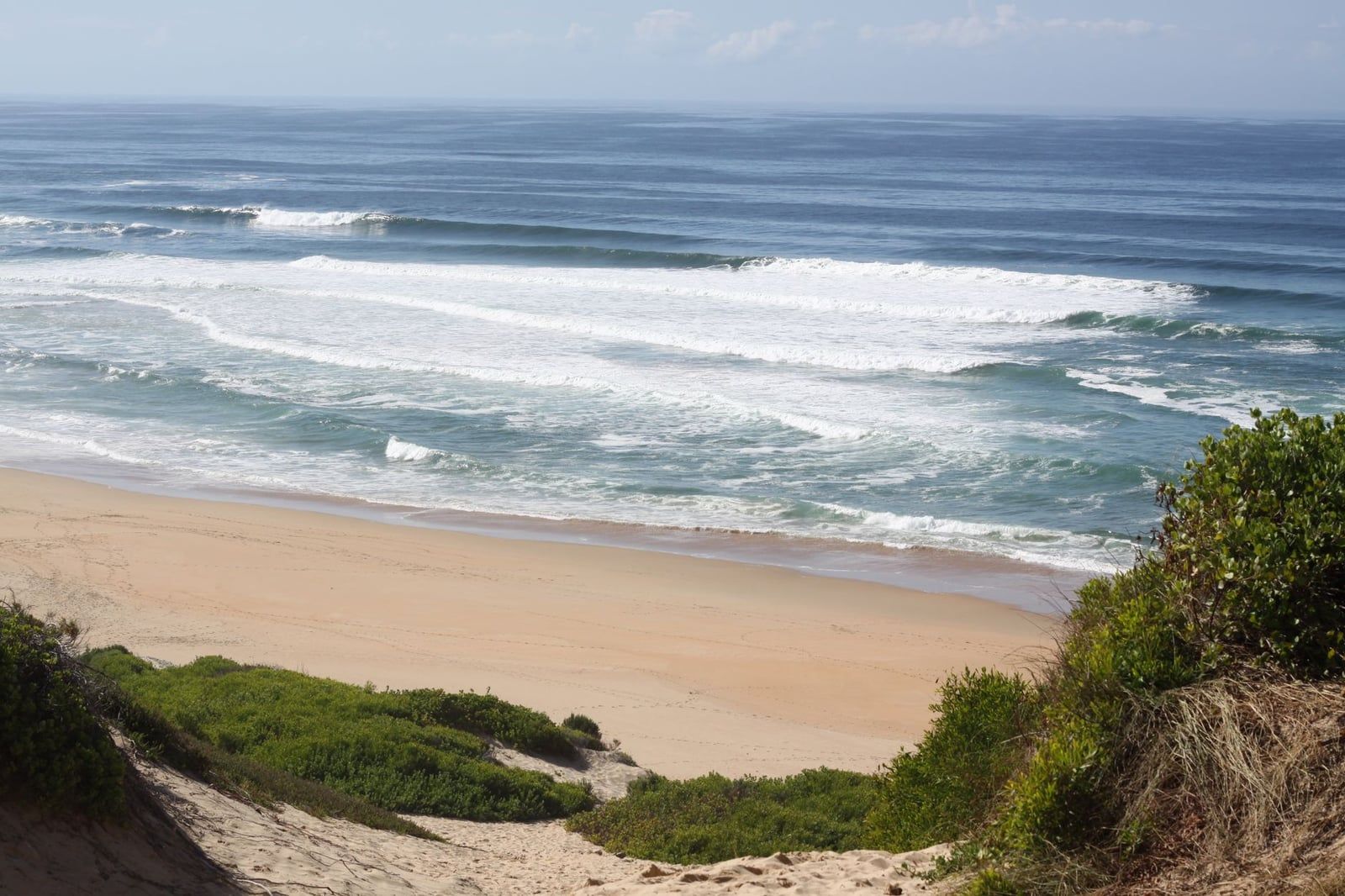
Spend the middle of the day on Wilderness beach or the boardwalk along the Touw River. Tandem paragliding over the coastline starts from ZAR 1,120 (about US$73) if the wind is right. Keen on the Wilderness lakes and forest walks? They belong to a slower trip — this is a lunch stop, not a base.
Knysna: the Heads at sunset, oysters after
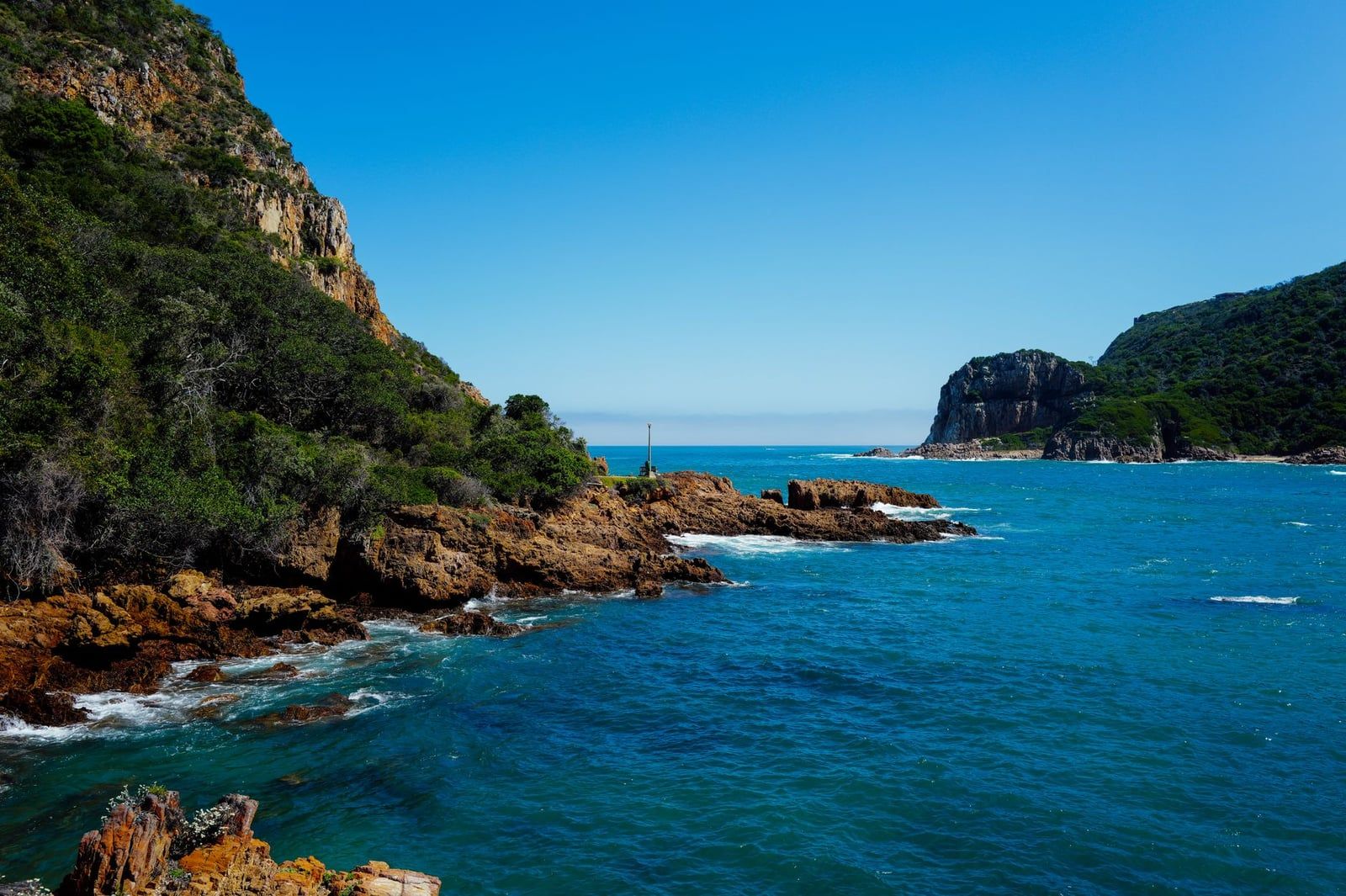
The 45 km run to Knysna is your last leg — about 35 minutes. Time your arrival for the Heads, the pair of sandstone cliffs guarding the narrow mouth of the Knysna estuary. The Eastern Head viewpoints catch the best late light, and the estuary below shelters the Knysna seahorse, an endangered species found in only three estuaries on Earth, all on this coast.
Dinner belongs at the Knysna Waterfront: 34 Degrees South serves fresh oysters cultivated in the lagoon, which is about as local as it gets. If you'd rather be on the water, a 2.5-hour lagoon sunset cruise starts from ZAR 990 (~US$65). Sleep in Knysna — you'll need the head start tomorrow.
Day 2: Knysna → Plettenberg Bay
Only 32 km today — 25 minutes — so the day belongs to one big walk. Most of it happens at Robberg, with a relaxed Knysna morning first.
Knysna morning, and a Saturday bonus
If you skipped last night's cruise, take a sunrise walk at the Heads or detour to Noetzie beach, the cove with the castles. On Saturdays, time your departure for Sedgefield's Wild Oats Community Farmers Market (8 am–12 pm), conveniently on the road east — stock up on breakfast and biltong.
Robberg Nature Reserve: pick your circuit
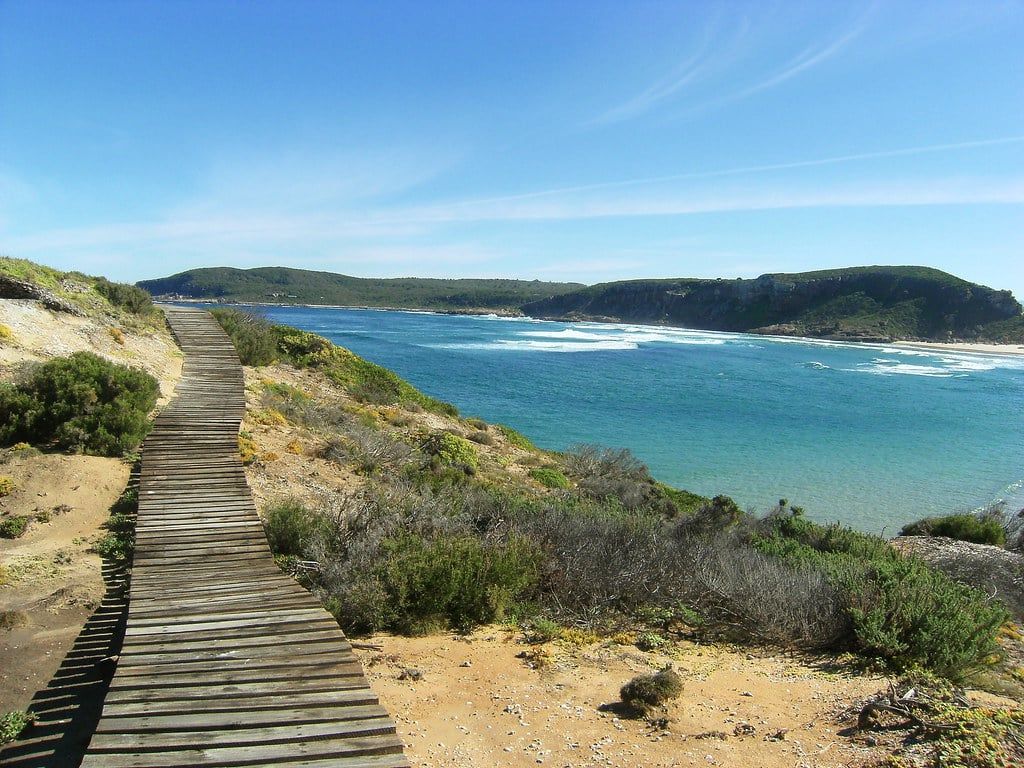
Robberg is the day's centrepiece: a rocky peninsula jutting into the Indian Ocean, with a Cape fur seal colony of over 6,000 animals, a noisy, fishy, entirely worth-it spectacle. Three circuits start from the car park. The short out-and-back to The Gap takes about two hours; the full Point circuit runs 9–10 km and takes four to five hours, with a steep 80 m trudge up loose sand that you avoid by walking clockwise. Recent entrance fees run R75 adult / R55 child, payable at the gate.
Go early: the car park fills in season, and the reserve closes to new entrants in the hour before closing (07:00–20:00 in summer). Watch the sea while you walk — whales pass offshore June to November. Then reward yourself with an afternoon on Lookout or Keurbooms beach.
If the weather turns (or your legs do)
Robberg in rain is miserable, so have a Plan B. Monkeyland, Birds of Eden and Jukani Wildlife sit next to each other just outside Plett, share a combined ticket, and house 11 free-roaming primate species and around 200 bird species under cover of forest. Keurbooms River kayaking works if it's windy but dry. Between June and November, whale-watching boats leave from Central Beach targeting southern right, humpback and Bryde's whales. For more ideas in and around town, see our things to do on the Garden Route guide.
Sleep in Plettenberg Bay. Or, if you want to shortcut tomorrow, push on the extra 68 km to Storms River — but only if you don't mind arriving in the dark, which we'd advise against on this road.
Day 3: Storms River, Tsitsikamma and the Road Back
The 68 km drive east takes about 50 minutes, and it delivers you to the best stop on the route — the one most three-day plans cut. Don't cut it. Day-visitor gates at the Tsitsikamma section of Garden Route National Park open 07:00 in summer (08:00 in winter) and close 18:00 / 17:00 sharp, enforced without exceptions.
Storms River Mouth: the suspension bridges
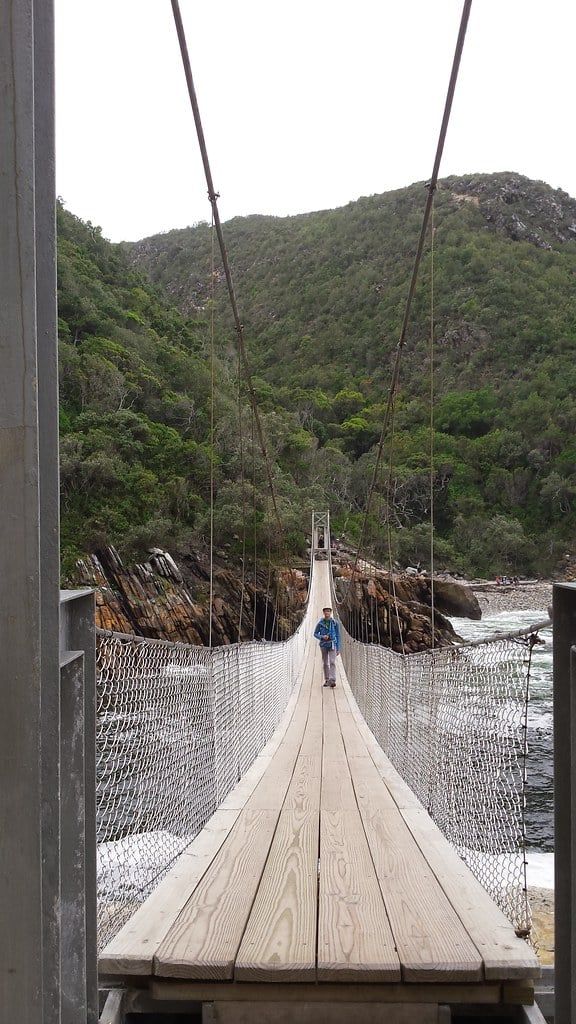
From the rest-camp car park, a boardwalk leads about 1 km through indigenous forest to a chain of suspension bridges spanning the black-water gorge where the Storms River meets the ocean. It's roughly 45 minutes return, and it's the single most photogenic hour on the Garden Route. A steeper trail above the bridges adds a viewpoint at about 1.5 hours return. If you're hiking fit and the tide tables cooperate, the coastal Waterfall Trail (2–3 hours, with rock scrambling) extends the morning — but it's the first thing to drop when time is tight. The bridges are the point; keep them.
International adults pay R367 per day in conservation fees (South African citizens R82); check current opening hours and entry fees before you go, since SANParks revises rates each November. Kayak and lilo trips paddle up the gorge from the same rest camp if you'd rather be on the water.
Bloukrans Bridge and Nature's Valley
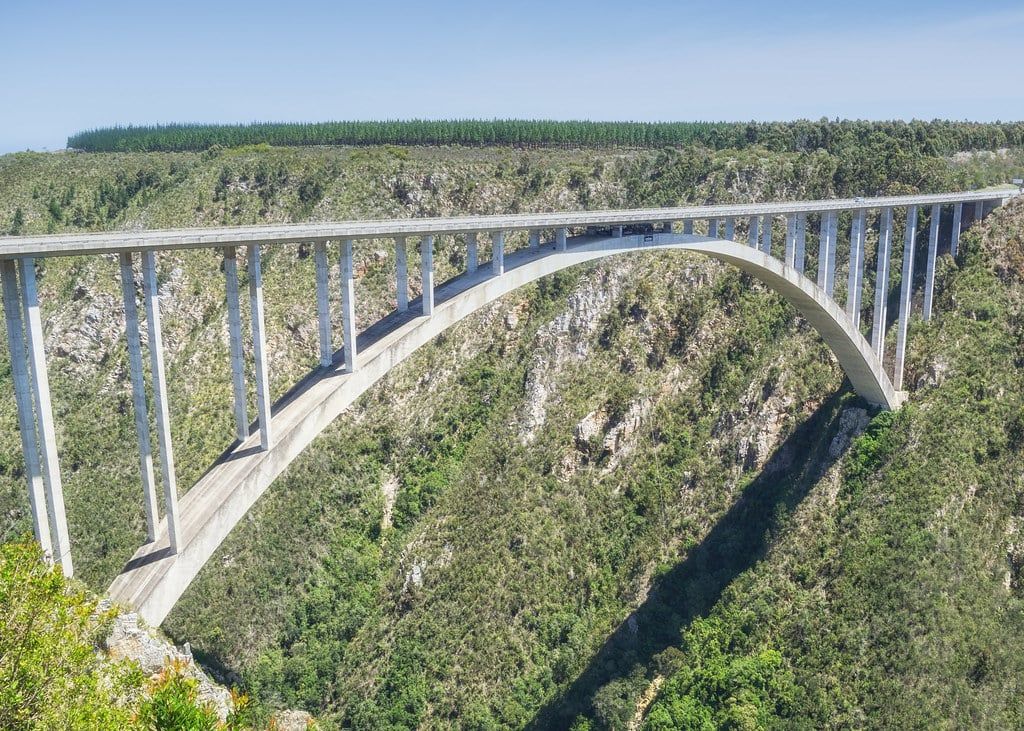
Bloukrans Bridge, right on the N2 west of Storms River, hosts the world's highest commercial bridge bungy — 216 m above the river. Jump if you've booked; watch from the gorge-facing deck if you haven't. Non-jumpers can walk the Sky Walk out to the platform. Ten minutes' detour off the N2, Nature's Valley offers the route's quietest beach, wedged between forest and surf — a good final-hour stop. The Tsitsikamma Canopy Tour, ziplining across 10 platforms about 30 m above the forest floor, is an option if you're skipping the bungy but still want adrenaline.
The exit: two roads home
Leave by mid-afternoon and the maths is simple. Cape Town is roughly 5.5 hours west — a dark, tiring drive if you leave later, and one we'd genuinely avoid after dusk on the N2 (baboons, livestock and unlit vehicles are real hazards). Gqeberha is 190 km, about two hours east, and a flight from there gets you home the same evening. If you're looping back to Cape Town with a day to spare, Route 62 through the Klein Karoo is the scenic way to do it.
Where to Stay Each Night
Night 1 is Knysna; night 2 is Plettenberg Bay. That split keeps backtracking near zero, with both towns an easy 25-minute hop apart. Here's a shortlist by budget — for a wider net, see our Garden Route accommodation guide.
Knysna: budget — Knysna Backpackers, a short walk from the Waterfront; mid-range — Falcon's View Manor, perched above the town with lagoon views; luxury — Conrad Pezula, the resort on the eastern Head. Plettenberg Bay: budget — Albergo for Backpackers; mid-range — Christiana Lodge; luxury — Tsala Treetop Lodge, a treetop suite complex in the forest between Plett and Knysna.
| Plettenberg Bay | Storms River Mouth Rest Camp | |
|---|---|---|
| Evening options | Restaurants, beaches, sanctuaries on the doorstep | Inside the national park, 2 minutes from the bridges |
| Day 3 start | 50-minute drive to reach the park on Day 3 | Wake up at the trailhead; bridges before the crowds |
| Price spread | Full range, budget to luxury | Camping, forest huts and chalets (SANParks) |
| Best for | Choose if you want dinner options and a beach afternoon | Choose if Day 3 is your priority and you book early |
Whenever you travel in December, January or February, book everything in advance — the whole coast fills up, and SANParks chalets go first. Check-in at park accommodation is from 14:00 and check-out is 10:00, which matters if you're planning a final-morning hike.
Getting Around: Self-Drive, Shuttle or Tour
Self-drive wins for a three-day window, and it isn't close. Rental cars run about R350–700 per day in season, the N2 is well-surfaced throughout, and every stop on this itinerary is a pull-off rather than a detour. Early starts — the 07:00 park gates, the Robberg parking — are simply impossible on a bus timetable. A normal 2WD is fine; nothing here needs a 4x4.
Without a car, you still have options, just slower ones. The Baz Bus runs a hop-on-hop-off backpacker service between Cape Town and Port Elizabeth with 14 Garden Route stops — good for solo travellers with flexible dates, hopeless for gate-opening starts. Intercape coaches link the bigger towns. Local shuttles such as Zeelie Taxi fill the gaps between towns. And guided three-day packages from Cape Town, typically including a Big 5 game drive, run roughly $700–1,400 per person — compare them on our Garden Route tours page. Families weighing tour versus self-drive can note the region is entirely malaria-free.
On the road: the N2 carries 120 km/h limits on dual carriageway and 100 km/h on single, and speed traps between Wilderness and Knysna have a reputation — keep to the limit there. Fuel up in George, Knysna and Plett rather than gambling on smaller stations. Use headlights in fog, keep valuables in the boot, and plan every town-to-town leg for daylight.
What Your 3 Days Will Cost
Per person, per day, expect three tiers: R800–1,200 on hostels and self-catering, R2,000–3,500 on mid-range guesthouses and restaurant meals, R5,000 and up for the luxury lodges. Fuel for the full route averages R1,200–1,800 total, and a rental car adds R350–700 per day plus a one-way drop fee of about R1,800 if you finish in Gqeberha.
Activities are where budgets swing. Tandem paragliding at Wilderness starts from ZAR 1,120 (~US$73); the 2.5-hour Knysna sunset cruise from ZAR 990 (~US$65); guided three-day tours from roughly $700–1,400 per person. Park fees add up too: Storms River Mouth charges international adults R367 per day, Wilderness R235 — a Wild Card pays for itself if you'll visit two or more sections.
Cards are widely accepted in towns, but carry cash as well: park gates, tips and smaller vendors don't all take them, and the Plaatbos and Goesa forest gates near Storms River Village are card-only — the opposite problem. Travel with a working chip card and some notes.
Best Time to Go and What to Pack
The shoulder months win: April–May and September–October bring mild 18–25°C days, fewer crowds and lower prices. December–February is warm beach weather — highs of 20–28°C — but it's the busiest and most expensive stretch of the year on the whole coast, and the months when you most need to book ahead. Winter (June–August) is coolest and wettest, with George around 8–20°C, but it's prime whale time and the cheapest season.
Whales pass this coast June to November, peaking July–September — southern rights, close enough to spot from the Robberg clifftops and the Mossel Bay shore paths. If whales are your priority, a winter or early-spring trip reorders Day 2: book the boat trip from Central Beach and let the beaches go.
Packing, tuned to this itinerary: proper hiking shoes for Robberg and the Storms River viewpoint trail, a waterproof layer (rain falls year-round and weather turns fast), swimwear, sunscreen, and binoculars for the Dolphin Point and seal-colony stops. The whole region is malaria-free, so no prophylaxis needed. If you're extending beyond three days, our seven-day itinerary adds Oudtshoorn, Route 62 and Addo at a humane pace.
Frequently asked questions
Is 3 days enough for the Garden Route?
It's the accepted minimum for the highlights — Knysna, Plettenberg Bay, Robberg and Tsitsikamma/Storms River — but it's highlights-only: no Cango Caves, no Addo, no slack for bad weather. Five days adds the Oudtshoorn detour and a safari; seven to ten makes it relaxed.
Where does the Garden Route start and end?
The route runs about 200 km from Mossel Bay (Western Cape) to Storms River (Eastern Cape) along the N2 — about two to three hours of non-stop driving. Cape Town sits 385 km (~4 h) west of Mossel Bay and is the practical start for most travellers.
Can you do the Garden Route from Cape Town in 3 days?
Yes, if you leave Cape Town early and treat the 385 km (~4 h) run as part of Day 1, and accept the ~5.5-hour drive back on Day 3. Better: fly to George and start on-route, or drop the car in Gqeberha and fly out. Skip the Oudtshoorn detour (adds ~160 km return) and don't plan Addo.
What is the best month for a Garden Route road trip?
The shoulder months, April–May and September–October, give the best weather-to-crowds ratio. December–February is warm but busy and expensive. Whale season runs June–November, peaking July–September.
Can you do the Garden Route without renting a car?
Yes. The Baz Bus hops between 14 Garden Route stops between Cape Town and Port Elizabeth, Intercape coaches link the main towns, shuttles like Zeelie Taxi cover inter-town transfers, and guided three-day tours from Cape Town (roughly $700–1,400 pp) remove the driving entirely.
Where should I stay on a 3-day Garden Route trip?
Night 1 in Knysna and night 2 in Plettenberg Bay — or Storms River Mouth Rest Camp to shave Day 3 — gives the least backtracking. Book well ahead for December–February; SANParks accommodation goes first.
How much does a 3-day Garden Route trip cost?
Roughly R800–1,200 per person per day on hostels and self-catering, R2,000–3,500 mid-range, R5,000+ luxury, plus R1,200–1,800 total fuel and R350–700/day for a rental car. Carry some cash for park gates and small towns.