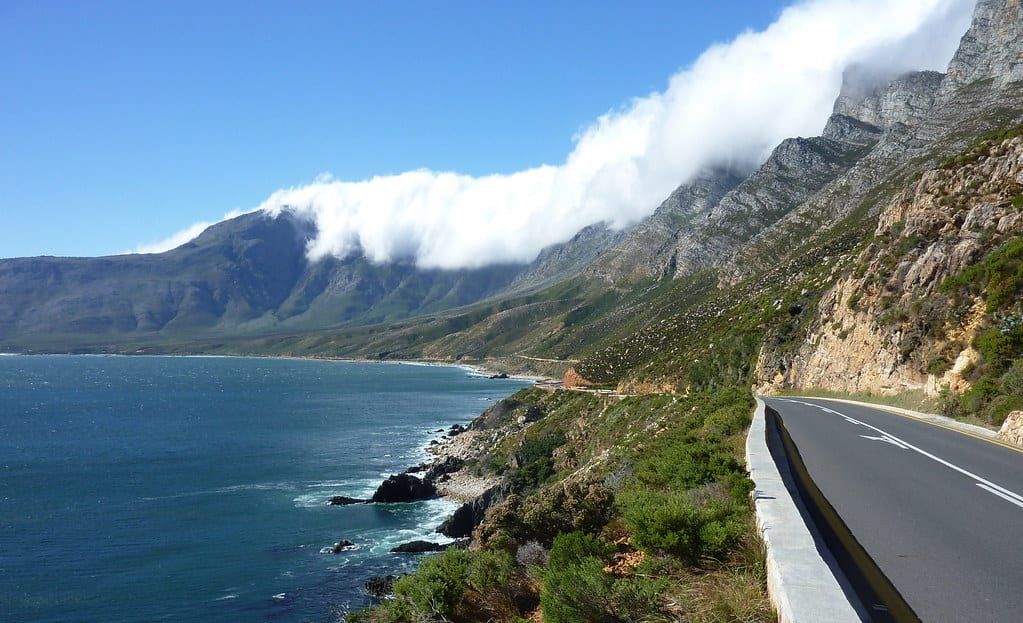
Seven days is the sweet spot for the Garden Route: long enough to drive from Cape Town all the way to Addo Elephant National Park without rushing, short enough to fit standard annual leave. The full run is roughly 750 km each way — about 8.5 hours of pure driving if you did it non-stop, which nobody does. This itinerary spreads those kilometres across a week so no single day puts you behind the wheel for more than five hours.
Every stop below comes with its drive time, entry fees and booking lead times, and the Day 7 fork — loop back to Cape Town on Route 62 or fly out of Gqeberha — is laid out with the actual maths. For more depth on individual towns, pair this with our guide to things to do on the Garden Route.
The 7-Day Garden Route at a Glance
The Garden Route proper is the 200-odd km of coast between Mossel Bay and Storms River, driven on the N2 past George, Wilderness, Knysna and Plettenberg Bay. Most of it sits inside Garden Route National Park, proclaimed in March 2009, which protects about 1,210 km² of indigenous forest, lakes and fynbos. The 7-day version stretches the idea: a Cape Town approach day at each end wrapped around five days of coast and a malaria-free safari finish.
Days 1–6 run like this (Day 7 is a fork, covered later):
| Day | Route | Drive time | Overnight |
|---|---|---|---|
| 1 | Cape Town → Mossel Bay | ≈4 h (385 km) | Mossel Bay |
| 2 | Mossel Bay → Wilderness | ≈40 min | Wilderness |
| 3 | Wilderness → Knysna | ≈35 min | Knysna |
| 4 | Knysna → Plettenberg Bay | ≈25 min | Plettenberg Bay |
| 5 | Plettenberg Bay → Storms River | ≈50 min | Storms River |
| 6 | Storms River → Addo | ≈2 h | Addo Main Camp |
Three decisions shape everything else. How many days? Three to five covers the highlights at a rushed pace; seven is comfortable; ten or more suits slow travel with Oudtshoorn and extra Addo time — our five-day Garden Route itinerary covers the compressed version. Which direction? Most travellers start in Cape Town because it's the main international hub, but the route reverses cleanly from Gqeberha if your flights work better that way. Loop or one-way? A one-way rental dropped in Gqeberha adds a fee of roughly R1,800 (quotes range R1,500–2,500) but saves repeating ~750 km of N2; a loop only makes sense if Route 62 itself is the draw — and on Day 7 you'll see it is a good one.
Planning Your Week: Car Hire, Packing and Road Rules
A compact rental runs about R350–700 per day depending on season, and no 4x4 is needed — the N2 and every road on this itinerary are tarred and well maintained, including Addo's main game loops. Pick up at Cape Town Airport for the full week; drop the car in Gqeberha if you're going one-way. Short on time? Flying the 50-minute hop to George Airport instead cuts roughly 350 km and half a day off the western approach — the full transport picture is in our how to get to the Garden Route guide.
South Africans drive on the left. Watch for speed-camera warning signs and brown tourism boards, and let faster traffic past on single-lane stretches. Tolls sit on the N2 at Tsitsikamma (about R50 — carry cash) and on the N1 Huguenot Tunnel if you route that way. Attendants pump your fuel at every station; a R5–20 tip is normal. Petrol stations appear every couple of hours on the N2, so refuel when you see one rather than gambling on the next town.
The single biggest safety rule: don't drive at night. Rural N2 stretches are unlit and you can meet baboons, livestock, pedestrians or broken-down vehicles with no lights. Otherwise the route is one of South Africa's safest self-drive regions — lock doors in towns, keep valuables out of sight, and park in secure areas.
What goes in the boot:
- Layers and a rain shell — coastal weather turns fast
- Grippy walking shoes for forest and cliff trails
- Binoculars for whales, seals and game
- A dry bag for kayak and lilo trips
- A reusable water bottle for hikes
- Offline maps downloaded before Day 1 (signal is patchy)
Not driving? Multi-day Garden Route tours from Cape Town run three to five days with pickup included, and the Baz Bus hop-on-hop-off service connects the backpacker hostels along the whole route. A rental car is still the most flexible way to do it.
Day 1: Cape Town to Mossel Bay via the Whale Coast
Day 1 is the transit day — 385 km, about four hours of driving — so make the road the point. Two route flavours, both ending in Mossel Bay.
Option A: the N2 via Swellendam
Take Sir Lowry's Pass out of Cape Town (the lookout is worth the pull-in) and stop at Peregrine Farmstall for the classic coffee-and-pie break. Swellendam makes a lunch stop, with the Drostdy Museum and Cape Dutch streets. If you want wildlife on day one, Bontebok National Park just outside town is South Africa's smallest national park — a short self-drive loop gets you bontebok, zebra and hartebeest within an hour.
Option B: Clarence Drive, Hermanus and the penguins
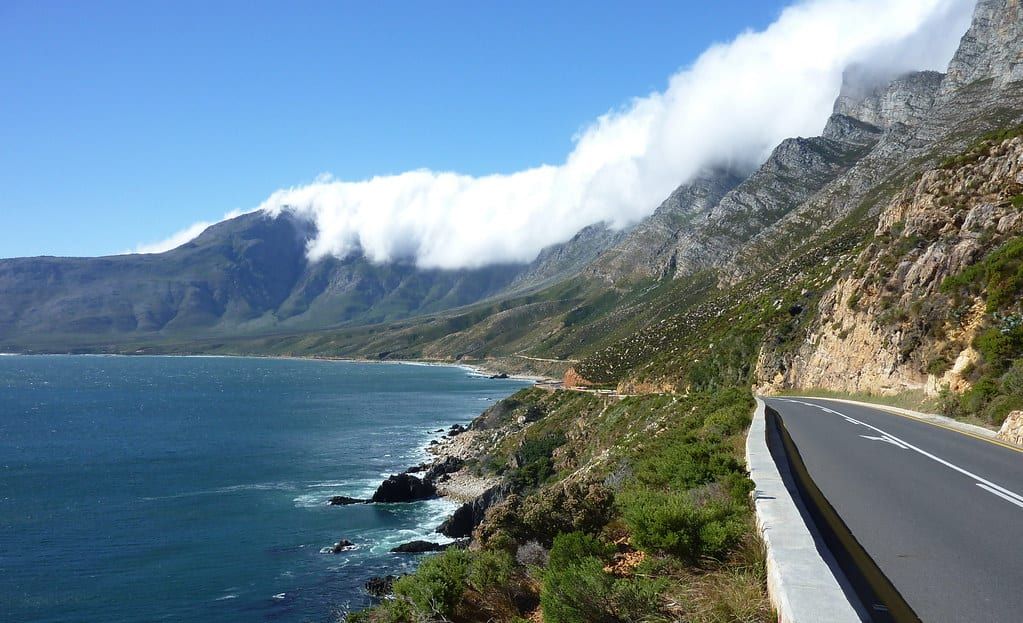
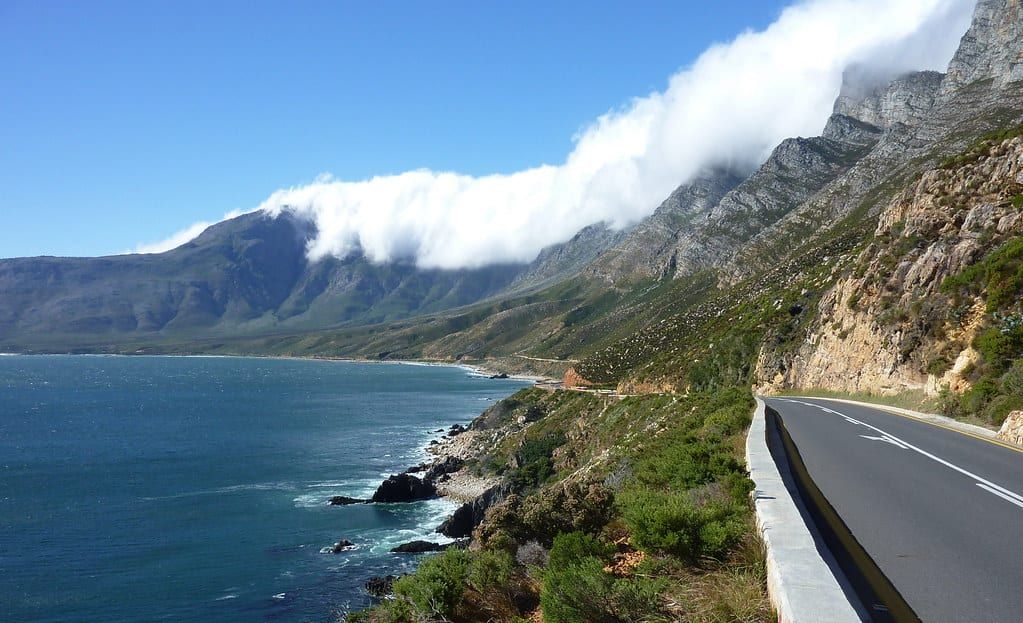
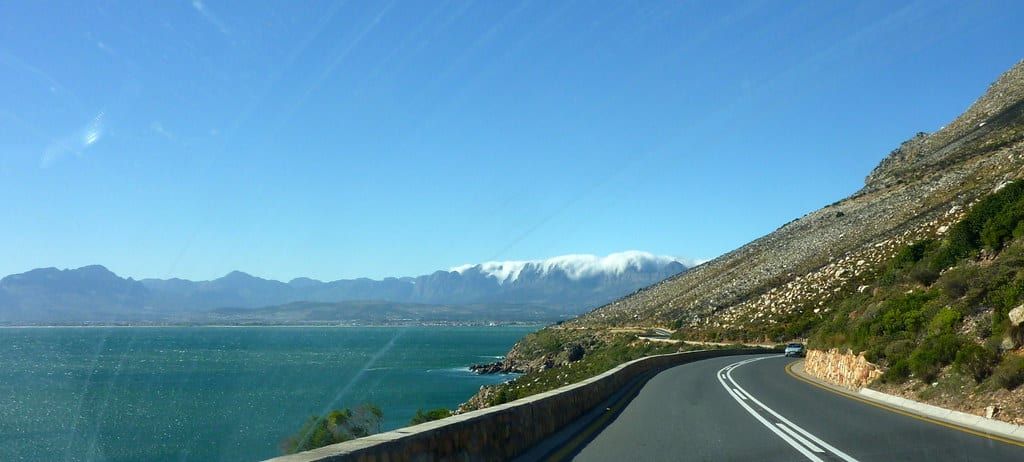
The R44 Clarence Drive from Gordon's Bay to Hermanus is one of the world's great coastal roads and adds about an hour over the N2. Hermanus itself is the payoff: southern right whales pass close inshore from June to November, peaking July–September, and the cliff path is free front-row seating. Continue to Stony Point at Bettys Bay for its penguin colony — R40 entry, open 08:00–16:30, and far quieter than Boulders Beach. A Cape Agulhas detour (the southernmost tip of Africa) is possible but pushes the day long.
Mossel Bay
Spend the afternoon at the Post Office Tree, the milkwood where Portuguese sailors exchanged mail, and the Dias Museum complex next door (about R40), which holds a full-size replica of the 1488 caravel. Dinner at Kaai 4 on the harbour — braai plates and a view of the boats. Keen for an early safari taste? Botlierskop's game drives sit just inland. Sleep in Mossel Bay; Reebok's Kusweg just east of town doubles as one of the coast's best shore-based whale-watching spots in season.
Day 2: Wilderness — Lagoons, Kayaks and the Map of Africa
Wilderness is 40 minutes east and the week's first slow-down day. Rent a double kayak on the Touw River for about R250 for two hours and paddle upstream to the boardwalk trailhead, or book Eden Adventures' canoe-and-waterfall trip (roughly R350 for a two-seater, half day). From where you beach the canoe, the Half-Collared Kingfisher trail runs to a waterfall through indigenous forest; allow 3–4 hours return for the full version. The Giant Kingfisher trail on the opposite bank is the harder sibling.
Entry to the Wilderness section of Garden Route National Park costs R235 per international adult per day (R61 for South Africans) — the same daily fee structure you'll meet at every SANParks stop. In the afternoon, drive up to the Map of Africa viewpoint, where the Kaaimans River loops into a shape that earns the name, then walk the long, uncrowded beach below. For sunset, you can't beat being on the water: SANParks' Ebb & Flow rest camp sits right on the river's edge, and guests swim and paddle until the light goes. That's the case for sleeping here rather than pushing on to Knysna.
Day 3: Knysna — The Heads, Oysters and Thesen Island
Knysna is 35 minutes on the N2, or take the 75 km Seven Passes Drive instead if you have the morning to spare — it winds through forest and gorges on old passes and is the prettier way in by far. Either way, arrive hungry.
The town's signature sight is the Heads, the sandstone cliffs guarding the narrow mouth of the Knysna estuary. The Eastern Head viewpoint is free and just as dramatic as any paid alternative; the ferry across to Featherbed Nature Reserve costs about R270 and includes a guided walk on the western Head — worth it once. Back in town, a half-dozen wild Knysna oysters at 34° South on the Waterfront runs R120–180, and the SANParks aquarium on Thesen Island has live Knysna seahorses, an endangered species found in only three estuaries on Earth, all on this coast.
Round out the day on Thesen Island — breakfast or lunch at Île de Païn, a slow wander past the boatyard — or take a lagoon cruise. If your dates land in July, the Knysna Oyster Festival runs about ten days and books the town out. Sleep in Knysna, or push the 25 minutes to Plettenberg Bay to buy yourself a lazier Day 4.
Day 4: Plettenberg Bay and Robberg Nature Reserve
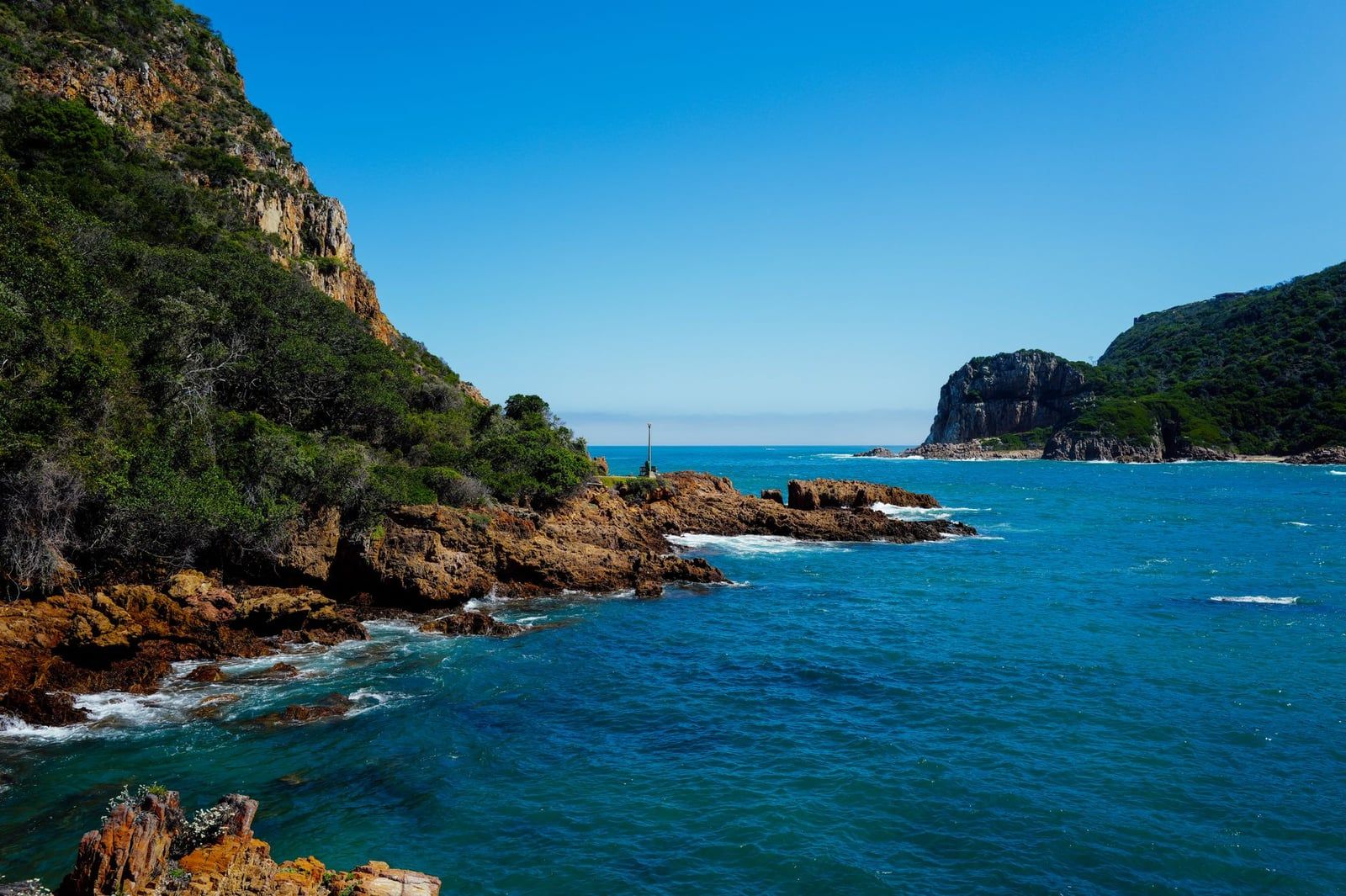
Robberg Nature Reserve, ten minutes south of Plett, has the best hike of the week. Entry is around R75 per adult at the gate (recent visitor rate — confirm current prices on capenature.co.za), and the reserve runs 07:00–20:00 in summer, 08:00–18:00 in winter, with no entry in the hour before closing. Three circuits: the Gap at 2.1 km, the Witsand Dune at 5.5 km, and the full 9 km Point circuit. Walk clockwise past the Gap — the reverse direction forces an 80-metre trudge up loose sand — and the Point route passes a loud Cape fur seal colony with whales offshore from June to November. Carry water; there's little shade. The car park fills by mid-morning in season, so go early.
Afternoon options, in order of appeal: a swim at Lookout Beach; a guided swim-with-seals trip from the harbour; or a whale-watching boat in season (July–September, roughly R900–1,100 per person). Hikers wanting a quieter alternative to Robberg can head to Goukamma Nature Reserve, 23 minutes west, for six trails of 4–15 km past remote beaches. End at Enrico's in Keurboomstrand — Italian food on the beach, no reservations, so arrive before sunset and put your name down.
Day 5: The Crags Sanctuaries to Tsitsikamma and Storms River
Only about an hour of driving today, but the fullest day of the week. Work west to east.
The Crags sanctuaries
Birds of Eden at The Crags is the world's largest free-flight aviary — arrive at 08:00 for feeding time, when the dome fills with sound. Next door, Monkeyland is a free-roaming primate sanctuary; both cost about R290 each, and combo tickets cut the price. If you need lunch, Bramon Wine Estate does tapas among the vines — the region's only wine estate, and a quirky one.
Bloukrans Bridge
At 216 m above the Bloukrans River, this is the world's highest commercial bridge bungy, at roughly R1,400 a jump. Watching is free from the gorge-facing deck, and non-jumpers can walk the Sky Walk to the platform. Even if you don't jump, stop — the bridge alone is worth ten minutes.
Storms River Mouth
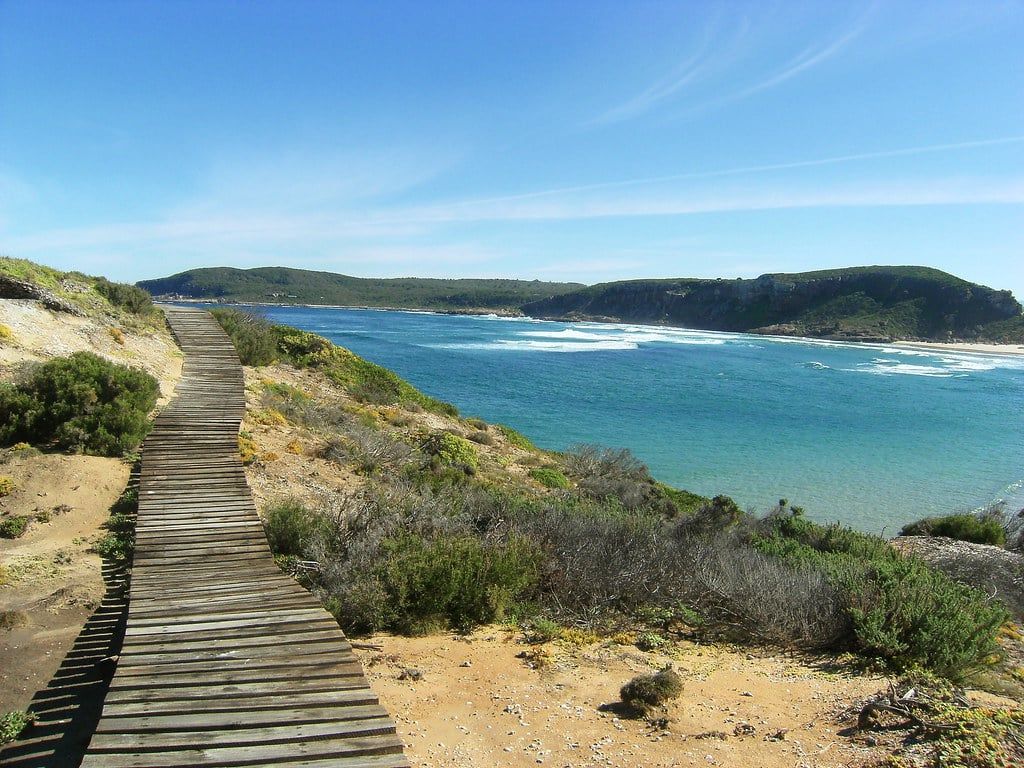
The Tsitsikamma section of Garden Route National Park is the payoff. Daily conservation fees (1 Nov 2025–31 Oct 2026) are R367 per international adult, R167 SADC, R82 for South Africans, children half price; gates open 07:00–18:00 in summer and 08:00–17:00 in winter, strictly enforced. The suspension-bridge boardwalk from the rest camp car park crosses the Storms River gorge where it meets the ocean — 1–1.5 hours return, dassies on the rocks, and the official start of the Otter Trail. Walk the first kilometre of that trail to a waterfall pool; the full 5-day, 42-km version costs R2,561 per person, admits just 12 hikers a day and sells out about a year ahead. On the water, Untouched Adventures runs a kayak-and-lilo trip up the gorge for about R750. Current gate times and prices are always on our opening hours and entry fees page.
Sleep inside the park if you can: Storms River Mouth Rest Camp puts cabins and campsites above the ocean and needs booking months ahead, especially over holidays. The fallback is Storms River village, 5 km inland — Tsitsikamma Village Inn for comfort, Tube 'n Axe for budget, and Marilyn's 60's Diner for a milkshake you didn't plan on.
Day 6: Addo Elephant National Park
Two hours east of Storms River, Addo is the safari finale and the reason the itinerary doesn't turn around at Tsitsikamma. Around 600 elephants live here, plus lion, buffalo, rhino, leopard, hyena, zebra and giraffe — the Big 5 without a single malaria tablet, which makes it the family-friendly alternative to Kruger. It's South Africa's third-largest national park, and the only place in the country where the wider "Big 7" claim works: great white sharks and southern right whale watching fall inside its marine section.
Conservation fees for 2025/26 are R492 per international adult per day, R225 SADC, R110 South African. The park caps daily visitor numbers, so book your day visit in advance through SANParks' day-visit reservation system rather than gambling at the gate. Be first in line when the gate opens — wildlife is active in the early morning and again from late afternoon — and self-drive the southern loop; a normal rental car is fine on the main gravel roads. If you'd rather have trained eyes, lodges outside the park run guided game drives. There's a restaurant at Main Camp, plus picnic and braai sites.
Overnight at Addo Main Camp if it's available: the waterhole below camp pulls elephants at dusk and dawn, sometimes in breeding herds dozens strong. Lodges cluster just outside the gate otherwise. Either way, you're now 45 minutes from Gqeberha's airport — which sets up Day 7. Note that SANParks has posted fee and booking changes for Addo taking effect from 1 October 2026, so check the current rate before you travel.
Day 7: Route 62 Back to Cape Town (or Fly Out from Gqeberha)
The fork in the road. Both variants work; pick based on whether Route 62 tempts you and how much driving you can stomach on your last day.
Variant A: the Route 62 loop
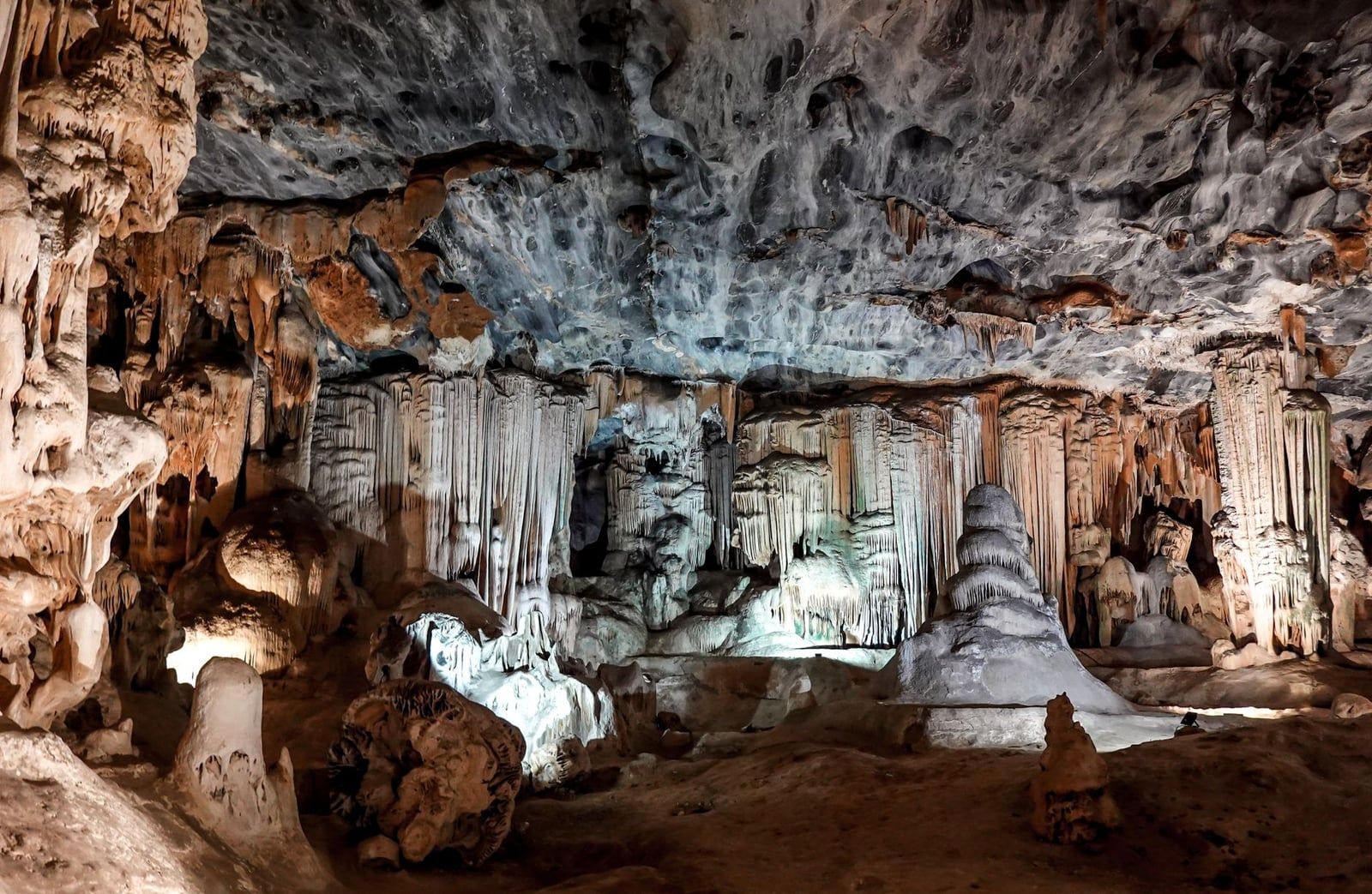
Roughly 420 km and 4.5–5 hours of driving back to Cape Town through the Klein Karoo — honest answer, that's a long final day, and a nine-day version with an Oudtshoorn overnight is more comfortable. Done in one push: Cango Caves near Oudtshoorn for the hourly Heritage Tour (R150 adult, departing 09:00–16:00; the Adventure Tour is currently unavailable), an ostrich show farm if the kids insist, port tasting in Calitzdorp, coffee in Barrydale, and a final stop in Montagu, known for hot springs, Cape Dutch streets and rock climbing. Arrive Cape Town by evening. The sunrise meerkat tour near Oudtshoorn (R660) needs an overnight — good reason to stretch to a ten-day Garden Route itinerary.
Variant B: fly out of Gqeberha
Fit in one more morning Addo loop — leave at 06:30, drive the southern circuit, and be back for checkout — then head west with a stop at Jeffreys Bay, whose Supertubes break is one of the world's best right-hand point waves (the surf outlets alone justify the detour). Drop the car at Gqeberha and fly to Cape Town or Johannesburg from about R1,000–2,500 one-way. The maths: a drop fee of R1,500–2,500 versus two extra days of car hire, fuel and accommodation on the loop. If Route 62 doesn't grab you, one-way usually wins.
Where to Stay and What a Week Costs
Because the hops are short, moving nightly works fine — you're never repacking after more than 45 minutes of driving. The alternative is a two- or three-night base around Knysna or Plettenberg Bay covering Days 3–5. Wherever you can, take the SANParks rest camps: Ebb & Flow at Wilderness, Storms River Mouth and Addo Main Camp put you inside the parks at prices private lodges can't touch, but they need booking 2–3 months ahead for December and January. Our Garden Route accommodation guide has the full run-down.
| Tier | Daily spend | What it looks like |
|---|---|---|
| Budget | R1,200–1,500 | Backpacker privates or guesthouse rooms (R350–700 pp), self-catering |
| Mid-range | R2,500–3,500 | Guesthouses, dinners out, most paid activities |
| Luxury | R6,000+ | Five-star lodges and boutique hotels |
Named picks at the top end: Views Boutique in Wilderness (from about R4,500 a night) and the Turbine Boutique Hotel on Knysna's Thesen Island (from about R3,200); Emily Moon outside Plett splits the difference. Food runs R150–240 per person for a restaurant meal, up to R260 for seafood mains — or self-cater for about R500–800 in groceries for two for the week and braai at the rest camps, which is half the fun anyway.
A realistic weekly tally for two, mid-range, one-way: car hire at R350–700 a day plus roughly R1,800–2,200 in fuel for the route; conservation fees (Wilderness R235, Tsitsikamma R367, Addo R492 per international adult per day — a SANParks Wild Card is exempt from all of them and pays for itself fast); then activities, from Featherbed at R270 and the sanctuaries at R290 each up to Bloukrans at R1,400. Two people travelling mid-range without the bungy land somewhere around R40,000–55,000 for the week all-in.
When to Go — and What to Book Ahead
The Garden Route is temperate year-round — rain falls in every season but rarely for long. December and January are peak domestic season: 30–50% price premiums, full beaches, and accommodation you need to book 2–3 months out. February to April brings warm seas and quiet roads. June to November is whale season, peaking July–September, and winter (June–August) means budget deals, lush misty forests and George hovering between 8 and 20°C — pack a jacket. Wildflowers bloom August–September. The sweet spots are March–May and September–November: mild weather, fewer crowds, whale chances late in that window.
Book-ahead checklist, in order of pain if you miss it:
- December–January accommodation: 2–3 months out
- Storms River Mouth rest camp: months ahead, holidays especially
- Addo day visit: reserve via SANParks' day-visit system
- Bloukrans bungy and sanctuary combos: 2–3 days ahead in season
- Hire car for peak season: as early as flights
- July Oyster Festival stays: book with your festival tickets
One last habit worth building: check gate times the night before every park day. The 07:00 summer openings and strict 18:00 closings at Storms River Mouth are enforced with fines, not warnings, and arriving at 15:00 leaves you two hours of light. Start early everywhere — the route rewards it.
FAQs
Is 7 days enough for the Garden Route?
Yes — seven days covers Cape Town to Addo at a comfortable pace, including the Route 62 return. With only four or five days, fly into George Airport instead, which cuts about 350 km and half a day off the western approach, and skip the Mossel Bay leg.
Should I drive the Garden Route one-way or loop back to Cape Town?
One-way usually wins: the Gqeberha drop fee of roughly R1,500–2,500 costs less than two extra days of car hire, fuel and accommodation on the loop. Only loop back on Route 62 if the Karoo towns, Cango Caves and mountain passes genuinely interest you.
Is it safe to self-drive the Garden Route?
It's one of South Africa's safest self-drive regions. Lock doors in towns, keep valuables out of sight, park in secure areas, and finish each day's driving in daylight — rural N2 stretches are unlit and baboons, livestock and pedestrians are real hazards after dark.
Do you need a 4x4 for the Garden Route?
No. The N2 and all main route roads are tarred and well maintained, and a standard car handles Addo's main game loops too. A high-clearance vehicle only matters for optional gravel detours like parts of the Swartberg Pass.
Can you do the Garden Route without a car?
Yes. Join a 3–5 day small-group tour from Cape Town or Gqeberha, or use the Baz Bus hop-on-hop-off service that stops at hostels along the route. You'll trade flexibility for someone else handling the driving and bookings.
When is whale season on the Garden Route?
June to November, with peak sightings July–September. The Hermanus cliff path is the best free vantage on Day 1; boat trips from Plettenberg Bay run roughly R900–1,100 per person in season.
Is the Garden Route malaria-free?
Yes — the entire coast, Gqeberha and Addo are malaria-free year-round, so no prophylaxis is needed. That's a big part of Addo's appeal as a family alternative to Kruger.
How much does a 7-day Garden Route road trip cost?
Roughly R1,200–1,500 per person per day sharing on a budget, R2,500–3,500 mid-range, or R6,000+ for luxury — plus a compact hire car at R350–700 a day and about R1,800–2,200 in fuel for the route. Park fees and big-ticket activities like the Bloukrans bungy (R1,400) sit on top.