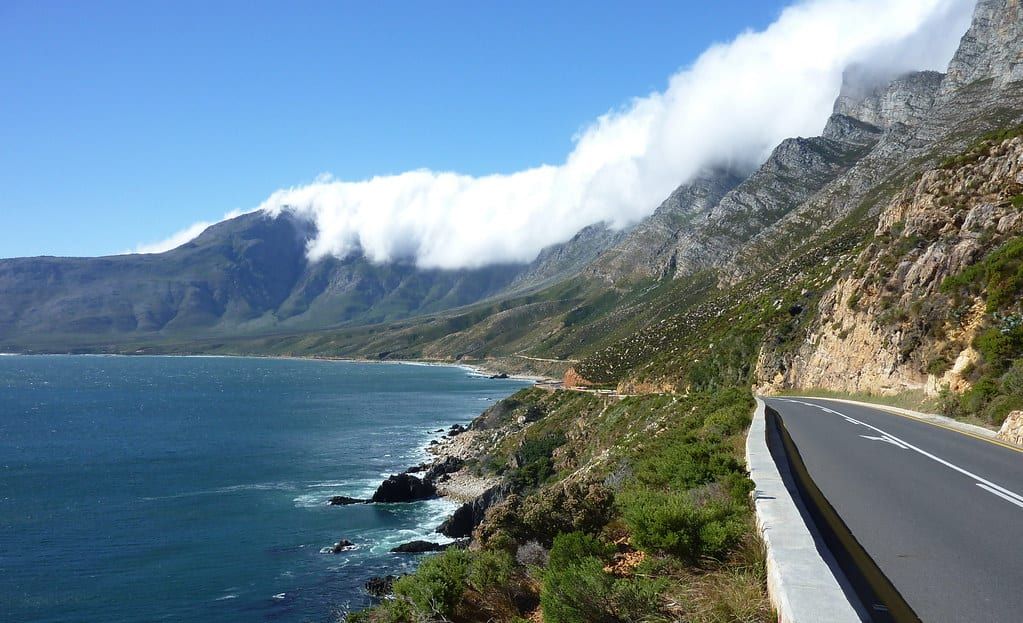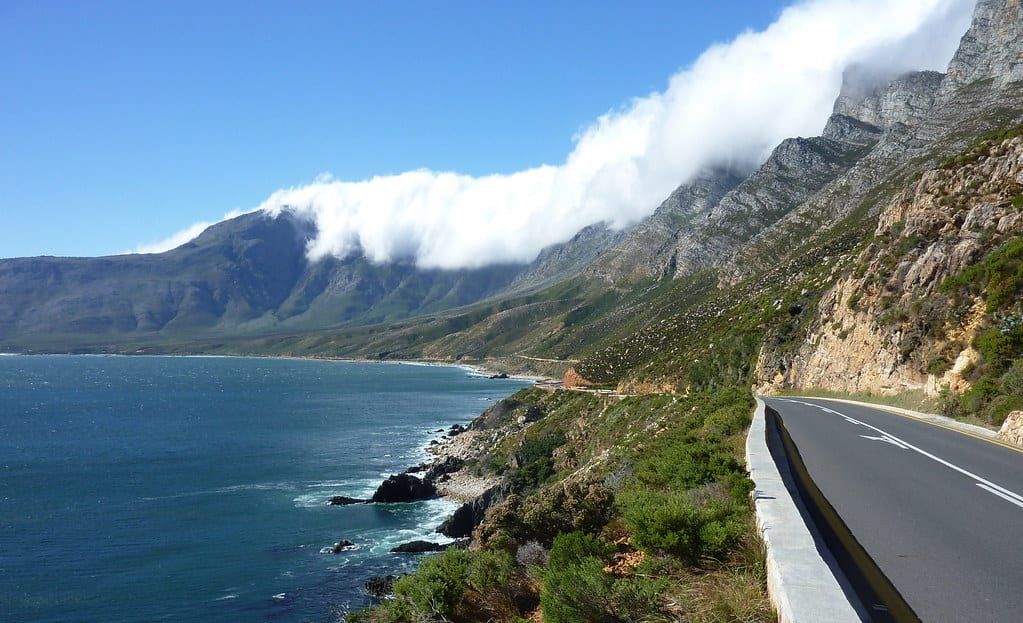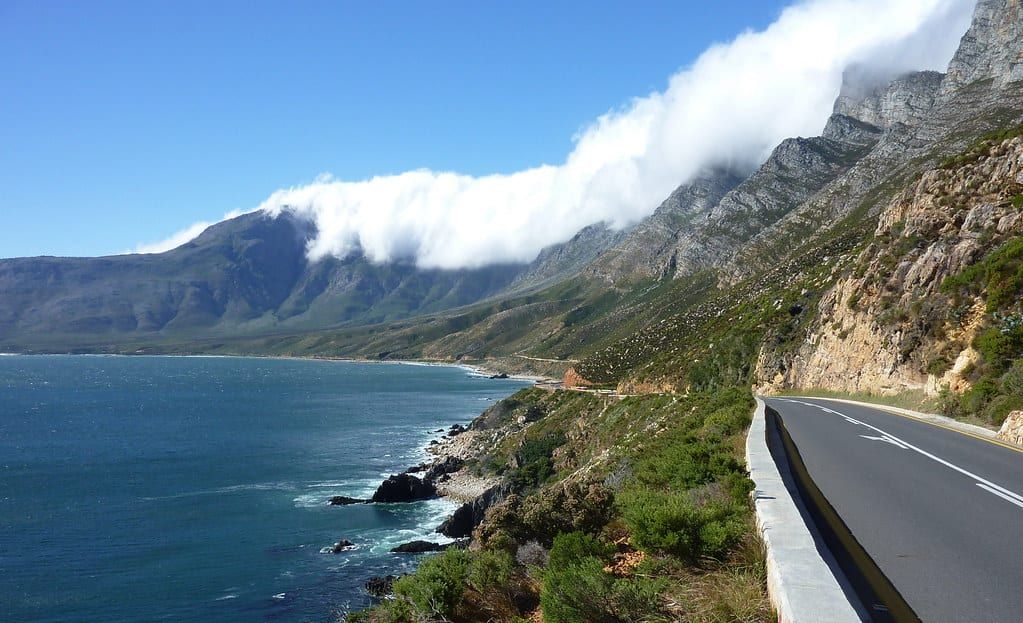
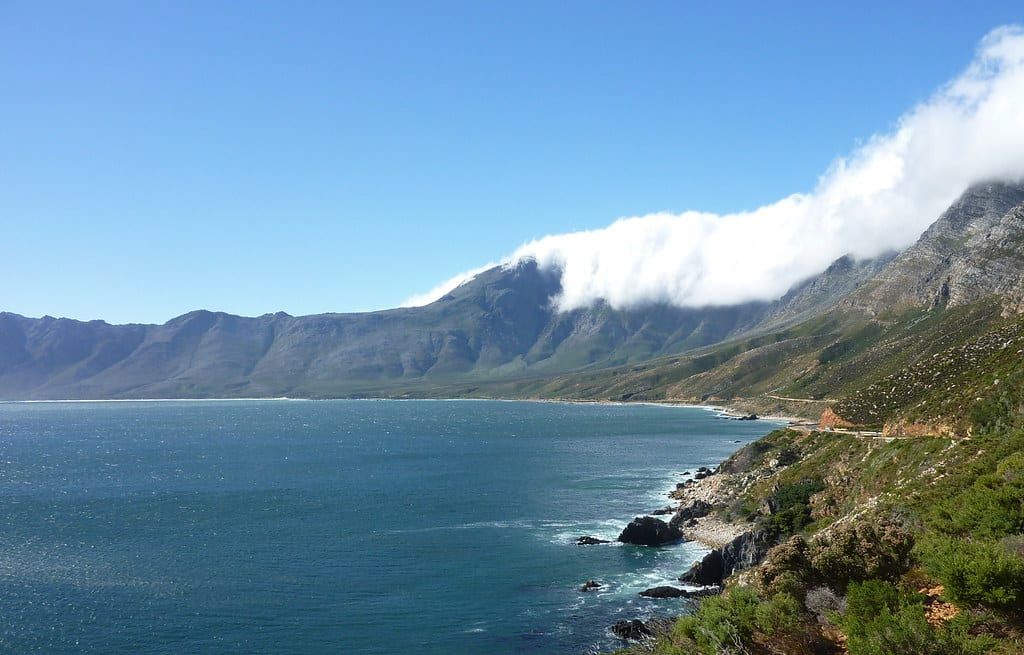
Four days is enough for the Garden Route if you're honest about what you're cutting. This plan covers the official route — the 200 km of coast between Mossel Bay and Storms River — plus the drive out from Cape Town, with whale watching in Hermanus on the way in. It runs west to east, ends with a short flight home from Gqeberha, and skips two big detours: Addo Elephant National Park and the Cango Caves at Oudtshoorn.
Every leg below comes with a distance and a time, because on this coast the two diverge — mountain sections and town speed limits slow the N2 well below what the kilometres suggest. Park entry fees are SANParks' current international rates; South Africans pay far less, and a Wild Card waives daily fees across the whole system.
Is 4 Days Enough for the Garden Route?
The Garden Route proper is short — about 200 km from Mossel Bay to Storms River, drivable in two to three hours if you never stopped, which would be a waste. The trip most people actually mean is longer: Cape Town to Gqeberha runs roughly 750 km, and the drive-in day from Cape Town matters because that's where Hermanus sits.
Four days fits the core route with three nights in proper bases and no crushing drive days. What it can't absorb is the inland loop. Addo Elephant National Park — South Africa's third-largest park, home to more than 600 elephants — sits about an hour north of Gqeberha, and Oudtshoorn's Cango Caves lie inland via the Klein Karoo. Each one costs you a full day you don't have. If elephants are the whole point of your trip, either swap Addo in for the Tsitsikamma day or stretch to five days — our 5-day Garden Route itinerary shows exactly what that extra day unlocks.
Shorter also works, if you change the start line. Flying into George Airport and renting there skips the Cape Town leg entirely, and a 3-day Garden Route plan from George covers Wilderness, Knysna, Plett and Tsitsikamma without rushing. Four days from Cape Town is simply the version most travellers arrive wanting.
Planning the Drive: Direction, Car Hire and Logistics
West to east is the standard direction, for one reason: most international flights land at Cape Town. You drive out along the coast, finish at Gqeberha, and the geography does the pacing for you. East to west from Gqeberha works just as well — run this plan in reverse — and suits anyone connecting onward along the Cape. For the full run-down of transport options, see our guide to getting to the Garden Route.
The bigger decision is what to do with the car at the end. Drop it in Gqeberha and you pay a one-way fee — Avis, Hertz, Europcar, First Car and Tempest all charge around R1,200 for Cape Town pick-up with Gqeberha drop-off, so budget R1,800 to be safe — but you skip re-driving five hours west, and the Gqeberha–Cape Town flight takes 1h20. Looping back instead means Route 62 through the Klein Karoo, which is a genuinely good drive and a genuinely full extra day.
| One-way + flight | Route 62 return loop | |
|---|---|---|
| Extra cost | Drop fee ~R1,200–R1,800 plus flight | No drop fee; extra fuel and a night |
| Time needed | Fits in 4 days | Realistically needs a 5th day |
| What you gain | A 1h20 flight home; no re-driven road | Oudtshoorn, Cango Caves, Karoo towns |
| Best for | Flyers short on time | Anyone returning to Cape Town with a spare day |
If you'd rather not drive at all, small-group tours from Cape Town over four days start around R14,750 per person sharing (about R16,700 single) and handle every booking and transfer. Non-drivers on a budget can take the Baz Bus, a hop-on-hop-off service that stops at hostels along the route — slow, but sociable, and you can break the journey anywhere.
One shortcut deserves a mention: George Airport is the Garden Route's own airport, a 50-minute hop from Cape Town with rental desks at the terminal. Flying in there and driving east buys you back the entire first day — a real option if four days is all you have and you'd trade Hermanus for a slower Tsitsikamma.
Day 1: Cape Town to Hermanus
Cape Town to Hermanus is about 120 km, an easy 90 minutes to two hours. That shortness is deliberate — day one is the warm-up, and keeping it light saves the route's heavy hitters for days two to four.
Morning: Kirstenbosch or a winelands stop
Leave Cape Town by nine and you can fit one stop before Hermanus. Kirstenbosch Botanical Garden spreads up Table Mountain's eastern slopes and needs two hours to do properly; Babylonstoren, the working farm in the Drakenstein valley, wants half a day and a lunch booking. Doing both is too much for one morning. Pick one and join the N2 afterwards.
Hermanus: whales from the cliffs
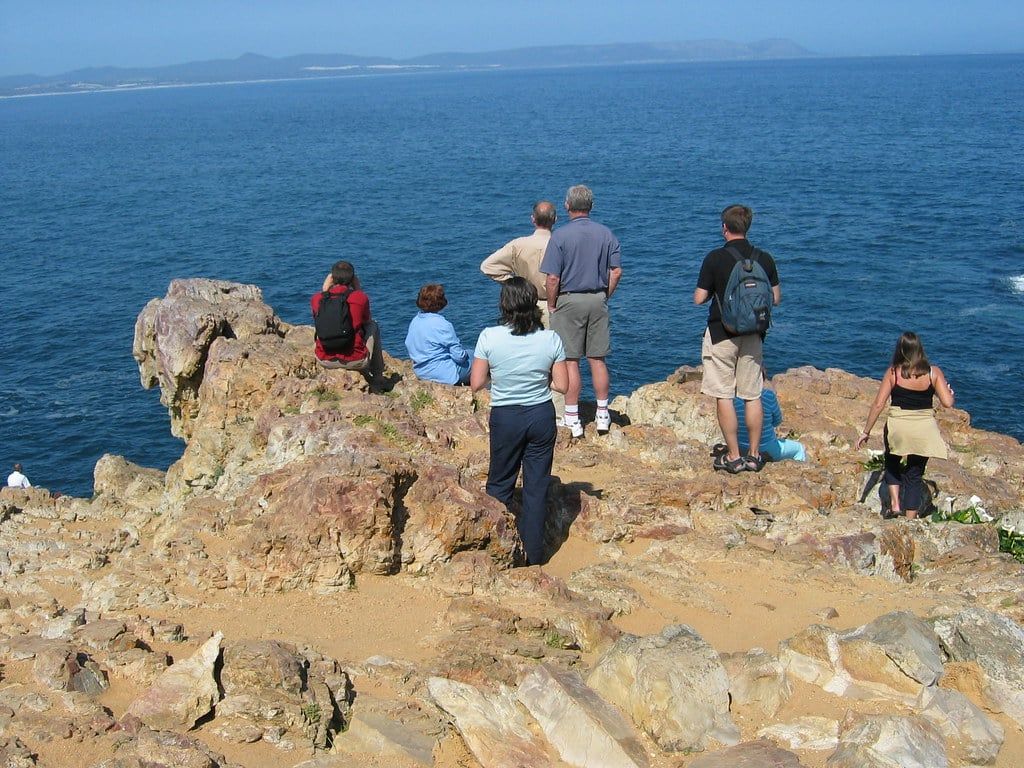
Hermanus is regarded as one of the best land-based whale-watching spots anywhere. Southern right whales calve in Walker Bay from June to November, with numbers peaking July–September, and you watch them from the Cliff Path — an easy 10 km coastal walk with vantage points along its whole length. Boat tours run from the harbour in season. September adds the town's whale festival to the mix, along with the year's biggest crowds.
Outside whale season the honest move is to keep moving. Swellendam makes a solid overnight instead of Hermanus, or push all the way to Mossel Bay and bank the kilometres for day two. There's no point paying cliff-top prices in March to stare at an empty bay.
Day 2: Hermanus to Wilderness via Mossel Bay
This is the longest day behind the wheel — roughly 310 km if you take the Cape Agulhas loop, and most of it comes before the Garden Route even officially begins. Start early, and start fed.
Cape Agulhas: Africa's southernmost point
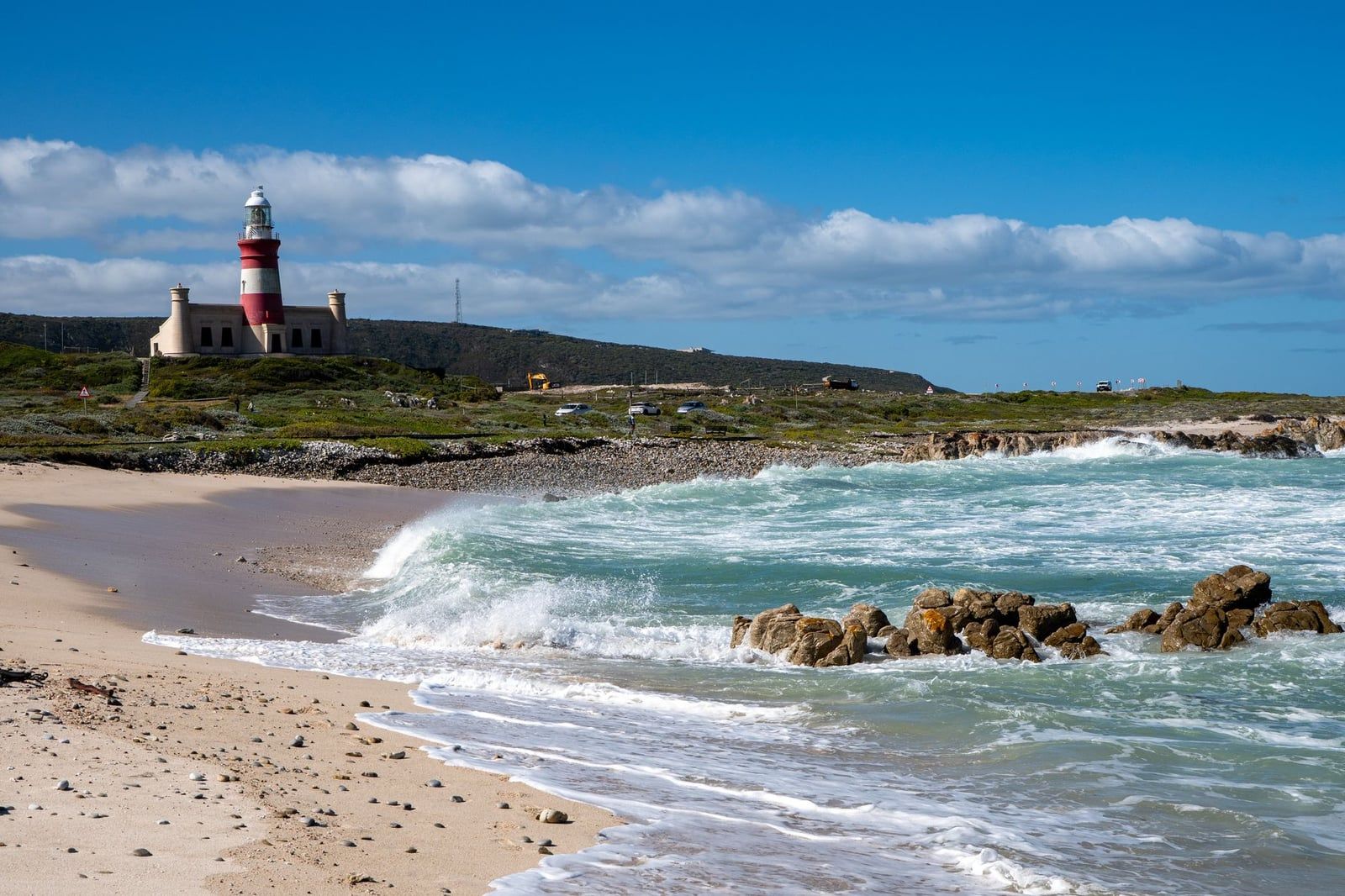
The detour south adds about an hour of driving plus viewing time. The reward is the continent's southernmost tip, where the Indian and Atlantic Oceans officially meet, marked by a cairn and watched over by South Africa's second-oldest lighthouse. It's worth the bend on a clear morning. In grey drizzle, skip it.
Swellendam and the run to Mossel Bay
Swellendam is the natural leg-stretch, roughly halfway, with coffee and a walk around its old Cape Dutch buildings. From there the N2 runs through farmland to the coast — Mossel Bay sits 385 km and about four hours from Cape Town, which tells you what this day asks of the driver.
Mossel Bay: where the route officially starts
Bartolomeu Dias made the first European landing on this coast here in 1488, and the Dias Museum Complex marks the spot. Give the town two or three hours: the museum, the tidal pools at The Point, Diaz Beach, and oysters if the season's right. The St Blaize trail runs 15 km along the clifftops — do a section for the views, not the whole thing on a driving day.
Wilderness: forest, lakes and the Kingfisher trail
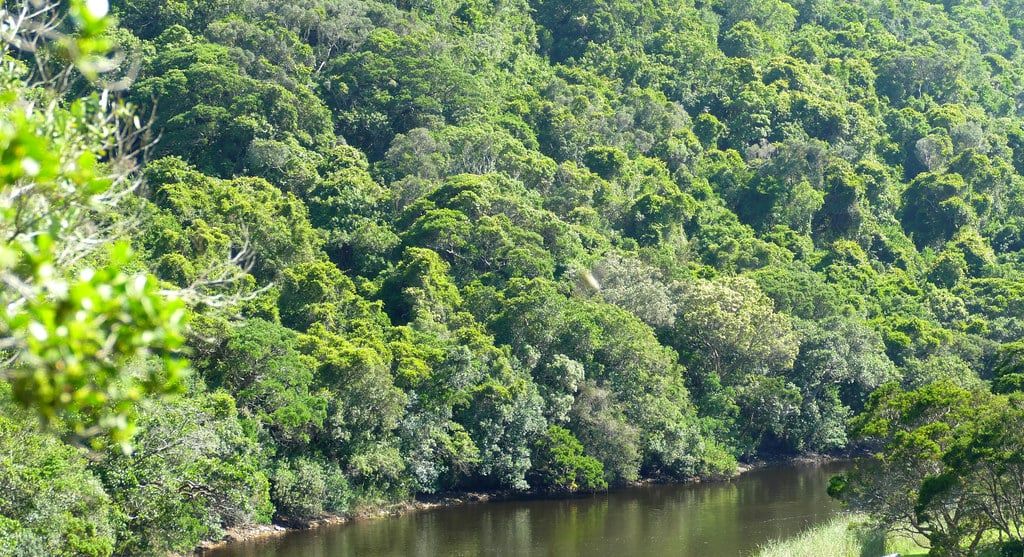
Fifty kilometres and 40 minutes east, Wilderness is the calmest stretch of the whole route: a chain of lakes, forested hills and the Touw River running through it. The Half-collared and Giant Kingfisher trail covers about 8 km return through indigenous forest to a waterfall — three hours at a stroll. If your legs are done by then, canoe the Touw River instead; rentals operate from the Ebb-and-Flow area. Park entry is R235 per international adult per day.
One thing to hold back for tomorrow: the Seven Passes Road, the old road between George and Knysna that winds through seven forested gorges instead of taking the N2. It's the scenic choice but costs an extra hour or more — perfect as a day-three morning drive, punishing at the end of a 300-km day.
Day 3: Knysna and Plettenberg Bay
Only about 77 km of driving separates Wilderness from Plettenberg Bay, which makes this the densest sightseeing day of the trip. The trade-off decisions happen here too, so decide over breakfast what you're willing to drop.
Knysna: the Heads and the lagoon
Two sandstone cliffs, the Knysna Heads, guard the narrow mouth of the estuary, and the Eastern Head viewpoints give you the classic look down onto the boats below. Lagoon cruises run from the waterfront, and the town's food signature is the oyster — the Knysna Oyster Festival runs about ten days every July. Under the water lives the strangest local claim to fame: the Knysna seahorse, the most endangered seahorse in the world, found in only three estuaries on Earth, all on this coast. You can see live ones in the SANParks tank on Thesen Island.
Robberg Nature Reserve
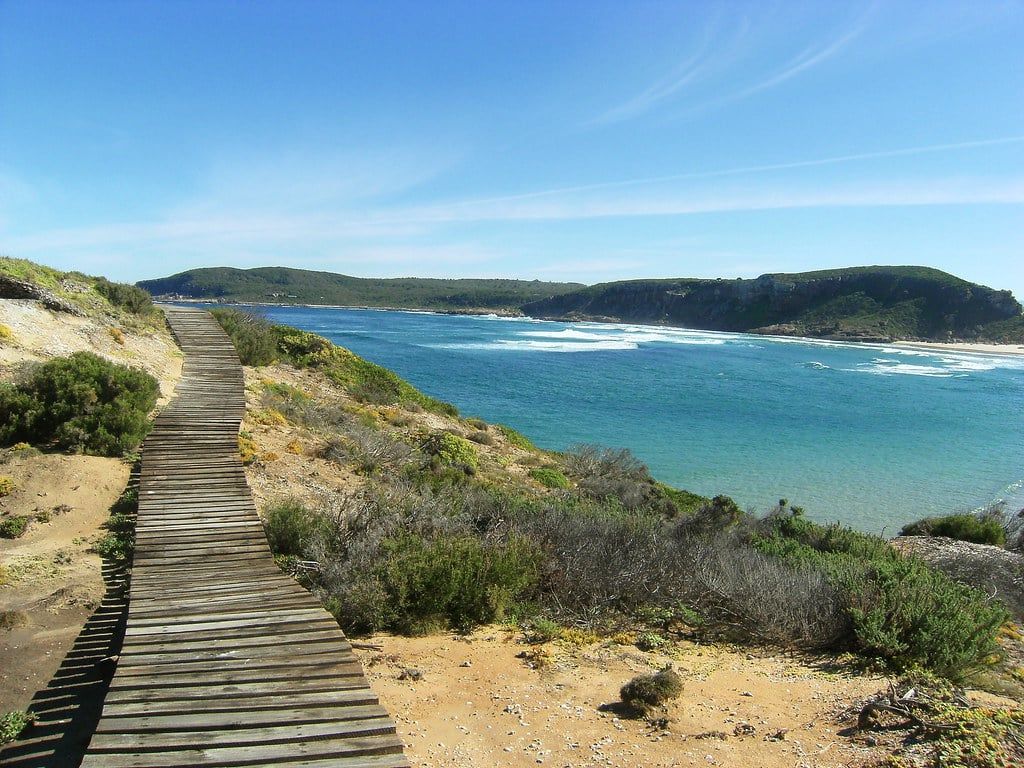
The Robberg peninsula, just west of Plettenberg Bay, is the best walk on the route. Three circuits leave from the car park: The Gap at about 2.4 km, the Witsand dune circuit at 5.6 km past a noisy Cape fur seal colony, and the full Point circuit of 9–10 km, roughly five hours with a high-tide danger section that makes checking the tide table non-negotiable. Entry is around R75 per adult. The car park fills by mid-morning in season, so go early — and walk clockwise past the Gap to avoid a trudge up loose sand.
The Crags: Birds of Eden and Monkeyland
Twenty minutes east of Plett, at The Crags, sit two of the most defensible animal stops in the country. Birds of Eden is the world's largest free-flight aviary — more than 3,500 birds under a two-hectare dome — and Monkeyland next door is a free-roaming primate sanctuary. Both are genuinely ethical operations, which matters more than usual on this coast; see the driving-tips section below for the experiences to refuse.
If time runs short
Cut in this order: the Crags sanctuaries first, a Knysna lagoon cruise second. Robberg survives every cut — it's the one thing on day 3 you shouldn't trade away. And if Plett's main beaches feel busy, the Keurbooms River and Nature's Valley, reached on the old R102, are the quiet versions. For more options, our guide to things to do along the Garden Route breaks the coast down town by town.
Day 4: Tsitsikamma and Storms River to Gqeberha — or the Route 62 Loop Home
Tsitsikamma is the finale, and it earns the earliest start of the trip: 68 km from Plettenberg Bay to the park gate, which opens 07:00 in summer and 08:00 in winter — and closes 18:00 or 17:00 sharp, enforced to the minute.
Storms River Mouth
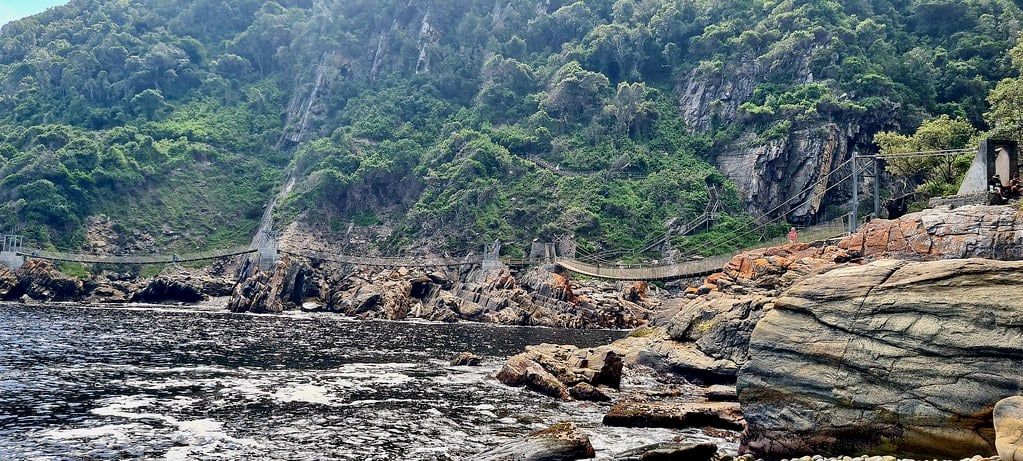
A 15-minute boardwalk from the rest camp leads through coastal forest to the suspension bridges spanning the gorge where the Storms River meets the Indian Ocean. Allow one to two hours, and bring the camera you pretend not to use. Entry costs R367 per international adult per day (South Africans pay R82; Wild Card holders enter free) — the full fee schedule for every section is on our Garden Route hours and fees page. Kayak and lilo trips paddle up the gorge itself if the bridges leave you wanting more.
The famous Otter Trail starts here: 42.5–45 km over five days and four nights to Nature's Valley, capped at 12 hikers a day and costing R2,561 per person including hut accommodation. It sells out roughly a year ahead, so if you haven't booked eleven months ago, you're doing the bridges with everyone else — and they're a fine consolation.
Bloukrans Bridge
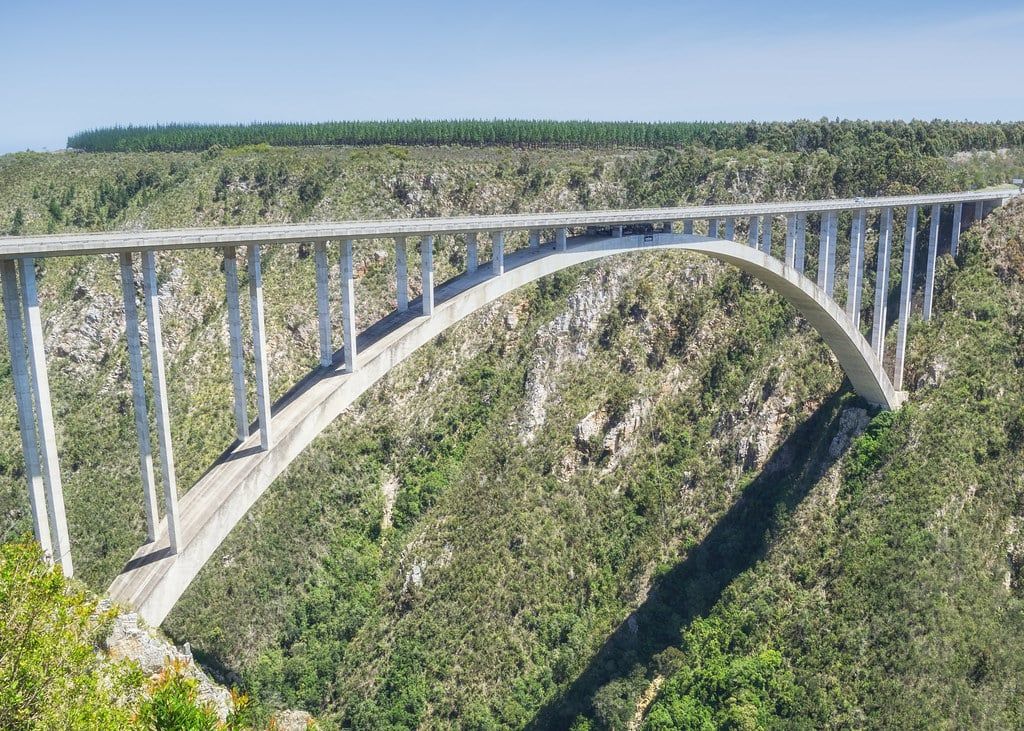
Back on the N2, the Bloukrans Bridge carries the world's highest commercial bridge bungy, 216 m above the river of the same name. Jumping is a booking and a strong nerve; watching costs nothing from the gorge-facing deck, and non-jumpers can walk the SkyWalk out to the platform for the view without the freefall. Canopy tours through the forest below run from Storms River Village for a tamer adrenaline hit.
Finish A: Gqeberha, and Addo as a fifth day
From Storms River it's 190 km — about two hours — to Gqeberha, with a stop at Jeffreys Bay en route if you want to watch surfers ride the point. Drop the car at the airport and fly the 1h20 back to Cape Town. Addo Elephant National Park sits about an hour north of Gqeberha: a natural fifth day, or a swap for today's plan if elephants outrank suspension bridges in your accounting.
Finish B: the Route 62 loop home
The alternative ending loops inland through the Klein Karoo on Route 62 — Oudtshoorn, ostrich country, and the Cango Caves, whose hour-long Heritage Tour costs R150 per adult and departs hourly from 09:00 to 16:00. It's a superb drive, and it is a full day of driving on top of Tsitsikamma. Within four days it doesn't fit honestly. Give it day five, or take the flight out of Gqeberha and come back for the Karoo another time.
Where to Stay Each Night (and When to Book)
Night one is Hermanus, full stop. Guesthouses line the cliff top within earshot of the whales, and the short drive in means you arrive with the afternoon to walk the Cliff Path. In whale off-season, push on to Mossel Bay or Swellendam instead and shift everything a town east.
Night two is Wilderness or Knysna. Wilderness is calmer, marginally cheaper and sits right on the national park's lakes; Knysna has the restaurants, the waterfront and the advantage of being 45 km further along the route. If day three looks packed — and it will — take Knysna.
Night three is Plettenberg Bay or Storms River village. Storms River puts you ten minutes from the suspension bridges for a 07:00 gate start, which is worth a lot on the last day; Plett gives you the better dinner. Sleep in Storms River if the bridges or a bungy are the trip's climax, in Plett if you want a last proper beach evening.
On timing: December through February is peak season, and coastal accommodation along the whole route books out — reserve three to six months ahead for summer travel. The shoulder months of March–May and September–November are cheaper and quieter, and winter is the bargain window if whales are your reason for going. Our Garden Route accommodation guide lists base options town by town, from guesthouses to SANParks rest camps.
Essential Driving Tips for the Garden Route
Plan every leg for daylight. The N2 between towns is poorly lit, and after dark you share it with baboons, livestock, pedestrians and the occasional unlit broken-down vehicle. That means early starts in winter, when the park gates don't open until 08:00 and the light goes by 18:00.
Refuel and resupply in the bigger towns — George and Knysna — where fuel, water, snacks and working card machines are all reliable. The smaller stops are sparse, and the gaps between them are longer than they look on the map.
The car question has a short answer: a compact is fine. The N2 is well surfaced the whole way, and no 4x4 is needed for this itinerary. Gravel only appears if you detour — parts of Route 62 and the Swartberg Pass — and a standard rental agreement may not cover it anyway. Watch your speed everywhere; the N2 is heavily patrolled and the traps are well hidden.
On the road itself, the R102 near Nature's Valley is baboon country — they cross without looking, and a collision writes off both the car and the morning. In towns, car guards in yellow jackets will watch your parked car for a tip of about R10; it's a normal, useful system. Drive on the left, expect roundabouts, and keep valuables out of sight at intersections.
On animals, be choosy. The free-roaming sanctuaries — Birds of Eden, Monkeyland — are the ones worth your money; Knysna Elephant Park has moved to observation-only visits, and that's the standard to hold anywhere else to. Skip elephant rides and cub petting outright. And refuse the seal-swimming trips around Plettenberg Bay: biting incidents and rabies reports along that stretch of coast make them a firm no, however good the photos look.
Garden Route in 4 Days: FAQs
Is 4 days enough for the Garden Route?
Yes — four days covers the core Mossel Bay–Storms River route plus Hermanus on the drive out from Cape Town, provided you one-way the rental or accept a fast final day. Five to seven days is more relaxed and is what you need to add Addo Elephant National Park and the Oudtshoorn/Cango Caves loop.
What's the best time of year for a 4-day Garden Route trip?
The route works year-round. March–May and September–November give the best balance of weather and crowds; December–February is warm and busy, so book accommodation well ahead. Whale season in Hermanus runs June–November, peaking July–September, and winter is the cheapest time to go.
Can you fit Addo Elephant Park into 4 days?
Only by swapping it for the Tsitsikamma day or adding a fifth day. Addo lies about an hour north of Gqeberha, is South Africa's third-largest national park and holds more than 600 elephants — a natural fifth-day finale after the coast.
How much does a 4-day Garden Route trip cost?
Small-group 4-day tours from Cape Town start around ZAR 14,750 per person sharing (about ZAR 16,700 single). Self-drive costs are rental (roughly R350–R700 per day in season), fuel, park entry fees of up to R367 per adult per section for internationals, and a one-way drop fee of R1,200–R1,800 if you finish in Gqeberha.
Should I drive one-way to Gqeberha or loop back to Cape Town?
One-way, if four days is your limit — the drop fee of roughly R1,200–R1,800 buys back five hours of re-driven road, and the Gqeberha–Cape Town flight takes 1h20. The Route 62 return loop through the Klein Karoo and Cango Caves is the better drive but realistically needs a fifth day.
Is it safe to drive the Garden Route?
Yes, in daylight and with normal caution: drive town to town before dark, don't stop for hitchhikers, keep valuables out of sight, and refuel at major stations. Watch for baboons on the R102 near Nature's Valley, livestock on rural stretches, and speed traps on the N2.